
India Targeted in Trump’s Tariff Offensive Over Russian Oil Imports
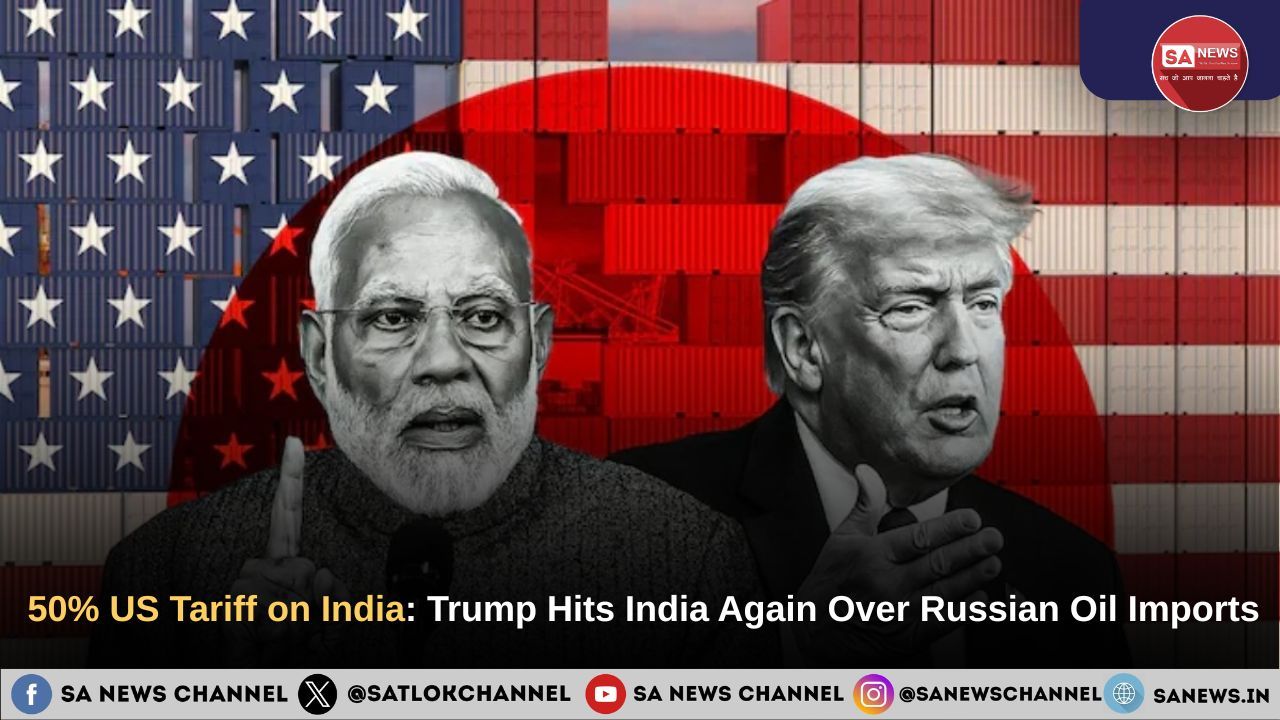
India has unexpectedly found itself at the center of Washington’s latest strategy to pressure Russia over its ongoing invasion of Ukraine. On Wednesday, former U.S. President Donald Trump announced a dramatic escalation—doubling tariffs on Indian goods from 25% to 50%. The new tariffs are intended to penalize New Delhi for continuing to import Russian oil, a move the Indian government has denounced as “unfair” and “unjustified.” The tariffs will take effect on August 27, leaving India a narrow 20-day window to respond.
The decision makes India the most heavily taxed U.S. trading partner in Asia, placing it in the same category as Brazil—another major economy currently under steep U.S. trade penalties. Trump’s administration claims the tariffs are aimed at undercutting Russian oil revenues and increasing pressure on President Vladimir Putin to agree to a ceasefire. However, the impact of this decision is expected to ripple through India’s economy, with fears that the export sector could face serious setbacks.
India exported around $86.5 billion in goods to the U.S. last year, making the U.S. its largest export market. Analysts warn that the new tariffs could render a significant portion of these exports commercially unviable. Many Indian exporters have said they struggle to absorb even a 10–15% increase in trade costs. A 50% tariff, they argue, is impossible to bear. Japanese financial firm Nomura noted that such a drastic measure could amount to a “trade embargo,” potentially triggering a sudden halt in exports of key goods.
Though electronics and pharmaceutical exports are currently exempt, the effects are expected to hit labor-intensive industries such as textiles, gems, and jewelry the hardest. Rakesh Mehra of the Confederation of Indian Textile Industry called the tariffs a “huge setback,” saying they would sharply reduce India’s competitiveness in the U.S. market. The government’s response so far has been firm, promising to take “all actions necessary” to protect national interests.
Many experts view Trump’s move as a high-stakes gamble. India is not the only country buying Russian oil—China and Turkey also continue to do so—but Washington’s decision to single out India has raised eyebrows. Former Indian central bank governor Urjit Patel described the development as the realization of India’s “worst fears.” He expressed hope that the situation could still be resolved through trade talks scheduled later this month, but warned that a full-blown trade war remains a distinct possibility.
The pressure now falls on Prime Minister Narendra Modi’s government to decide whether to scale back trade ties with Russia or risk deeper economic conflict with the U.S. India has been gradually reducing its reliance on Russian arms and oil in recent years, but still considers Russia a key partner. Dr. Chietigj Bajpaee of Chatham House suggests that while the India-Russia relationship has lost some of its Cold War-era strategic value, it remains important for India’s defense and energy needs.
Some analysts argue that the U.S. pressure may have the unintended consequence of pushing India closer to Russia, China, and other emerging powers. Ajay Srivastava of the Global Trade Research Initiative (GTRI) said Trump’s decision could prompt India to reconsider its long-term strategic alignment. Prime Minister Modi is also preparing to visit China for the upcoming Shanghai Cooperation Organisation (SCO) summit—his first since the deadly Galwan Valley clashes in 2020. There is speculation that India, Russia, and China could revive trilateral diplomatic efforts.
The immediate focus, however, remains on the upcoming trade negotiations with the U.S. Talks have previously stalled over contentious issues such as agriculture and dairy. Washington wants greater market access in these sectors, but India has long resisted such demands. It remains unclear whether Modi’s government will offer concessions in these sensitive areas or maintain its position in the face of political risks.
Trump’s tariff decision also casts doubt on India’s growing appeal as a “China-plus-one” destination for global supply chains. While the impact on investor confidence may be limited in the short term, the higher tariffs could reduce India’s cost advantage compared to countries like Vietnam. Nevertheless, companies like Apple—which manufactures a significant portion of its iPhones in India—are unlikely to be directly affected, as semiconductors are exempt from the new tariffs.
Experts also warn that the Indian government may need to ramp up support for its exporters. So far, New Delhi has avoided direct subsidies, focusing instead on export promotion and trade financing. But many believe this approach may not be enough to mitigate the shock from such a wide tariff gap.
The opposition in India has seized the opportunity to criticize the Modi administration. Senior Congress Party leader Rahul Gandhi called the 50% tariffs “economic blackmail” and an “attempt to bully India into an unfair deal.” While retaliation from India appears unlikely in the short term, experts say it is not out of the question. Barclays Research points to a precedent in 2019, when India imposed retaliatory tariffs on 28 U.S. products in response to earlier American levies on steel and aluminum—some of which were later reversed.
As the August 27 deadline approaches, the stakes are rising rapidly. The coming days will reveal whether India and the U.S. can find a diplomatic off-ramp or whether the world’s two largest democracies are heading toward a damaging trade war.