
United Sherpa Association Celebrates Lhabsol in Wallkill, New York
On a softly drizzling day in Wallkill, New York, nearly two hours from the restless rhythm of New York City, the annual Sherpa Kyidug Lhabsol (Lhapso) ceremony unfolded with a quiet depth that the weather could not diminish. It was spring in its tender fullness. The grass had turned a luminous green, the surrounding trees were dressed in new leaves, and small flowers opened quietly along the edges of the gathering ground. Birds moved through the damp air, their songs threading gently through the sound of distant chants. The sky remained overcast, yet the earth felt alive, as if participating in the ritual itself.
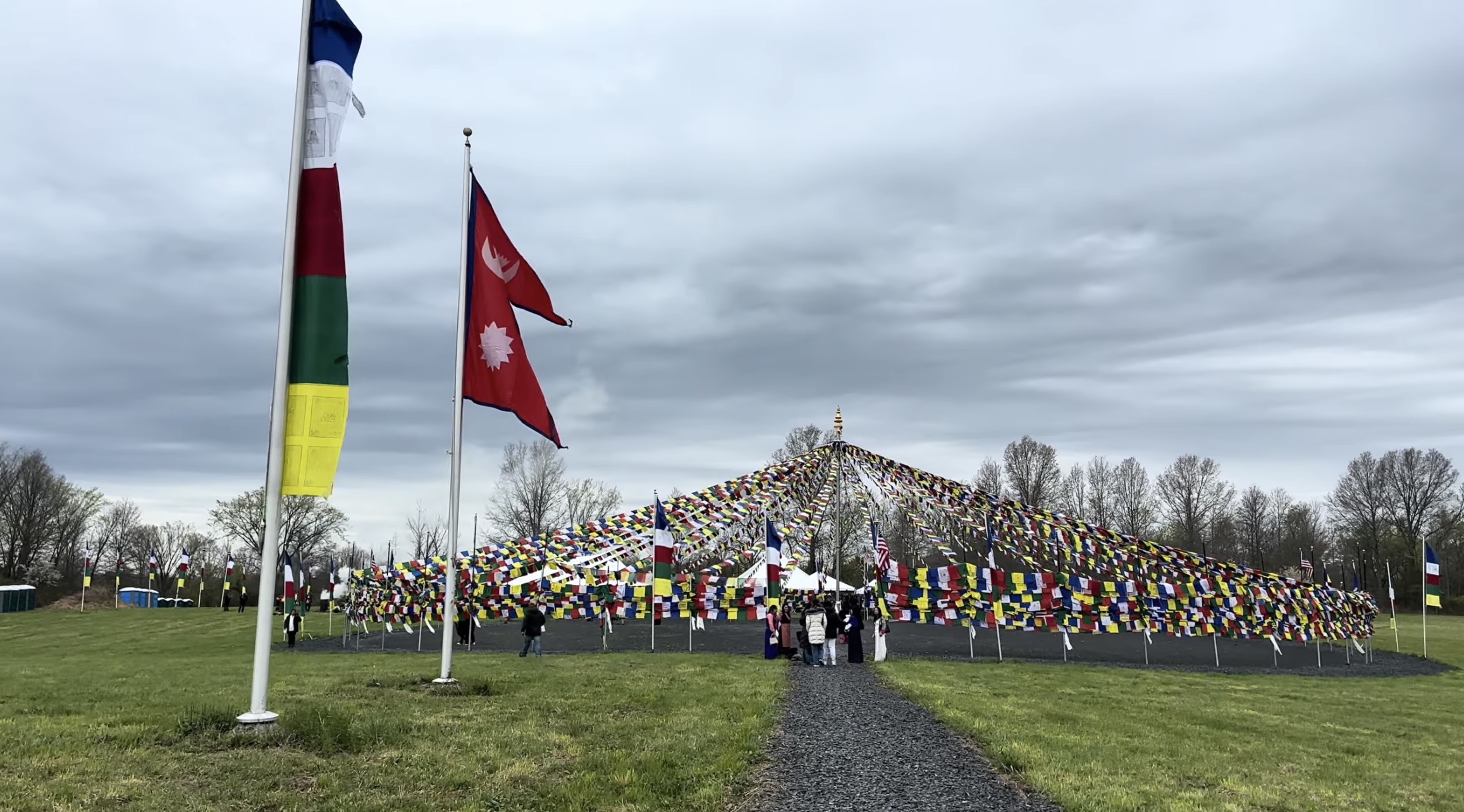
At the center of the Lhabsol ground stood a tall pole from which vast strands of five colored prayer flags, blue, white, red, green, and yellow, extended outward in all directions, forming the sacred geometry of a stupa. Around it, hundreds of prayer flags fluttered from smaller poles, their movements carried by the wind. In Himalayan understanding, these colors represent the elements, sky, air, fire, water, and earth, and as the flags moved, prayers were not merely spoken, but released into space for the well-being of all beings.
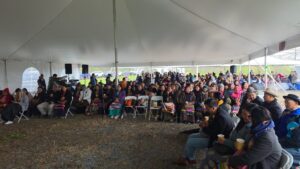
Despite the rain, thousands gathered from the Tri-State area and beyond, drawn not by convenience but by devotion. Elders walked slowly with prayer beads in hand, families stood together under umbrellas, and children moved through the field with quiet wonder. In that meeting of rain and remembrance, Lhabsol revealed itself not as an event, but as a living continuity.
Amid this gathering, another quiet expression of care emerged within the community. The Nepalese Nurses Association set up a table for health screening, offering basic checkups and guidance to attendees. Their presence reflected a practical form of compassion, where care extended beyond prayer into the well-being of the body. In the same space where offerings were made for all sentient beings, direct service was given to the community, reminding everyone that compassion is not only contemplated but lived.
The organizing committee welcomed guests in the traditional manner, offering chimar, khapse, and butter tea. These gestures, simple in form yet rich in meaning, carried the warmth of Himalayan hospitality. The offering of chimar symbolized auspiciousness and abundance, khapse reflected celebration and continuity, and butter tea, shared among all, created a sense of connection that gently dissolved distance and difference.
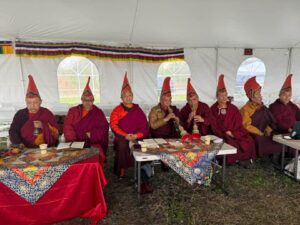
The ceremony began with Sang Serkim Puja, led by the Venerable Urgen Tulku Sherpa, Lama Pema Sherpa, Dr. Yula Sherpa, Khenpo Ngawang Lhundup Lopen Gyurme Chhodrak, and other respected venerable members of the Sangha. Offerings of incense, grains, and sacred substances rose into the moist air, dissolving into unseen space. In Buddhist understanding, such acts are not directed outward alone; they refine intention within. The offering becomes a mirror, reflecting the mind’s capacity for generosity, humility, and alignment with interdependence.
As the ritual concluded, the sacred ground transformed into a field of movement and meaning through traditional dances, each one not merely a performance, but a teaching expressed through body and rhythm.
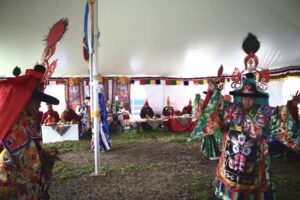
The Serkim Dance, rooted in the ritual of offering, unfolded with measured grace. In Himalayan practice, serkim refers to the offering of liquid to protective forces. The dance embodies this act of generosity and respect, where each gesture becomes an offering and each step a form of mindfulness. It reflects a fundamental understanding that giving is not loss, but connection.
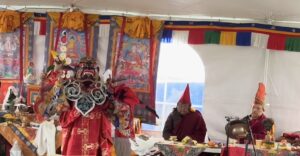
The Dorje Dolo Dance entered with a powerful and transformative presence. Dorje Dolo is a fierce manifestation of Guru Padmasambhava, representing the transformation of obstacles into wisdom. The movements are dynamic and grounded, evoking fearless compassion. In Buddhist understanding, this fierceness is not aggression, but clarity that cuts through illusion.
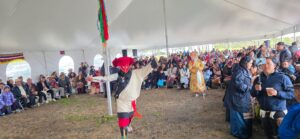
The Michhiring Dance, often known as the Old Man Mask Dance, carried a quieter message. The figure of the old man reflects the passage of time. In Himalayan understanding, age is not decline but the accumulation of experience and insight. Through gentle humor and grounded presence, the dance invites reflection on impermanence and the wisdom of living in harmony with change.
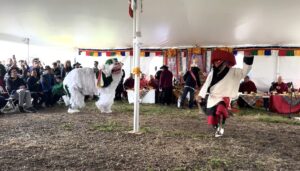
The Singi Dance, the White Lion Dance, brought a luminous and expansive energy. The white lion symbolizes fearlessness, clarity, and joyful awareness. Its movements were both playful and majestic, echoing across the field in rhythm with the wind and the prayer flags. In Buddhist symbolism, the lion’s roar represents the voice of truth, clear and unwavering.
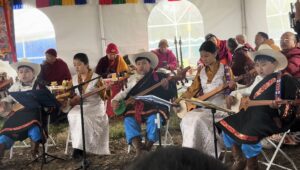
Children later performed traditional Sherpa songs and dances. Their voices carried not only melody, but continuity. In them, culture was not remembered; it was alive.
As the ceremony deepened, the gathering moved into a shared offering. White flour was lifted into the air with the collective chant, Ki Ki So So Lha Gyal Lo. This expression affirms that harmony and goodness may prevail. As the flour rose and dissolved into the rain filled sky, it merged with the movement of the prayer flags and the quiet breath of the land.
The meaning of Lhabsol rests in this relationship. Lha refers to divine or protective forces, while bsol signifies offering or invocation. Historically rooted in Himalayan traditions that honor the sacred presence of mountains and nature, Lhabsol reflects a worldview in which human life is deeply connected with the natural and unseen world.
The Lhabsol gathering in Wallkill was not only a moment for the community to come together in offering and remembrance, it also became a quiet renewal of collective energy. In the presence of ritual, nature, and shared intention, something subtle was restored. The chants, the movements, the rising incense, and the fluttering prayer flags formed a field of awareness through which the community reconnected with its roots, its values, and its inner balance.
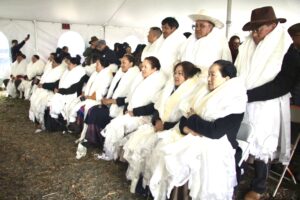
Representing the broader community were Dorjee Sherpa, Treasurer of the Association, Pemba Chhiri Sherpa, and Ms Kaljang Sherpa, President of the Network of Sherpa Students and Professionals.
The ceremony was further enriched by the active participation of Vice President Pasang Sherpa, Religious Coordinator Nawang Jimpa Sherpa, Secretary Pasang Sherpa, along with other executive members. Supported by the dedicated efforts of volunteers, their presence reflected the unity and collective spirit of the community, contributing to the successful completion of the Lhabsol ceremony.
“The event was successfully carried out with the collective support of a dedicated organizing committee, generous Lhabsol sponsors, committed volunteers, and the active participation of community members. The strong spirit of collaboration and shared devotion played a vital role in making the ceremony both meaningful and successful,” said Lhakpa Rinji Sherpa, Coordinator of the Sherpa Kyidug Board of Trustees.
The ceremony also looked gently toward the future, as a new organizing committee was formally chosen to lead the Lhabsol celebration for the coming year. This transition, carried out in a spirit of unity and shared responsibility, reflected the community’s enduring commitment to preserving tradition while nurturing continuity. With blessings still lingering in the air, the newly entrusted members accepted their role with humility, carrying forward not only the responsibility of the organization but the deeper intention of sustaining cultural memory and collective devotion for generations to come.
As the ceremony drew to a close, the sacred ground gently shifted into celebration. Sherpa, Nepali, and Tibetan songs filled the air, and people gathered not as participants of a ritual, but as a community renewed. The rain continued to fall softly, the flags continued to move, and the green earth held it all in quiet presence.
In that rain soaked spring field in Wallkill, Lhabsol was not only performed, it was lived, as a reminder that compassion, awareness, and connection endure wherever they are carried.

United Sherpa Association Transfers $30,521 to Nepal’s Prime Minister’s Disaster Relief Fund
3 weeks ago
Global Sherpa Conference 2026: A Global Gathering to Preserve Heritage, Identity and Unity
3 weeks ago