
Balendra Shah Sworn in as Nepal’s Prime Minister Amid Historic and Symbolic Ceremony in Kathmandu

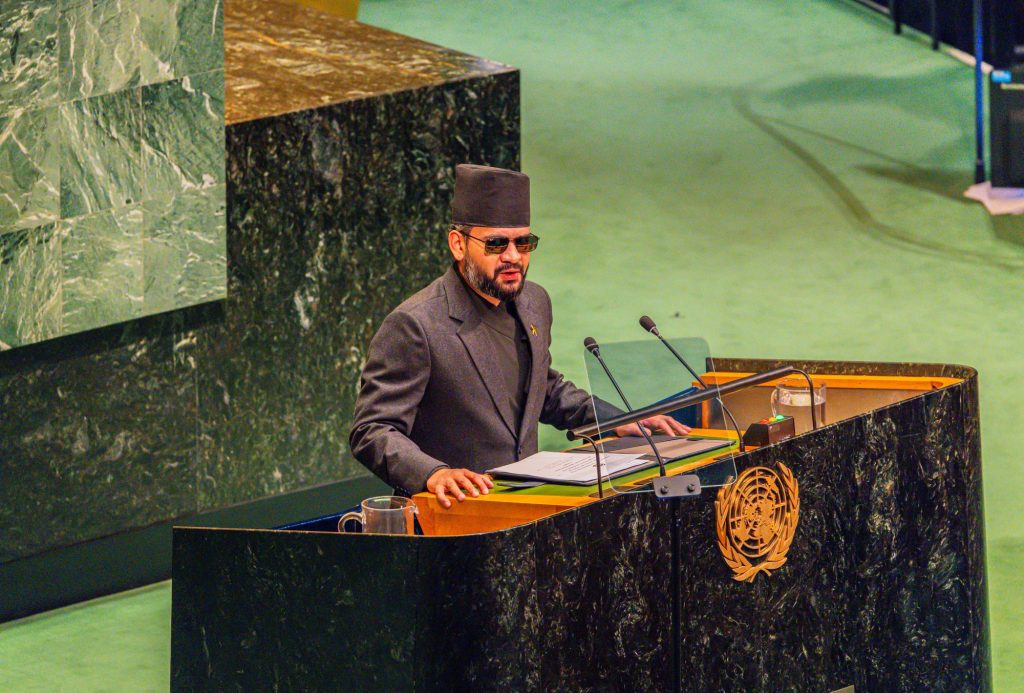
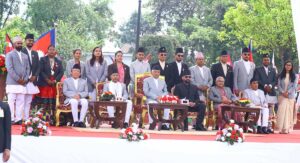
Kathmandu, March 27 — In a moment of both political transition and symbolic significance, Balendra Shah, popularly known as Balen, was formally sworn in as the Prime Minister of Nepal on Friday during a special ceremony held at the Office of the President, Shital Niwas. The oath of office and secrecy was administered by President Ramchandra Paudel, following Shah’s appointment earlier in the day under Article 76(1) of the Constitution of Nepal.
The ceremony brought together the highest ranks of the state and political establishment, reflecting the weight of the moment. Among those present were Vice President Ram Sahaya Prasad Yadav, Chief Justice Prakash Man Singh Raut, Chair of the National Assembly Narayan Prasad Dahal, former prime ministers, senior government officials, chiefs of security agencies, and members of the diplomatic community.
What distinguished this swearing-in ceremony from previous state functions was its deeply symbolic and culturally layered format. For the first time, the oath-taking incorporated elements of Vedic–Sanatan tradition alongside Buddhist practices, reflecting Nepal’s plural spiritual heritage. The ceremony resonated with the sound of conch shells blown in unison from seven directions, while 108 Batuks (young Vedic students) chanted sacred mantras. Complementing this, 108 Buddhist monks recited prayers, creating an atmosphere that bridged ancient traditions with the contemporary political moment. The fusion of these rituals conveyed a message of inclusivity, continuity, and cultural identity at the highest level of governance.
Shah, who serves as the parliamentary party leader of the Rastriya Swatantra Party, was unanimously elected to the post by his party on Thursday. His rise to the premiership marks a dramatic and unconventional political trajectory. In the March 5 general elections, he secured victory from Jhapa-5, defeating veteran leader KP Sharma Oli by a significant margin. Earlier this year, Shah had resigned from his position as Mayor of Kathmandu Metropolitan City, where he had gained national prominence for his assertive leadership style, urban reforms, heritage conservation efforts, and focus on infrastructure development.
An engineer by training and a former rapper turned public figure, Shah represents a generational and stylistic shift in Nepal’s political landscape. His entry into federal politics, followed immediately by his elevation to the prime ministerial office, underscores both his popular appeal and the evolving dynamics within Nepal’s democratic system.
Following his appointment, Prime Minister Shah swiftly announced the formation of his Cabinet, signaling an intent to move quickly into governance. He has retained key portfolios of Defence and Industry under his direct leadership.
Economist and prominent political figure Swarnim Wagle has been appointed Deputy Prime Minister and Minister for Finance, indicating a focus on economic reform and fiscal stability. Sudhan Gurung has been entrusted with the Home Ministry, while Shishir Khanal will lead the Ministry of Foreign Affairs, reflecting continuity and experience in diplomacy.
The Ministry of Physical Infrastructure, Transport and Urban Development will be headed by Sunil Lamsal, aligning with Shah’s strong emphasis on infrastructure modernization. Biraj Bhakta Shrestha has been appointed Minister for Energy, Water Resources and Irrigation, while Khadka Raj Paudel will oversee Tourism, a sector critical to Nepal’s economy.
In the social sectors, Sasmit Pokharel will lead Education, Science and Technology as well as Youth and Sports, while Nisha Mehta has been assigned Health and Population. Bikram Timilsina will serve as Minister for Communications, and Pratibha Rawal will head Federal Affairs and General Administration.
Similarly, Dipak Sah has been given responsibility for Labour and Employment, Sobita Gautam will oversee Law, and Geeta Chaudhary will lead Agriculture and Livestock Development along with Forest and Environment. Sita Badi has been appointed Minister for Women, Children and Senior Citizens.
As Nepal enters a new political chapter under Prime Minister Balendra Shah, expectations remain high. His leadership will be closely watched for how it balances reformist ambition with institutional stability, and how effectively it addresses the country’s pressing challenges—from economic recovery and governance reforms to infrastructure development and social inclusion.