

U.S. and China Begin Trade Talks in Madrid Amid Tensions Over Tariffs, TikTok, and Russian Oil
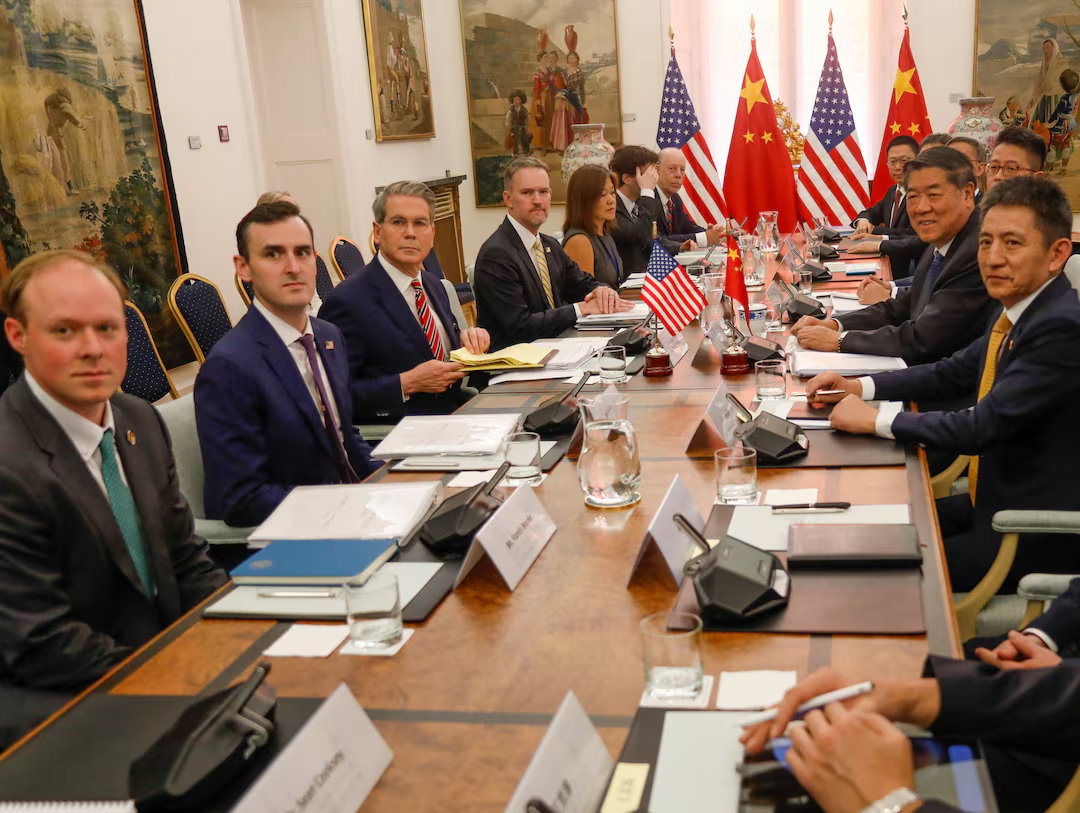
Madrid, Sept 14 – Senior U.S. and Chinese officials concluded the first day of high-stakes trade talks in Madrid on Sunday, seeking to manage their increasingly strained economic relationship. The discussions touched on a looming deadline for the forced divestiture of TikTok’s U.S. operations, Washington’s push for allied tariffs on Chinese goods linked to Russian oil purchases, and long-running disputes over tariffs and export controls.
The delegations met at the Palacio de Santa Cruz, a 17th-century baroque building that houses Spain’s foreign ministry. On the U.S. side, Treasury Secretary Scott Bessent and Trade Representative Jamieson Greer led the negotiations, while China was represented by Vice Premier He Lifeng and top trade negotiator Li Chenggang. Talks lasted about six hours before breaking for the evening. “We’ll start again in the morning,” Bessent told reporters as he left the venue.
This marked the fourth time in as many months that the two delegations have met in European cities to try to stabilize ties that have been battered by tariffs and technology restrictions under President Donald Trump’s administration. In July, during a meeting in Stockholm, the sides agreed to extend a fragile 90-day trade truce that eased triple-digit retaliatory tariffs and reopened the flow of rare-earth minerals from China to the United States. Despite these steps, Trump has approved keeping U.S. tariffs on Chinese imports—averaging about 55%—in place until at least November 10.
A key issue looming over the Madrid talks is the fate of TikTok. The popular short-video app, owned by China’s ByteDance, faces a September 17 deadline to divest its U.S. operations or risk being banned. Trade analysts widely expect the deadline to be extended for the fourth time since Trump took office. While TikTok had not been formally raised in earlier rounds of trade talks, U.S. officials placed it on the official agenda this time, a move seen as giving the Trump administration political cover to justify another extension.
Experts caution that a major breakthrough is unlikely in Madrid. “I’m not expecting anything substantive between the U.S. and China unless and until there is a one-on-one meeting between Trump and Chinese President Xi Jinping,” said William Reinsch, a senior fellow at the Center for Strategic and International Studies. He argued that the talks serve mainly to define each side’s “red lines” and lay the groundwork for a potential Trump-Xi meeting later this year.
Wendy Cutler, a former U.S. trade negotiator now at the Asia Society Policy Institute, said the most significant “deliverables” would likely be reserved for a possible meeting between Trump and Xi, perhaps at the Asia-Pacific Economic Cooperation summit in Seoul at the end of October. Such outcomes could include a final resolution on TikTok, easing restrictions on Chinese soybean purchases, and lowering U.S. tariffs on Chinese goods linked to fentanyl-related chemicals. However, she added that Beijing is unlikely to move forward without major U.S. concessions on tariffs and export controls—areas where Washington remains firm.
Another contentious issue is China’s ongoing purchases of Russian oil. Washington has been pressing its allies to impose “meaningful tariffs” on imports from countries, including China and India, that continue buying Russian crude, arguing that such measures would reduce Moscow’s revenues and pressure it toward peace talks over Ukraine. The United States has already imposed a 25% tariff on Indian goods as punishment for its Russian oil imports, though similar duties on China have not yet been applied. The Treasury has also tied the talks to combating money laundering, citing concerns over illicit Chinese shipments of technology to Russia.
For its part, China’s Ministry of Commerce said the Madrid discussions would cover tariffs, the U.S. use of export controls, and the TikTok issue. Negotiations are scheduled to resume on Monday morning, with both delegations expected to hold press conferences in the afternoon to outline their progress—or lack thereof.