
Buddha Jayanti Celebrated by Nepali Organizations in Northern California
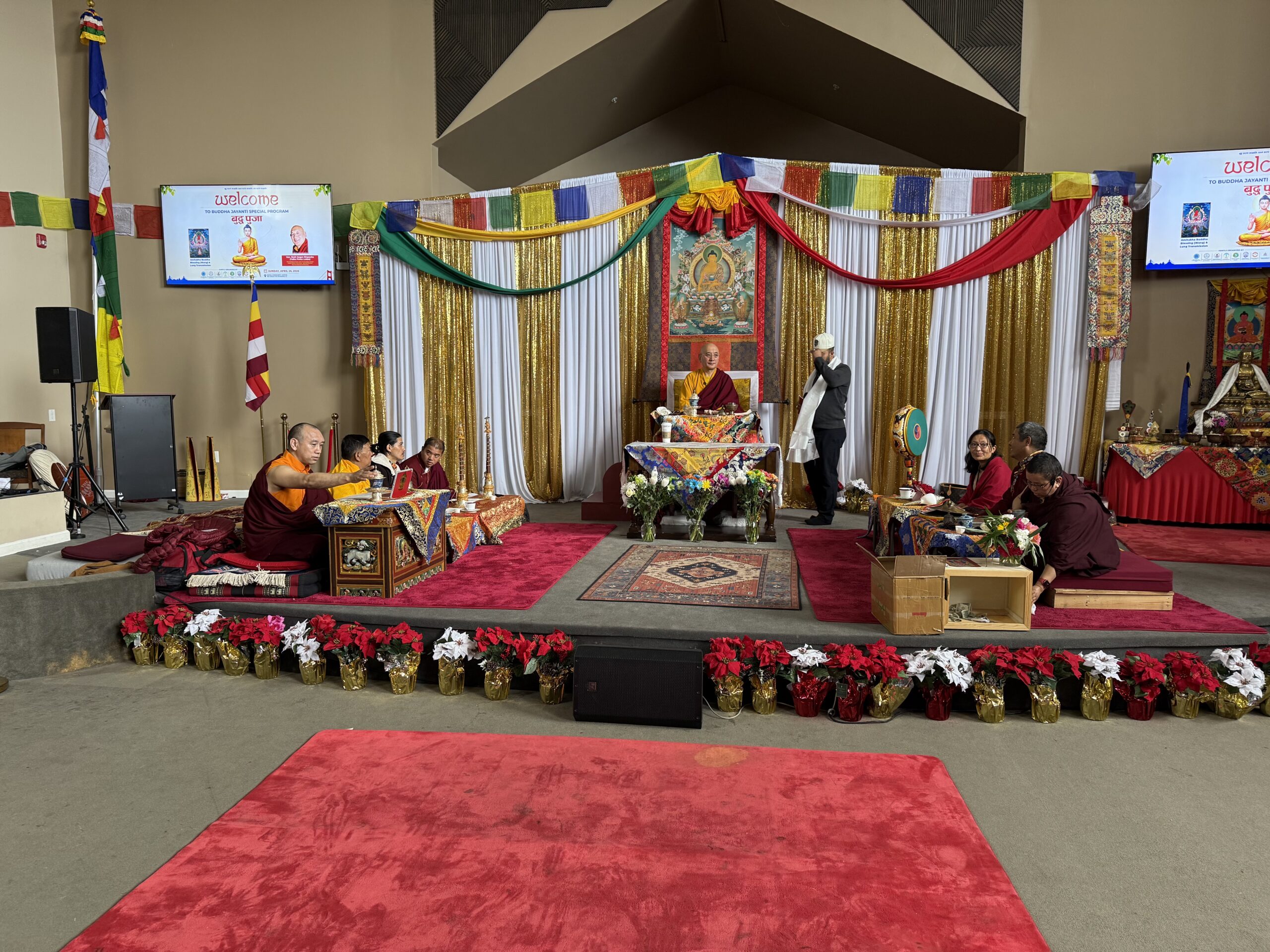
In the gentle unfolding of spring, when the air itself seems to carry a quiet renewal, the Nepali community of Northern California gathered in a spirit of reverence and reflection to celebrate Buddha Jayanti, the sacred commemoration of the birth, enlightenment, and parinirvana of Siddhartha Gautama, the Buddha. The event, held at the Nepali Community Hall in Richmond, became not merely a cultural gathering but a living mandala of devotion, wisdom, and shared humanity.
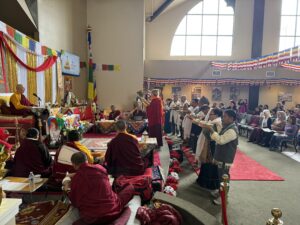
Organized collectively by a constellation of Nepali organizations, including the California Sherpa Association, Nepali Association of Northern California, Federation of Indigenous Nationalities of Nepal in California, Tamang Cooperation Society of California, Northern California Tamu Samaj, Magar Society of Northern California, Buddha Nepal Peace Foundation, and Newah Organization of America Northern California, the celebration reflected a rare unity across communities. In that unity, one could sense the deeper teaching of the Buddha that beyond identity and difference lies a shared aspiration for peace and awakening.
The event began with sacred Buddha prayers offered by venerable monks and members of the sangha. Their rhythmic chanting filled the hall with a profound stillness, as if time itself had paused to listen. The sound of prayers did not merely echo in the space, but gently settled into the hearts of those present, inviting each person into a moment of inner reflection.
The hall itself had been transformed into a sacred space. Draped in the five colored Buddhist flags symbolizing the elements and the harmony of existence, and adorned with images of the Buddha, it radiated a quiet luminosity. These colors, softly resting across the hall, seemed to echo an ancient truth that life, in all its diversity, is bound together by interdependence.
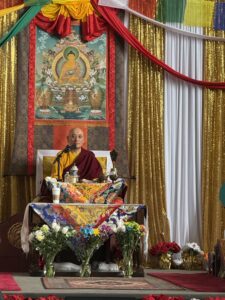
Presiding over the event as the Chief Guest was His Eminence the Sixth Sogan Rinpoche, Tulku Pema Lodoe, a revered reincarnate lama of the Sogan lineage. He is the head of Bayan Monastery and serves as the Spiritual Director of the Bay Area Dharma community. With a presence that was both serene and deeply grounded, Rinpoche embodies the living continuity of a spiritual tradition devoted to compassion and wisdom. His teachings arise not merely from study but from realization, carried with humility and clarity that gently reaches the hearts of listeners.
During the gathering, Rinpoche bestowed the empowerment of Amitabha Buddha, the Buddha of Infinite Light, along with teachings on the path leading to rebirth in Sukhavati, the Pure Land. This sacred empowerment opened a space for practitioners to connect with the deeper qualities of awareness and compassion within themselves. He explained the four causes necessary for being born in the Pure Land: the generation of bodhichitta, the accumulation of merit and wisdom, the clear visualization of Amitabha Buddha and his realm, and sincere aspiration expressed through prayer.
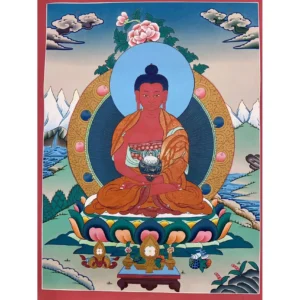
Rinpoche guided the audience into the visualization of Amitabha Buddha and his pure realm, describing it not as a distant heaven, but as a manifestation of purified perception. In this way, the Pure Land was revealed as something that begins within the mind when obscurations are gently released.
At the heart of his teaching was the arising of bodhichitta, the awakened mind of compassion. He explained the two forms of bodhichitta: the relative bodhichitta, which is the heartfelt wish to benefit all beings, and the ultimate bodhichitta, which realizes the true nature of reality beyond illusion and separation. Together, they form the path that unites wisdom and compassion.
He reminded the audience that life is marked by anitya, impermanence, a truth often understood intellectually but rarely felt deeply. In the fleeting nature of all things lies not despair, but a call to awareness. To recognize impermanence is to awaken urgency, to live meaningfully, and to cultivate what truly matters.
Turning to karma, Rinpoche emphasized that our present life is both the result of past actions and the ground for future becoming. He outlined the ten unwholesome actions arising from body, speech, and mind, urging practitioners to observe them not with guilt, but with clarity and responsibility. The path to purifying negative karma, he explained, lies not in avoidance alone, but in conscious transformation, through ethical conduct, meditation, wisdom, and above all, the cultivation of bodhichitta.
Prayers resonated throughout the hall, not as mere recitations, but as expressions of collective aspiration. Acts of merit “punya” were encouraged through the practice of the six paramitas: generosity, discipline, patience, diligence, concentration, and wisdom. These, Rinpoche explained, are not distant ideals but practical ways of living with awareness in daily life.
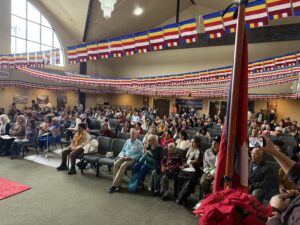
Hundreds of Nepali community members and local residents gathered for the celebration, sitting together in quiet devotion. Some listened deeply to the teachings, others joined in prayer, while many simply rested in the peaceful atmosphere that filled the hall.
In the end, the celebration of Buddha Jayanti in Richmond was not only a commemoration of a historical event, but a reminder of a living path. It gently pointed inward, toward the awakening of compassion, awareness, and wisdom within each individual.
As the gathering came to a close, what remained was not only the memory of prayers and teachings, but a subtle transformation, a quiet recognition that the light of the Buddha is not something distant, but something to be realized within the depth of one’s own being.