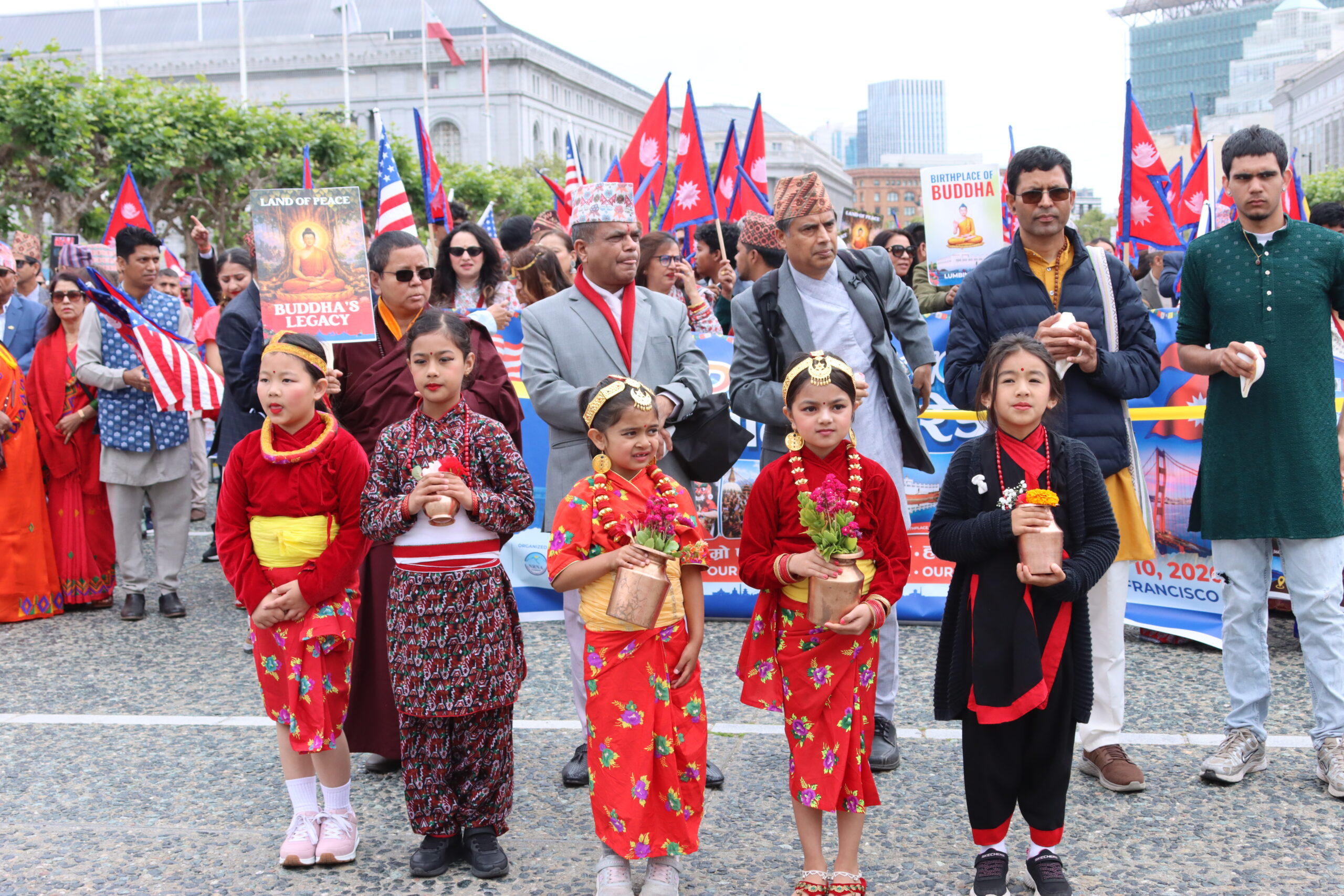
Under the theme “Celebrating Nepali Identity, Unity and Pride in Bay Area,” the event, organized by the NRNA California Chapter under the patronage of the Consulate General of Nepal, San Francisco, transformed the heart of San Francisco into something rare and beautiful, a living reflection of Nepal itself.
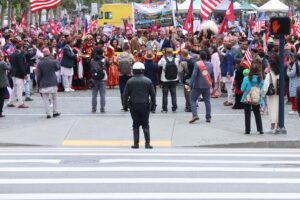
The parade began from the majestic grounds of San Francisco City Hall. Beneath its grand dome stood families, elders, children, youth, cultural leaders, and community members carrying with them memories of distant mountains, villages, temples, and ancestral traditions. Participants had arrived not only from the Bay Area and nearby Silicon Valley, but also from across the state of California, including Los Angeles, Sacramento, and many other cities where Nepali communities have steadily grown over the years.
Though the program was initiated by the NRNA California Chapter, the celebration became a collective effort involving Nepali organizations, cultural groups, religious communities, youth associations, and volunteers from throughout California. More than a single organizational event, Nepal Day Parade emerged as a shared platform to introduce Nepal’s identity, culture, spirituality, and diversity to the wider world.
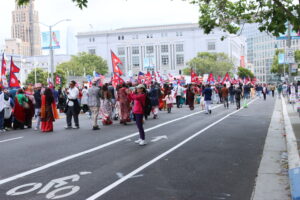
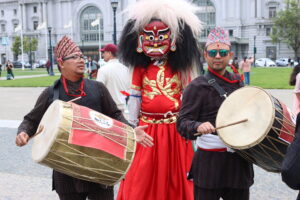
Then slowly, like a river flowing from the Himalayas toward the sea, the procession began moving along historic Market Street toward Embarcadero Plaza, escorted respectfully by the San Francisco Police Department. As the parade advanced through downtown San Francisco, the sounds of Panchai Baja rose into the morning air. The deep rhythm of drums and the cry of traditional instruments echoed between the tall buildings, carrying with them the spirit of Nepal’s villages, ceremonies, and celebrations. Nepali bhajans and devotional songs flowed gently through the streets, blending with laughter, conversation, and the sound of fluttering flags beneath the California sky.
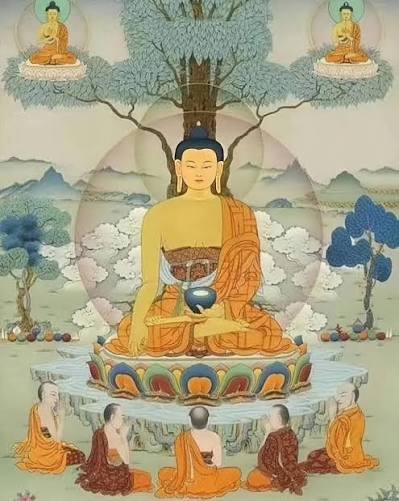
People carried the flags of Nepal and the United States side by side, their colors moving together in the cool ocean breeze. Others held portraits and symbols deeply connected to Nepal’s spiritual and cultural identity, images of Gautama Buddha, Mount Everest, Lumbini, and Pashupatinath Temple. These were more than decorations carried through a parade. They were reminders of homeland itself, carried lovingly across oceans into a new world.
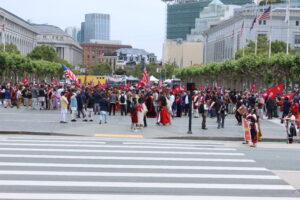
Different Indigenous group organizations together with many other Nepali organizations from across Northern California marched proudly beneath their own banners and traditional attire. The streets became a moving tapestry of color, music, heritage, and collective memory. Each step carried not only celebration, but also the quiet determination to preserve language, culture, and identity for future generations growing up far from the Himalayas.
Among the many spectators watching the parade were two tourists from Italy, Francesca and Carla, who stood enthusiastically along Market Street capturing photographs and videos of the celebration. Having recently traveled to Nepal and completed the Annapurna Trek, they were visibly moved by the atmosphere of the event. Watching the sea of traditional dresses, music, flags, and smiling faces flowing through San Francisco, Carla said with amazement, “I can’t believe there are so many Nepali people in San Francisco. I love Nepal.” Their words reflected something deeper than admiration for a parade. They revealed the quiet way Nepal leaves an imprint on those who have walked through its mountains, villages, and spiritual landscapes.
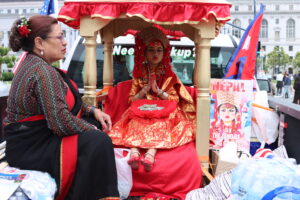
Among the most captivating moments of the parade was the appearance of the Kumari, the Living Goddess of Newar tradition, whose presence drew reverence and admiration from the crowd. Equally mesmerizing was the ancient Lhake Dance, whose masked performers brought a powerful spiritual energy into the streets of San Francisco. For a brief moment, Market Street no longer felt like the center of a modern American city. It felt ancient and sacred, as though the spirit of Nepal itself had emerged beside the Pacific Ocean.
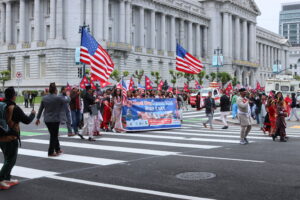
Leading the procession were the Pancha Kanya, walking gracefully at the front like symbols of harmony, purity, and auspiciousness. Behind them stretched a human river of culture and celebration. Thousands lined the sidewalks, while tourists and local residents stopped to watch as San Francisco slowly transformed into what many affectionately called “Mini Nepal.”
This year’s celebration carried an even deeper emotional resonance as it coincided with Mother’s Day in the United States. Amid the music, flags, and festivities, many participants reflected not only on their mothers, but also on the motherland itself, Nepal, the land that first gave them language, memory, identity, and belonging. Far from the Himalayas, the parade became a quiet expression of longing and gratitude toward the homeland carried within their hearts. For many immigrants, Nepal remains like a mother whose presence continues to nourish them even across oceans and generations. In that sense, the celebration was more than a public festival. It became a deeply personal remembrance of roots, sacrifice, and the enduring bond between people and the land from which they came.
The history of Nepal Day Parade in California, particularly in the San Francisco Bay Area, reaches back more than a decade. Its roots can be traced to as early as 2011, when the event was organized by Motherland Nepal with the vision of bringing together the growing Nepali diaspora through culture, unity, and shared identity. What began as a modest community gathering gradually evolved into one of the largest public celebrations of Nepali heritage in Northern California. More than a festival, Nepal Day Parade has become a living bridge between generations, preserving memory and tradition while introducing Nepal’s cultural richness to the broader American public.
By the time the procession reached Embarcadero Plaza, the waterfront had transformed into a grand cultural gathering filled with traditional dances, songs, performances, prayers, food, and communal celebration. Children danced in traditional dress while elders smiled quietly beside the Bay. The sound of music blended with the ocean wind as flags continued to wave beneath the open sky.
And for a brief moment in the cool air of San Francisco, far from the Himalayas yet spiritually close to them, it no longer felt as though Nepal was distant.
It felt as though Nepal itself had arrived beside the sea.