

Digital Bridges 4 Nepal: Building Bridges of Opportunity and Strengthening Communities Through Education
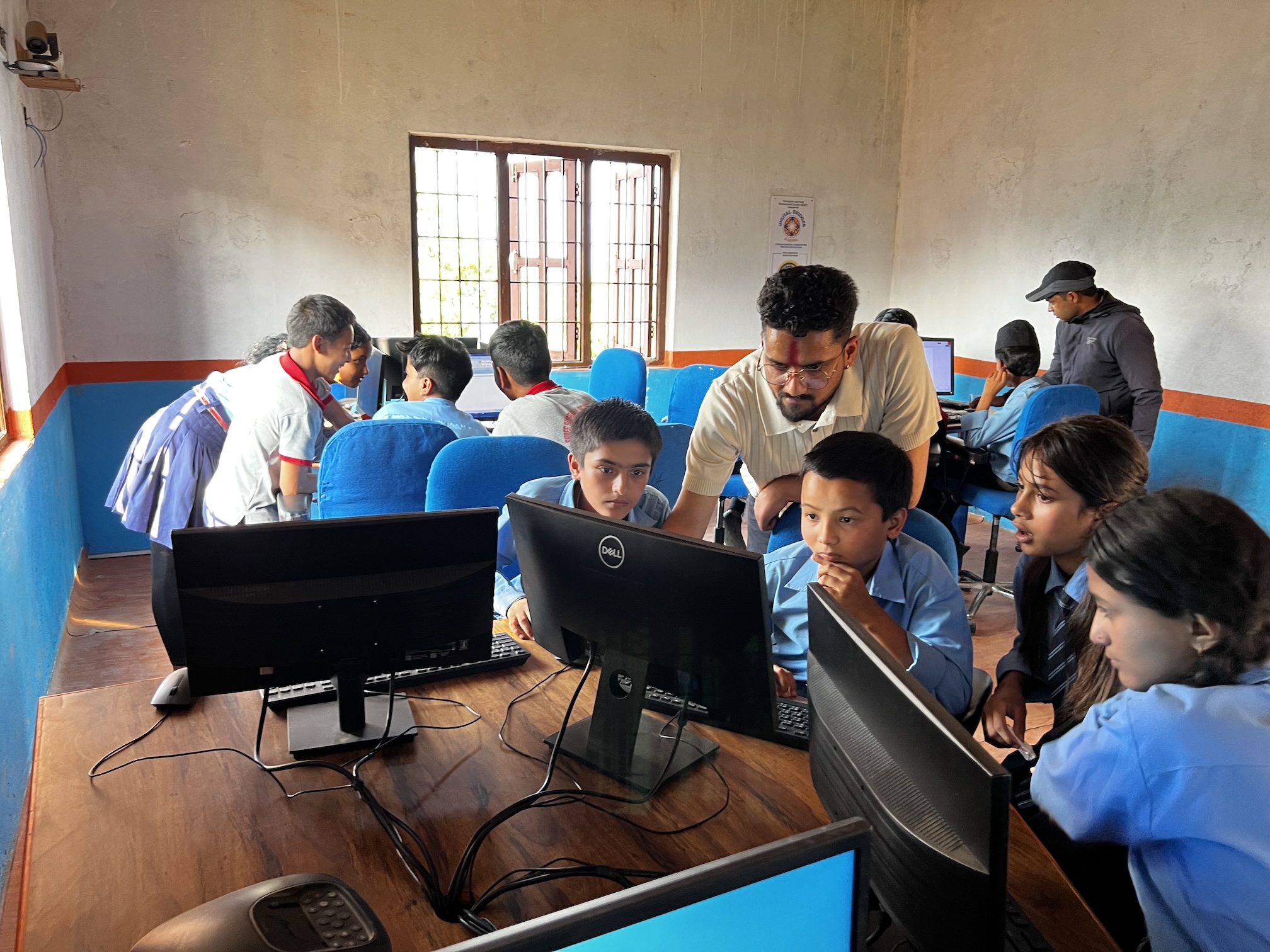
By Lhakpa Gelu Sherpa, San Francisco, California — In the remote mountains and valleys of Nepal, where villages are separated by rugged terrain and towering Himalayan peaks, thousands of children begin each school day with dreams of a brighter future. Yet for many students living in rural and underserved communities, access to computers, internet connectivity, and modern educational resources remains limited. While technology has transformed learning across much of the world, many schools in Nepal continue to face significant challenges in preparing students for the opportunities and demands of the digital age.
Bridging this educational divide is the mission of Digital Bridges 4 Nepal (DB4N), a nonprofit organization dedicated to expanding educational opportunities, empowering young people through technology, and strengthening communities through education.
The story of Digital Bridges 4 Nepal began following Nepal’s devastating 2015 earthquake. During his travels throughout the country, founder Antoine Edmond witnessed not only the physical destruction caused by the disaster but also the longstanding educational inequalities that existed between urban centers and remote villages.
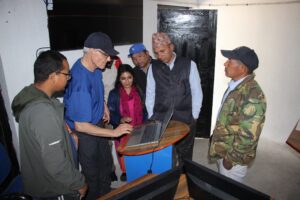 Photo Courtesy: Digital Bridges 4 Nepal
As he visited schools across Nepal, Edmond met students eager to learn, teachers devoted to serving their communities, and local leaders striving to create better opportunities for the next generation despite limited resources. What inspired him most was the determination and resilience of the Nepali people. He realized that while rebuilding infrastructure was essential, providing access to technology and modern educational tools could have a profound and lasting impact on the future of young people and their communities.
Motivated by this vision, Edmond founded Digital Bridges 4 Nepal with a simple but transformative goal: to connect remote communities to the opportunities of the digital age through education, technology, collaboration, and community partnership.
Today, Digital Bridges 4 Nepal operates as a United States-based 501(c)(3) nonprofit organization with offices in New York, New Jersey, and Kathmandu. Working closely with municipalities, schools, educators, parents, and local communities, the organization has become one of the leading initiatives advancing digital education throughout rural Nepal.
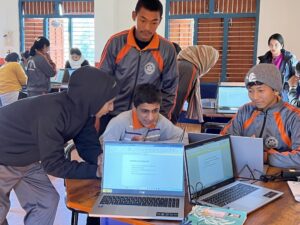 Photo Courtesy: Digital Bridges 4 Nepal
At the heart of the organization’s mission is the Collaborative Learning Environment Center (CLEC), its flagship program. More than a traditional computer laboratory, a CLEC serves as a dynamic learning hub where students gain access to technology, conduct research, collaborate on projects, develop critical-thinking skills, and engage with educational resources that broaden their understanding of the world.
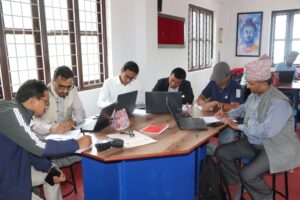 Photo Courtesy: Digital Bridges 4 Nepal
The organization also invests heavily in teacher development. Through specialized training programs, educators learn how to effectively integrate technology into classroom instruction, transforming learning from rote memorization into a more engaging process of exploration, creativity, and problem-solving.
This comprehensive approach has generated remarkable results. According to the organization, more than 1,170 students have directly benefited from access to modern educational technology. In 2025 alone, more than 517 students participated in supported programs, while over 54 teachers received technology-focused training between 2019 and 2025. Schools participating in the initiative have reported increased student engagement, improved digital literacy, and stronger performance in Information and Communication Technology (ICT) education.
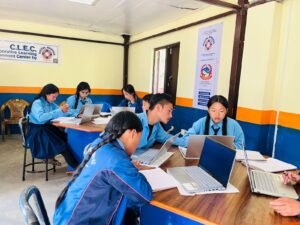 Photo Courtesy: Digital Bridges 4 Nepal
The organization’s footprint now extends across some of Nepal’s most geographically isolated regions. To date, Digital Bridges 4 Nepal has successfully established 20 Collaborative Learning Environment Centers in districts including Kalikot, Mustang, Manang, Gorkha, Syangja, Kathmandu, Solukhumbu, Khotang, Udayapur, and Morang. In many of these communities, students experienced their first interaction with computers and digital learning tools through the organization’s programs.
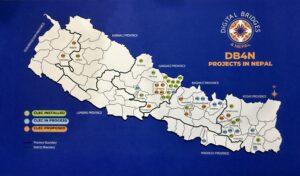 Photo Courtesy: Digital Bridges 4 Nepal
The work, however, is far from complete. Currently, 12 additional CLECs are under development in Gorkha, Parbat, Sindhupalchok, Dolakha, Mahottari, Khotang, Dhankuta, and Morang districts. Future centers have also been proposed in Achham, Bajura, Lamjung, Nawalpur, Nuwakot, Kathmandu, Sindhupalchok, Okhaldhunga, and Solukhumbu, reflecting the organization’s ambitious vision to expand educational opportunities throughout Nepal.
The organization’s future plans were highlighted during a recent gathering in San Francisco, where supporters, educators, community leaders, and members of the Nepali diaspora came together to learn more about Digital Bridges 4 Nepal’s achievements and aspirations.

Addressing the audience, Claude Roussel, President of Digital Bridges 4 Nepal USA, outlined the philosophy guiding the organization’s work. He emphasized that Digital Bridges 4 Nepal is not focused on constructing school buildings. Instead, the organization seeks to transform what happens inside existing schools by creating technology-enabled classrooms, developing educational curricula, providing digital learning resources, and equipping teachers with the skills necessary to prepare students for the future.
“We are not building schools,” Roussel said. “We are building opportunities.”
He explained that a modern educational environment requires far more than walls and a roof. It requires access to knowledge, technology, innovative teaching methods, and opportunities for students to engage with a rapidly changing world.
“Our goal is to help students become critical thinkers, problem-solvers, and confident participants in a global society,” he said.
Roussel also shared the organization’s ambitious growth strategy, noting that Digital Bridges 4 Nepal hopes to establish between fifteen and twenty new CLECs every year, significantly expanding access to digital education throughout rural Nepal.

Speaking at the event, Phurnyima Sherpa, Treasurer of Digital Bridges 4 Nepal USA, emphasized that education remains one of the most powerful tools for creating lasting social change.
He noted that the organization’s mission extends far beyond providing computers and internet access. According to Sherpa, the ultimate goal is to empower young people, create opportunities, and strengthen communities through education.
“Every child deserves the opportunity to learn, grow, and realize their full potential, regardless of where they are born,” Sherpa said. “Education changes lives. It empowers individuals, uplifts families, and transforms communities.”
Sherpa expressed gratitude to the volunteers, educators, donors, local governments, and community partners whose support has made the organization’s accomplishments possible. He noted that the success of Digital Bridges 4 Nepal demonstrates what can be achieved when people unite around a shared vision of educational equity and opportunity.
He also called upon the global Nepali diaspora to become more actively involved in supporting educational initiatives throughout Nepal.
“The Nepali community abroad possesses tremendous talent, experience, and resources,” Sherpa said. “By working together, we can help ensure that children in even the most remote parts of Nepal have access to the tools and opportunities they need to succeed in the modern world.”
According to Sherpa, supporting education is one of the most meaningful investments that individuals can make because its impact extends across generations.
“Every contribution matters,” he said. “When we invest in education, we invest in Nepal’s future.”
Both Roussel and Sherpa stressed that sustainable development is most successful when communities work together. Schools, local governments, teachers, parents, students, international supporters, and the Nepali diaspora all have important roles to play in creating lasting educational change.
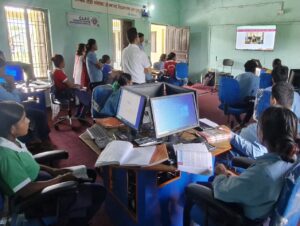 Photo Courtesy: Digital Bridges 4 Nepal
For Digital Bridges 4 Nepal, the mission extends beyond installing computers or internet connections. The organization seeks to cultivate a culture of learning, innovation, empowerment, and opportunity that benefits entire communities for generations to come.
As the gathering concluded, participants left with a renewed appreciation for the transformative power of education and technology. What began as one individual’s response to the challenges he witnessed in post-earthquake Nepal has evolved into a growing movement dedicated to connecting remote classrooms with the wider world.
In a nation where mountains often create physical barriers, Digital Bridges 4 Nepal is building a different kind of bridge, one made not of steel or concrete, but of knowledge, opportunity, hope, and a steadfast commitment to strengthening communities through education.
With every classroom connected, every teacher trained, and every student empowered, that bridge reaches a little farther toward a brighter, more equitable, and more prosperous future for Nepal.
To learn more about and support Digital Bridges 4 Nepal’s mission of strengthening communities through education, please scan the QR code below or visit the website at https://www.digitalbridges.org.



United Sherpa Association Transfers $30,521 to Nepal’s Prime Minister’s Disaster Relief Fund
2 weeks ago
Global Sherpa Conference 2026: A Global Gathering to Preserve Heritage, Identity and Unity
2 weeks ago