Flowing through the heart of the Kathmandu Valley, the Bagmati River begins its journey in the quiet forested hills of Shivapuri and winds past one of Hinduism’s most sacred sites, the Pashupatinath Temple, before crossing into India and eventually joining the Ganga. For centuries, the river sustained life, culture, and spirituality in Nepal’s capital. Today, however, the Bagmati stands as a stark symbol of unchecked urban growth and environmental neglect, widely regarded as the most polluted river in the country.
The cultural and ecological importance of the Bagmati
The Bagmati originates at Bagdwar in the Shivapuri Hills, at an elevation of about 2,690 metres above sea level. It forms the backbone of a complex river system that includes seven major tributaries and several smaller sub-tributaries, all of which weave through the Kathmandu Valley.
As Nepal’s oldest river, the Bagmati holds deep religious meaning for Hindus. It is believed to possess purifying powers and has long been central to rituals, festivals, and daily life. The river supports nearly three million people in and around the valley, providing water for agriculture, household use, bathing, and traditional livelihoods.
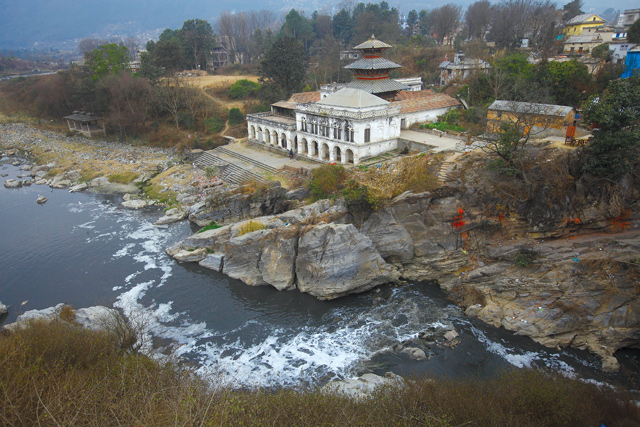
Its passage through the Pashupatinath Temple area gives it unparalleled spiritual significance. The riverbanks at Aryaghat, one of Nepal’s most important open-air cremation sites, host daily funeral rites, reinforcing the belief that the Bagmati connects the living, the dead, and the divine. In this sense, the river is not only a physical feature but also the foundation of Kathmandu’s civilisation.
Yet this sacred river has deteriorated dramatically. What was once clear and life-giving has become foul-smelling, dark, and biologically unsafe, threatening ecosystems, public health, and even the cultural practices tied to it.
How pollution took hold
The pollution of the Bagmati reflects the broader challenges of rapid urbanisation in the Kathmandu Valley. Industrial growth, population expansion, and weak environmental governance have combined to overwhelm the river’s natural capacity to cleanse itself.
Industrial and household wastewater
Factories and workshops that sprang up along the riverbanks have long discharged untreated waste into the Bagmati. These effluents contain hazardous chemicals, heavy metals, and organic pollutants that severely degrade water quality.
However, industry is only a small part of the problem. Studies show that domestic wastewater accounts for more than 90 percent of the total wastewater in the valley. While most households now have toilets, the lack of adequate sewage treatment systems means that wastewater is often released directly into rivers and streams. As a result, sanitation infrastructure has expanded on paper, but pollution has continued unchecked in practice.
Untreated sewage flowing into the river
Untreated sewage remains the single largest contributor to Bagmati pollution. More than 95 percent of wastewater generated in the Kathmandu Valley is estimated to enter water bodies without any form of treatment.
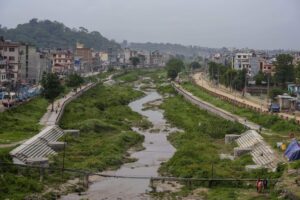
Projections made a decade ago already warned that existing and planned wastewater treatment plants would be insufficient. Those warnings have proven accurate. Pollution levels surpassed earlier projections even before 2020, highlighting the gap between infrastructure planning and the reality of urban growth.
Solid waste and plastic pollution
Solid waste mismanagement has further compounded the crisis. Open dumping along riverbanks is common, and waste ranging from plastics and textiles to metal and organic refuse regularly finds its way into the Bagmati.
Research suggests that over 60 percent of solid waste in the Kathmandu Valley is dumped in streets or near rivers, and roughly a quarter of it eventually reaches open water. One study estimated that around 70,000 plastic fragments move through the Bagmati each day. These materials choke aquatic life, disrupt ecosystems, and break down into microplastics that persist for decades.
Religious practices under pressure
Ironically, the river’s sacred status has also contributed to its pollution. Religious festivals draw thousands of devotees to the riverbanks, where offerings such as flowers, garlands, food, and ritual materials are often discarded into the water.
At Pashupatinath, an average of nearly 40 cremations take place daily. Ashes and partially burned remains are traditionally released into the river, a practice rooted in centuries-old beliefs. While culturally significant, the cumulative impact of these activities has added to the river’s already heavy pollution load, especially in the absence of proper waste management around religious sites.
Environmental and public health consequences
The Kathmandu Valley has experienced rapid population growth, with urban expansion outpacing environmental planning. The continued discharge of untreated waste into the Bagmati has severely degraded the valley’s environment and undermined sustainable development.
Polluted river water is closely linked to public health risks. Contaminated water contributes to waterborne diseases such as diarrhoea, which remain a major cause of preventable deaths worldwide. In Nepal, mortality linked to unsafe water, sanitation, and hygiene remains significant.
Despite Nepal being rich in freshwater resources, Kathmandu faces chronic water scarcity. River pollution, over-extraction of groundwater, and the drying up of traditional water sources have forced residents to rely on tanker water or spend hours queuing at limited public taps.
Government testing in 2023 revealed that a quarter of drinking water samples in Kathmandu contained faecal coliform bacteria. Contamination was found across multiple sources, including tap water, tanker water, wells, and even water linked to the Melamchi supply system, underscoring the scale of the crisis.
Efforts to restore the river
Over the years, multiple initiatives have aimed to revive the Bagmati. Wastewater treatment plants were built as early as the 1980s, and later expanded under projects supported by the Asian Development Bank. Constructed wetlands have also been introduced as a nature-based method to treat wastewater.
A major intervention came with the Bagmati River Basin Improvement Project, which sought to increase dry-season water flow by storing monsoon rainfall in dams such as Dhap and the planned Nagmati reservoir. The idea was to dilute pollution and flush waste downstream.
However, these projects have faced criticism. Environmentalists warn that large dams could disrupt natural ecosystems and require the clearing of tens of thousands of trees. Experts also argue that increasing water flow alone cannot clean the river if sewage and solid waste continue to enter it unchecked.
Community-led initiatives have shown more visible results. The Bagmati River Clean-up Mega Campaign, launched in 2013, removed tens of thousands of tonnes of waste over a decade and helped raise public awareness. Yet even after years of cleanup drives, the river remains unsafe.
Scientific studies published in 2023 detected widespread contamination with antibiotic-resistant bacteria along the Bagmati. Many of these bacteria were resistant to multiple antibiotics, pointing to ongoing sewage discharge and serious health risks for communities living nearby.
Can the Bagmati be saved
Experts increasingly agree that restoring the Bagmati requires more than engineering projects. Watershed specialists have stressed the need for a holistic approach that combines infrastructure, policy reform, community participation, and long-term environmental planning.
Without controlling pollution at its source, even the most ambitious river restoration projects are unlikely to succeed. True recovery will depend on effective sewage treatment, strict waste management, enforcement of environmental regulations, and meaningful involvement of local communities.
A shared responsibility
Like the Ganga in India, the Bagmati is both a sacred river and a mirror of human impact. Across South Asia, rivers with deep cultural significance are among the most polluted. Regional cooperation, shared research, and collective action could offer more effective and affordable solutions.
If current trends continue, pollution will keep eroding biodiversity, public health, and cultural heritage along the Bagmati. Protecting this river is not only an environmental necessity but also a moral obligation to preserve a living symbol of Nepal’s history and spiritual identity.