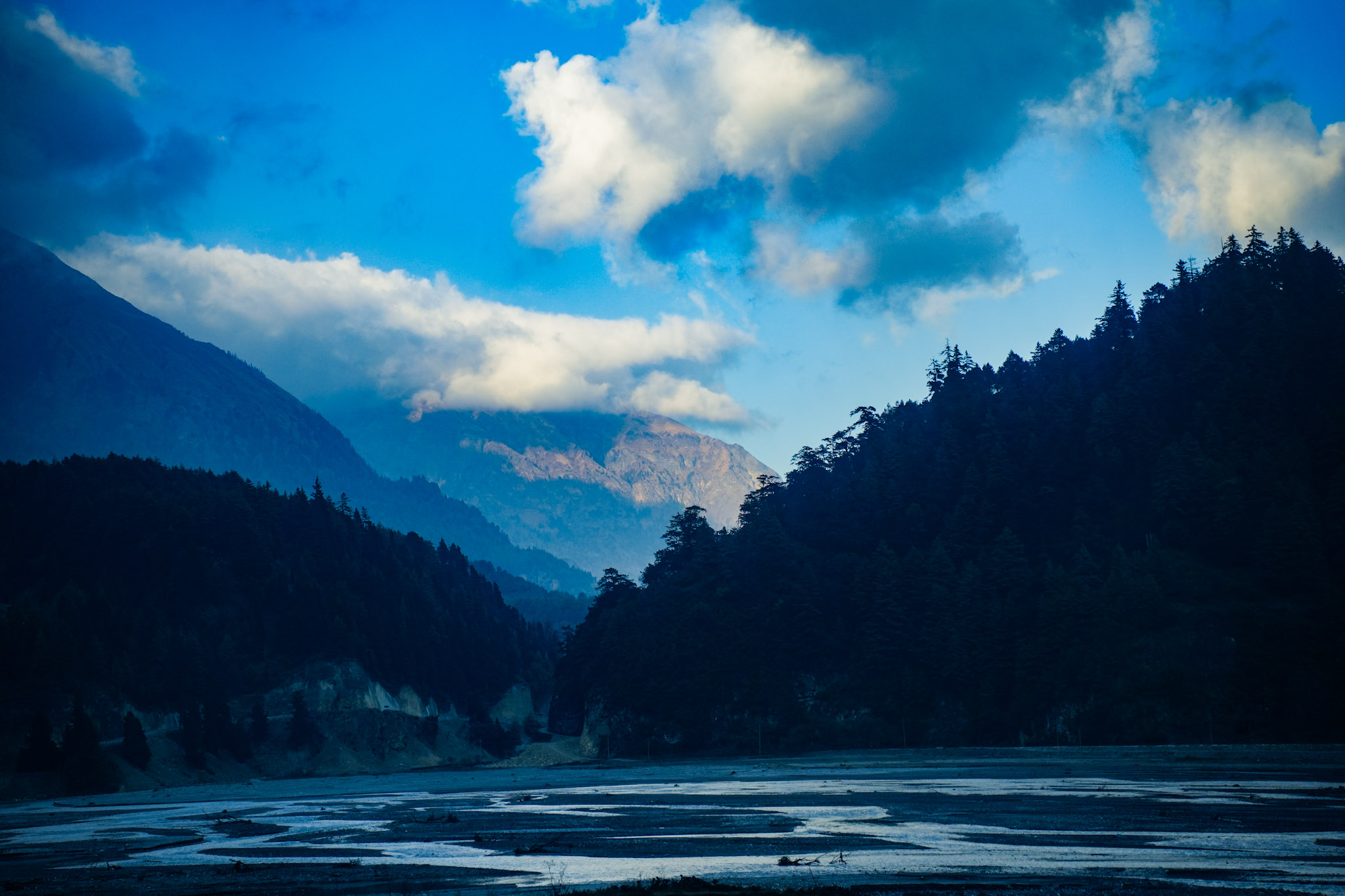


Climate change in Nepal is no longer a distant environmental concern confined to policy workshops or international conferences. It is a structural transformation unfolding across the country’s geography, economy, and social fabric. Scientific data, combined with lived experience across the Himalayas, mid hills, and Tarai plains, makes one reality unmistakable: climate change must be understood as the defining development challenge of twenty first century Nepal.
Recent events from the Himalayas to the Tarai have proven that climate change is not only about forests and the environment. The floods in Tilagaun of Humla, the glacial flood from the Tibet region into Rasuwa, the glacial lake outburst in Thame, the devastating Melamchi flood, repeated inundation in the Kathmandu Valley over the past two years, abnormal drought and flooding in Tarai districts, and increasing landslides and soil erosion in mid hill and mountain regions are all indicators of climate change impacts. These are no longer future projections described in scientific models. They are present day realities shaping livelihoods, infrastructure stability, food security, migration patterns, and public finance.
Despite this, political discourse in Nepal continues to treat climate change largely as an environmental agenda rather than a central development framework. Election manifestos mention forest conservation, renewable energy, and international climate participation. However, the deeper structural implications of climate risk for infrastructure design, fiscal planning, agricultural transformation, energy security, and national stability remain insufficiently integrated into mainstream governance.
Scientific evidence demands a far more comprehensive response.
Accelerated Warming in the Hindu Kush Himalayan Region
The Intergovernmental Panel on Climate Change Sixth Assessment Report confirms that high mountain regions are warming faster than the global average. The Hindu Kush Himalayan Assessment by the International Centre for Integrated Mountain Development reports that regional temperatures have already risen by approximately 1.3 degrees Celsius compared to pre industrial levels. Under high emission scenarios, warming in the region could exceed 3 to 5 degrees Celsius by the end of this century.
This amplified warming has direct cryospheric consequences. A landmark 2019 study published in Science Advances found that glacier mass loss in the Himalayas has doubled since the late twentieth century. Glaciers across Nepal are retreating at accelerated rates, losing significant ice volume annually.
The immediate effect of accelerated glacial melt is the expansion of glacial lakes. Nepal now hosts dozens of lakes classified as potentially dangerous due to unstable moraine dams. As temperatures rise, meltwater accumulation increases hydrostatic pressure behind these fragile natural dams, heightening the probability of glacial lake outburst floods.
The glacial lake outburst in Thame and the transboundary glacial flood affecting Rasuwa illustrate how cryospheric instability translates directly into economic vulnerability. Hydropower facilities, tourism infrastructure, bridges, roads, and downstream settlements all become exposed to sudden catastrophic surges.
In the short term, increased meltwater may augment river flows. In the long term, continued glacier shrinkage threatens dry season water availability, which is critical for irrigation and hydropower generation. Thus, glacier retreat simultaneously intensifies flood risk and undermines long term water security.
Intensifying Precipitation and Landslide Hazard
Basic climate physics provides further insight. According to the Clausius Clapeyron relationship, the atmosphere can hold approximately seven percent more moisture for every one degree Celsius increase in temperature. This means warming increases the intensity of rainfall events even if total annual rainfall does not rise dramatically.
Climate models for South Asia project increasing frequency of short duration, high intensity rainfall events. In Nepal’s geologically fragile mid hill and mountain regions, rainfall intensity is a primary trigger of landslides. Geotechnical studies demonstrate that slope failure probability increases sharply once rainfall thresholds are exceeded.
The floods in Tilagaun of Humla and repeated landslides across the mid hills are consistent with this scientific understanding. The Melamchi disaster further exemplifies compound hazard dynamics. Extreme rainfall, combined with sediment surges and upstream instability, devastated drinking water infrastructure, agricultural land, bridges, and homes.
Compound events are increasingly recognized in climate science. When heavy rainfall coincides with glacial instability, weak land use regulation, or sediment accumulation, impacts multiply.
Infrastructure built using historical rainfall averages does not account for these evolving extremes. Roads cut into unstable slopes, hydropower tunnels constructed without updated sediment projections, and settlements developed along floodplains become increasingly vulnerable.
Hydropower Dependence and Energy System Fragility
Nepal’s electricity generation relies predominantly on hydropower. While this provides a low carbon profile, it creates systemic vulnerability to hydrological variability.
Run of river hydropower projects depend on predictable seasonal discharge. However, climate change introduces multiple uncertainties. Accelerated glacial melt may temporarily increase river flows, but long term glacier loss reduces dry season discharge. Meanwhile, extreme rainfall increases sediment transport, damaging turbines and reducing plant efficiency.
Sedimentation is not merely a maintenance issue. High sediment loads shorten infrastructure lifespan, increase operational costs, and reduce generation reliability. Storage based hydropower may offer more regulation capacity, but dam safety becomes increasingly critical under intensified precipitation and potential seismic activity.
The International Energy Agency highlights diversification as a core resilience strategy for climate vulnerable countries. Solar and wind potential in Nepal remains underdeveloped relative to hydropower. Diversification reduces systemic exposure to hydrological shocks and enhances long term energy security.
Energy policy must therefore integrate hydrological modeling, sediment forecasting, and extreme event scenarios into project approval and financing frameworks.
Agricultural Vulnerability and Food Security
Agriculture remains central to Nepal’s economy, employing a significant share of the population. Yet it is highly climate sensitive.
Rising temperatures affect crop phenology, reduce yields of temperature sensitive crops such as wheat, and increase evapotranspiration rates. Heat stress in the Tarai may push certain crops beyond optimal growth thresholds.
Simultaneously, monsoon variability produces both floods and droughts. In some Tarai districts, abnormal flooding is followed by prolonged dry spells within the same year. The Asian Development Bank projects substantial agricultural productivity losses across South Asia under high warming scenarios if adaptation measures are not implemented.
Food security risks therefore intersect with rural income stability. Crop failure increases household vulnerability and accelerates migration pressures.
Climate resilient agriculture requires integrated irrigation systems capable of managing both flood and drought conditions, improved seed varieties, crop diversification, soil conservation, and climate indexed insurance mechanisms.
Urbanization and Escalating Flood Risk
Kathmandu Valley’s repeated inundation over recent years reflects the convergence of climate change and urban governance failures. Rapid urban expansion has replaced permeable surfaces with concrete. River corridors have been encroached upon. Drainage systems are outdated and insufficient for extreme rainfall events.
Hydrological modeling shows that flood damage increases sharply when rainfall intensity exceeds drainage design thresholds. As climate change intensifies extreme precipitation, urban infrastructure designed for past climate conditions becomes increasingly inadequate.
Climate resilient urban planning must prioritize watershed protection, stormwater management systems, floodplain zoning, and nature based solutions such as wetland restoration and green spaces.
Urban climate risk is no longer limited to riverbank settlements. It is a city wide governance issue.
Climate Induced Migration and Social Stability
Increasing landslides, soil erosion, glacial risks, and agricultural stress are gradually forcing communities to leave traditional settlements. Climate induced migration is unfolding incrementally in mountain and mid hill regions.
Research by the International Organization for Migration identifies climate mobility as a growing global phenomenon. Without formal recognition and policy planning, migration may strain urban infrastructure, increase informal settlements, and exacerbate inequality.
Planned, dignified relocation strategies based on risk mapping and livelihood planning are essential to prevent environmental vulnerability from escalating into social instability.
Recognizing migration as a policy reality is a critical step in climate governance.
Fiscal Exposure, Insurance, and Climate Finance
The World Bank estimates that climate change could significantly reduce Nepal’s GDP by mid century under high emission scenarios. Disaster reconstruction already consumes substantial portions of public expenditure.
Climate risk insurance, reinsurance systems, and catastrophe risk pooling mechanisms can reduce fiscal volatility. Large infrastructure projects such as hydropower plants, highways, and urban systems should incorporate mandatory climate risk insurance frameworks.
International climate finance remains essential. As a low emission yet highly vulnerable country, Nepal has strong moral and legal grounds for adaptation funding. However, accessing funds such as the Green Climate Fund requires credible scientific data, institutional transparency, and strong project design capacity.
Climate finance must support institutional strengthening, data systems, and long term resilience building, not merely short term project implementation.
Institutional Reform and Data Integration
Nepal’s climate governance remains fragmented across ministries. Comprehensive long term monitoring systems integrating glaciology, hydrology, meteorology, and geotechnical data are limited.
A unified national climate database is necessary to support evidence based policy. Early warning systems must be strengthened and linked to local governments and communities.
Climate change cannot remain confined to the Ministry of Forests and Environment. It directly affects finance, infrastructure, agriculture, energy, disaster management, and internal security. Whole of government coordination is required to align planning, budgeting, and accountability mechanisms.
Redefining Development in the Climate Era
The scientific evidence is unequivocal. The Hindu Kush Himalayan region is warming rapidly. Glaciers are retreating. Extreme rainfall events are intensifying. Agricultural systems are under stress. Infrastructure faces escalating hazard exposure.
The floods in Tilagaun of Humla, the glacial flood affecting Rasuwa, the Thame outburst, the Melamchi devastation, repeated Kathmandu inundation, abnormal Tarai droughts and floods, and increasing landslides are not isolated incidents. They are manifestations of a changing climate interacting with development choices.
Political parties must therefore move beyond symbolic acknowledgment of climate change. Every major development project must answer fundamental questions:
How are future temperature and rainfall projections integrated into design?
What hydrological and sediment models inform infrastructure standards?
How is fiscal risk managed?
Who is accountable if foreseeable climate risks are ignored?
Development that does not integrate climate science is structurally fragile and economically inefficient.
Conclusion: Resilience as National Strategy
Nepal contributes minimally to global greenhouse gas emissions, yet it stands on the frontline of climate impact. This moral asymmetry strengthens its claim in global climate negotiations. However, international advocacy must be matched by domestic transformation.
Climate informed governance must become the foundation of national planning. Infrastructure standards must reflect future climate realities. Energy systems must diversify. Agriculture must adapt. Urban planning must modernize. Migration must be managed strategically. Fiscal systems must internalize climate risk.
In the twenty first century, resilience is not a policy preference. It is the condition for national stability, economic sustainability, and long term prosperity.
Nepal’s path forward depends on recognizing climate change not as an environmental side issue, but as the central organizing principle of development itself.