
Letting Go of Ego, Hatred, and Delusion: Buddhist Master Knen Sangay Rangjung Rinpoche Inspires Nepali Diaspora

Sunday, June 30, 2025, North Carolina, USA
In a deeply spiritual and thought-provoking event hosted by the Nepali Community Center of North Carolina (NCCNC), the highly revered Tibetan Buddhist teacher Khen Sangay Rangjung Rinpoche delivered a public teaching that touched the hearts of many. The central message of his discourse emphasized that the root causes of human suffering—attachment (rāga), hatred (dveṣa), and ignorance or delusion (moha)—must be overcome in order to attain true peace and happiness.
Rinpoche’s visit was part of a special religious event organized to foster spiritual understanding within the Himalayan and broader Nepali diaspora in the United States. Delivered in the Tibetan language and translated into Nepali by Khenpo Pemachhiring Sherpa, the teaching drew a large and diverse audience, including monks, lay practitioners, students, and families.
Message of the Teaching: Cultivating Inner Purity
In his nearly ninety-minute-long teaching, Rinpoche focused on the inner transformation required to lead a meaningful life. “As long as we cling to the notion of ‘mine’ and allow our ego to dominate our thoughts, as long as we harbor jealousy towards others and fail to control the anger that arises within our mind, real happiness will continue to elude us,” he said.
Rinpoche emphasized that the cultivation of compassion (karuṇā) is not a theoretical ideal but a practical path. If one can look at all sentient beings with the tenderness and care that one would have for one’s own child, then the poisons of attachment, anger, and delusion will gradually weaken.
“Compassion is the medicine that cures the illness of self-centeredness,” he said. “True spiritual practice begins when one turns the light inward and purifies the mind.”
Host Community and Reflections
Dr. Bikash Shakya, President of the NCCNC, thanked Rinpoche for sharing timeless wisdom that offers guidance not only for Buddhists but for anyone seeking a more conscious and peaceful life. “Rinpoche’s teachings reminded us that spiritual realization is not about rituals alone but about a deep transformation of the heart and mind,” he said. “This event was held to help integrate Buddhist philosophy into our daily lives.”
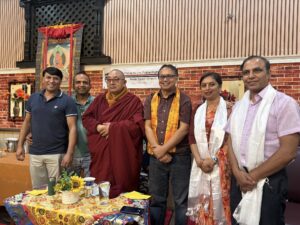
Photo credit: Everest Times
The program was opened by Kalpana Bhandari, General Secretary of the NCCNC, who formally welcomed Rinpoche and introduced him to the audience with a brief biographical note. Attendees had the rare opportunity to engage in direct dialogue with Rinpoche, asking questions on topics ranging from family life and meditation practice to handling modern-day stress through Dharma.
The event marked one of the most significant Dharma gatherings in the region in recent years, drawing interest from communities across neighboring states.
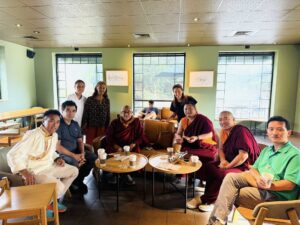
Photo Credit: Everest Times
Who Is Khen Sangay Rangjung Rinpoche?
A Lifetime of Study and Practice from Early Childhood
Born in 1960 in Dolakha district, a remote Himalayan region of eastern Nepal, Khen Sangay Rangjung Rinpoche entered the world of Buddhist learning at the tender age of seven. He was recognized early on for his profound devotion and intellectual brilliance. His journey into the profound teachings of Nyingma Buddhism, the oldest of the four major schools of Tibetan Buddhism, began under the guidance of Himalayan masters.
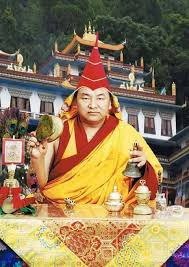
After completing his foundational monastic education in Nepal, Rinpoche pursued advanced studies in India. In 1994, he graduated from the prestigious Ngagyur Nyingma Institute at Namdroling Monastery in Bylakuppe, Karnataka, India—one of the world’s foremost centers for Nyingma Buddhist philosophy—earning the title of “Khenpo”, a Ph.D.-level degree in Buddhist studies. This title was formally conferred by the 11th throneholder of the Palyul lineage, His Holiness Drubwang Pema Norbu Rinpoche, one of the most respected figures in Tibetan Buddhism.
Rinpoche’s education did not end there. He received extensive empowerments, transmissions, and pith instructions from some of the greatest Tibetan Buddhist masters of the 20th century, including:
-
Dilgo Khyentse Rinpoche – a towering figure in the non-sectarian (Rimé) movement.
-
Dudjom Rinpoche and Dudjom Yangsi Rinpoche – heads of the Dudjom lineage.
-
Penor Rinpoche – head of the Palyul tradition of the Nyingma school.
-
Chatral Sangay Dorje Rinpoche – a reclusive Dzogchen master renowned for his fierce compassion and strict discipline.
Founder of a Thriving Monastic Institution in Nepal
In his mission to spread the Dharma, Rinpoche established the Ngagyur Phayul Urgyen Dorje Chöling Monastery at Pharping near Kathmandu, Nepal. This institution has grown into a respected center for monastic education and spiritual practice, now hosting over 600 monks. The monastery is officially recognized by Nepal’s Ministry of Education and offers a full spectrum of Buddhist scholastic training, including logic, philosophy, ritual studies, and meditation.
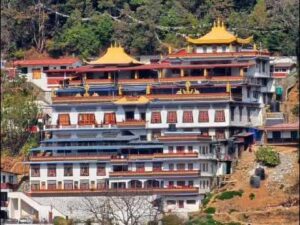
To date, the monastery has produced 15 Khenpos (senior Dharma teachers), and many of its senior students have gone on to pursue doctoral-level studies at Lumbini Buddhist University, Nepal’s premier academic institution for Buddhist education.
Rinpoche’s monastery is not only a place of study but also a spiritual refuge for those seeking to dedicate their lives to inner transformation through the path of the Buddha. In recent years, Rinpoche has extended his teaching activities internationally, visiting Europe, the United States, and Southeast Asia to teach the Dharma and support the growing global community of Himalayan Buddhists.
Legacy and Vision
Khen Sangay Rangjung Rinpoche is widely admired for his humility, clarity of thought, and depth of compassion. His teachings emphasize practical transformation over intellectual debate, encouraging practitioners to embody Dharma in every action, word, and thought.
His recent visit to North Carolina not only reaffirmed his role as a guiding light for Himalayan Buddhists in diaspora but also left an indelible impression on all who attended. As the world grows more fragmented and fast-paced, Rinpoche’s message rings loud and clear: “Without purifying the heart, there can be no peace—neither within oneself nor in the world.”