
“Nyungné: A Sacred Retreat of Fasting, Silence, and Compassion in Himalayan Buddhism”
Introduction
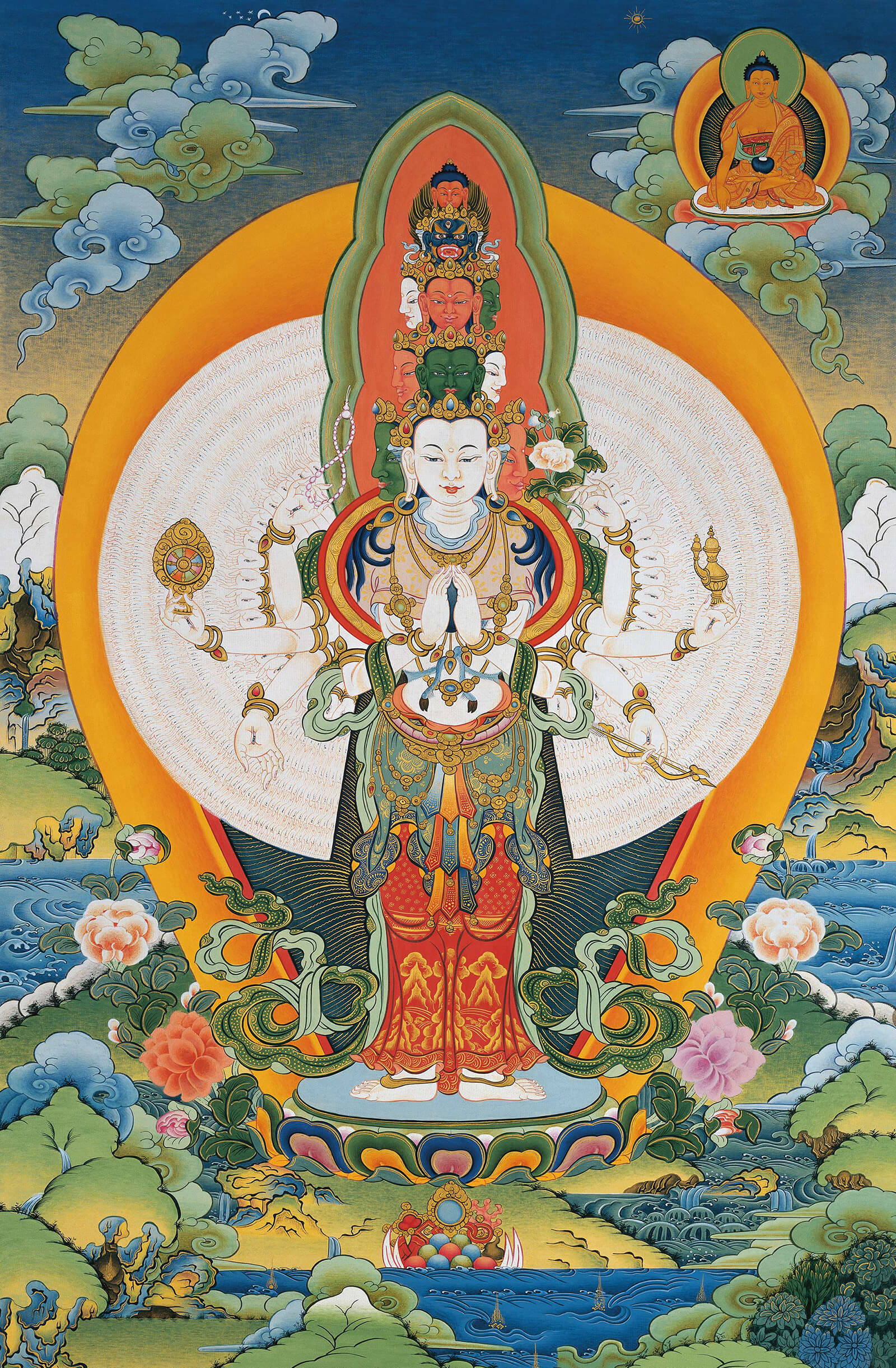
Nyungné, a Tibetan word often translated as “abiding in retreat” or “abiding in fasting,” is a deeply transformative practice in Tibetan Buddhism rooted in devotion, self-discipline, and the cultivation of compassion. At its core, Nyungné is a powerful method of purification and spiritual renewal centered on Avalokiteśvara (Chenrezig in Tibetan), the bodhisattva who embodies the infinite compassion of all the Buddhas. This intensive practice combines elements of fasting, silence, prayer, mantra recitation, visualization, and prostrations to bring the body, speech, and mind into harmonious alignment with the altruistic path of the bodhisattvas.
Nyungné is widely practiced across the Himalayan Buddhist world, especially in Tibet, Bhutan, Nepal, Ladakh, and increasingly in Western Buddhist centers. It holds particular significance during sacred times of the lunar calendar, especially the month of Saka Dawa, which commemorates the birth, enlightenment, and parinirvana of the Buddha. These holy days are believed to multiply the karmic effects of actions, making the merit of practices like Nyungné even more potent.
Traditionally undertaken in groups at monasteries, nunneries, or lay dharma centers, Nyungné retreats typically span two and a half days, though some practitioners choose to repeat the cycle many times. On the first day, participants observe a vegetarian diet and engage in extended sessions of practice, including mantra chanting (Om Mani Padme Hum), meditation, and visualizations of Avalokiteshvara in his Thousand-Armed form. The second day intensifies the commitment with a complete fast—no food, water, or speech—and a vow of total silence. Throughout, practitioners alternate between meditation sessions, devotional chanting, and full-body prostrations, symbolizing the purification of ego and the offering of one’s body, speech, and mind to the path of awakening.
Far from being merely an ascetic exercise, Nyungné is revered as a profound expression of inner transformation, helping practitioners cleanse obscurations, generate vast merit, and awaken the heart of compassion. It serves as both a ritual of purification and a gateway to deeper realization, making it especially valuable for laypeople and monastics alike who seek a powerful yet time-bound spiritual retreat.
History
The origins of the Nyungné practice are rooted in the extraordinary life and realization of Gelongma Palmo (also known as Bhikṣuṇī Pelmo), a legendary 11th-century female saint in the Vajrayāna Buddhist tradition. Revered as one of the earliest female mahasiddhas, she is believed by some to have been Princess Lakṣmīkara of the sacred land of Oḍḍiyāna, a region long associated with esoteric Buddhism and the birthplace of Padmasambhava.
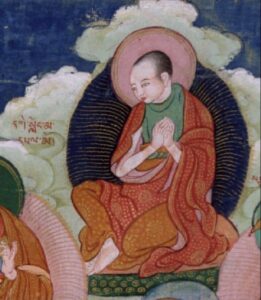 Gelongma Palmo (also known as Bhikṣuṇī Pelmo),
Born into nobility and raised amidst luxury, Gelongma Palmo developed a profound inclination toward spiritual life. Renouncing her royal status and material comforts, she took ordination as a nun and devoted herself wholeheartedly to the Dharma. However, her spiritual journey soon became even more arduous—she contracted a severe form of leprosy, which led to her being cast out from her monastic community and forced into seclusion in the wilderness.
Rather than succumbing to despair, Gelongma Palmo turned inward with unwavering faith. She began a strict daily discipline of fasting, meditation, and mantra recitation focused on the Thousand-Armed Avalokiteśvara, a luminous archetype of universal compassion. Over time, through her sincere and relentless practice—including countless recitations of the mantra Om Maṇi Padme Hūṃ and profound visualization—she experienced a direct vision of Avalokiteśvara, who blessed her with healing and bestowed upon her the realization of non-dual compassion. Her physical affliction was miraculously cured, and she attained a level of spiritual insight that resonated with the very heart of the bodhisattva path.
Her realization became the living source of the Nyungné practice, which was passed down through an unbroken lineage of accomplished yogis, teachers, and monastic institutions. Today, Nyungné is a widely respected and systematically taught retreat in Tibetan Buddhist lineages such as the Kagyü, Gelug, Sakya, and Nyingma, especially in Nepal, Bhutan, Tibet, and Himalayan communities. In modern times, it has also taken root in dharma centers throughout North America, Europe, and Asia, offering a time-tested path of transformation to practitioners around the world.
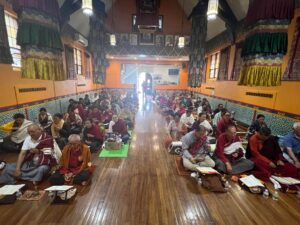 Nyungné Retreat at the United Sherpa Association Monastery, New York, 2024
Benefits
Nyungné is considered one of the most accessible and impactful retreat practices within the Vajrayāna tradition, especially for lay practitioners who seek deep spiritual benefit within a relatively short timeframe. Though its external form is strict—demanding fasting, silence, and physical effort—its inner rewards are manifold and profound.
1. Spiritual Purification
One of the central goals of Nyungné is to purify negative karma accumulated over countless lifetimes. Through the deliberate restraint of body (fasting and prostrations), speech (silence and mantra), and mind (meditation and visualization), practitioners systematically uproot emotional defilements such as pride, desire, anger, and ignorance. The retreat acts as a spiritual detox, restoring clarity and virtue to one’s inner life.
2. Cultivation of Compassion
Avalokiteśvara is the embodiment of infinite compassion, and every aspect of the Nyungné retreat is geared toward awakening that same quality within oneself. By invoking and internalizing the energy of Chenrezig through mantra, visualization, and supplication, practitioners gradually dissolve the barriers between self and others, expanding their capacity to care for all beings without exception.
3. Accumulation of Merit
Practicing Nyungné during auspicious periods such as Saka Dawa or other sacred days is said to multiply karmic results exponentially. Even a single cycle of the retreat is considered equal to months of ordinary practice in terms of merit accumulation. For those seeking favorable rebirths, spiritual accomplishments, or simply to remove obstacles in life, this practice is especially powerful.
4. Healing and Inner Strength
Many practitioners report that Nyungné has both physical and psychological healing effects. Fasting can help cleanse the body, while silence and prayer reduce mental turbulence. The intense focus on altruism and surrender nurtures emotional resilience, peace, and inner stability, which can help overcome chronic stress, trauma, and personal struggles.
5. Practical and Time-Efficient
Unlike longer retreats that require months or even years, Nyungné offers a complete and transformative experience in just two and a half days. It is therefore ideally suited to modern practitioners who wish to engage deeply with the Dharma while balancing family, work, or social responsibilities.
Whether practiced as a one-time purification, repeated in cycles, or integrated into a yearly schedule of retreats, Nyungné provides an intensive gateway into the compassionate heart of Mahāyāna Buddhism. It connects practitioners directly with the blessings of Avalokiteśvara, offering a rare opportunity to cleanse, renew, and reawaken the sacred potential within every being.