

SpaceX’s Starship Reaches Orbit but Fails Reentry in Latest Test Toward Mars Ambitions
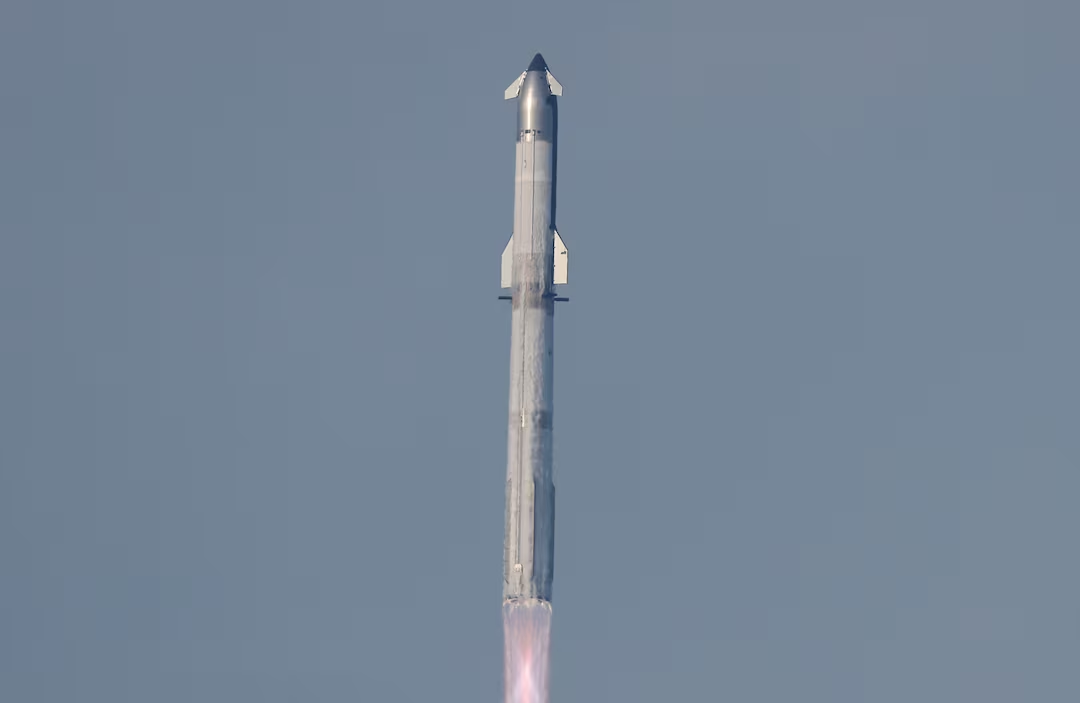
SpaceX moved one step closer to realizing its Mars ambitions on Tuesday with the latest test launch of its massive Starship rocket. The uncrewed flight, launched from the company’s Starbase facility in South Texas, marked significant progress after two previous attempts ended in failure. However, the mission ultimately fell short of full success after the spacecraft lost control and broke apart during reentry.
The launch, which took place just after 7:30 p.m. ET on May 27, 2025, saw Starship successfully lift off atop its powerful Super Heavy booster. The combined system, standing nearly 400 feet tall, is the largest and most powerful rocket ever built. It roared past the launch tower as all 33 of the Raptor engines ignited simultaneously, sending shockwaves that could be felt for miles around.

This was the first time a previously flown Super Heavy booster was reused. Of its 33 engines, 29 were also reused from a prior mission, making it a significant milestone for SpaceX’s goal of full rocket reusability. While the launch demonstrated impressive power and engineering, problems emerged once Starship reached its suborbital trajectory.
Shortly after reaching orbit, Starship experienced a propellant leak, which caused it to lose attitude control. The spacecraft began spinning uncontrollably, and mission control was unable to regain command. This led to the vehicle entering Earth’s atmosphere at an improper angle, which compromised its heat shield. SpaceX confirmed that the spacecraft likely disintegrated over the Indian Ocean. The company had cleared a large area of the landing zone in advance to ensure public safety.
“As if the flight test was not exciting enough, Starship experienced a rapid unscheduled disassembly,” SpaceX posted on X (formerly Twitter). “With a test like this, success comes from what we learn. Today’s test will help us improve Starship’s reliability as SpaceX seeks to make life multiplanetary.”
The mission was part of SpaceX’s iterative development strategy—launch, learn, adjust, and relaunch. The company had made several significant upgrades to the upper stage following the March 2025 test flight, which ended after multiple engine shutdowns and a catastrophic hardware failure. That flight also resulted in debris scattering across parts of South Florida and the Atlantic Ocean.
Tuesday’s test attempted to deploy mock Starlink satellites to evaluate payload deployment capabilities, but mission control was unable to open the satellite bay doors. This portion of the test will be revisited in future flights.
While no crew was aboard, and none is planned until a much later stage in the testing process, the stakes remain high. The ultimate vision, as laid out by SpaceX founder Elon Musk, is to make humanity a multiplanetary species by sending humans to Mars aboard Starship.
Despite the dramatic conclusion, the latest launch is a step forward. It demonstrated the rocket system’s capability to reach orbit and tested many new systems under real conditions. However, challenges persist—particularly in refining reentry procedures, ensuring vehicle stability in space, and managing the delicate systems involved in orbital flight.
Unlike previous missions where the Super Heavy booster returned to the launch site, this time it followed a modified trajectory and splashed down in the Gulf of Mexico. Video and data feeds were lost before impact, and SpaceX later confirmed the booster likely exploded before hitting the water.
For now, the team at SpaceX continues to review flight data, analyze what went wrong, and prepare for future launches. As Musk reminded his followers after the March failure: “Rockets are hard.” Tuesday’s mission served as another vivid reminder of that truth.