
Sushila Karki Appointed as Nepal’s First Female Prime Minister Amid Deadly Protests and Political Upheaval
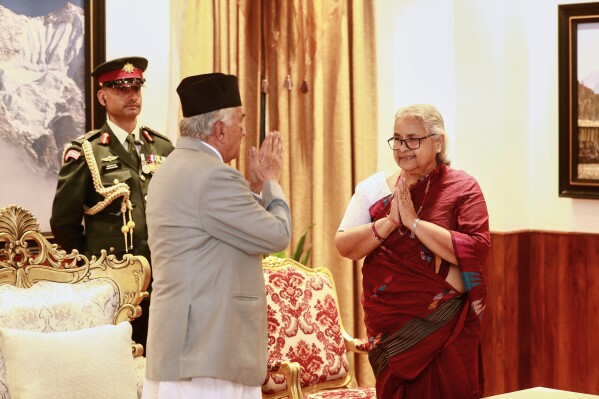
KATHMANDU, Nepal (AP) — Nepal’s President Ram Chandra Poudel on Friday appointed former Supreme Court Chief Justice Sushila Karki as the nation’s interim prime minister, making her the first woman to lead the Himalayan republic. The historic appointment comes after a week of violent unrest that forced the resignation of the previous government and left the country in deep political turmoil.
The president’s office announced that parliament has been dissolved and that fresh national elections will be held on March 5, based on the recommendation of Prime Minister Karki. The most recent legislative elections took place in 2022, but rising discontent and a collapse of order in the capital made early elections unavoidable.
Karki, 73, is widely known for her uncompromising stance against corruption during her judicial career. As Nepal’s first and only female chief justice from 2016 to 2017, she frequently challenged powerful political figures and was seen as a champion of judicial independence. In 2017, she narrowly survived an impeachment attempt by lawmakers who accused her of bias—an effort that was condemned as an assault on the judiciary and ultimately failed. Her record has earned her strong public respect, which the presidency hopes will help calm the present unrest.
She was sworn in Friday at the presidential residence in Kathmandu in a modest but symbolically powerful ceremony broadcast on state television. Dressed in traditional attire, Karki took the oath of office vowing to restore stability and oversee credible elections. The moment marked a major milestone in Nepal’s history, long dominated by male leaders from entrenched political families.
Her appointment follows one of the bloodiest weeks in Nepal in recent memory. Protests began Monday after the government imposed a sudden ban on popular social media platforms, including Facebook, X (formerly Twitter), and YouTube. Officials said the companies had failed to register locally or comply with government oversight, but the move sparked outrage, particularly among young people.
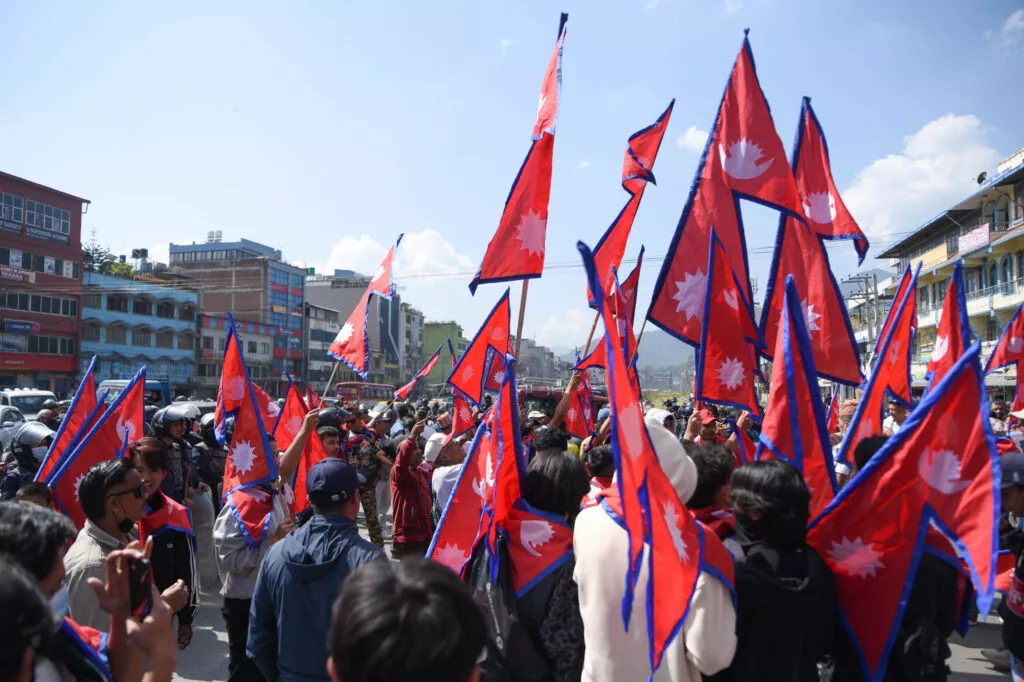
Although the ban was quickly lifted, demonstrations intensified under the banner of the “Protest of Gen Z.” Tens of thousands of mostly young protesters poured into the streets of Kathmandu, voicing anger over unemployment, inequality, and the dominance of “nepo kids”—the privileged children of political elites accused of living in luxury while most of the population struggles.
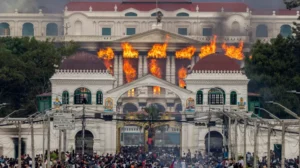
By midweek, the unrest had spiraled into violent confrontations. Demonstrators attacked government buildings, set fire to parliament, stormed the presidential residence, and vandalized businesses across the capital. Police opened fire on crowds, and clashes raged for days. Authorities confirmed at least 51 deaths, including dozens of protesters, three police officers, and several inmates who died during a prison riot in Kathmandu. Hundreds more were injured.
The violence forced Prime Minister Khadga Prasad Oli to resign on Tuesday. He fled his official residence under military escort as demonstrators approached the compound. That evening, the army moved in, imposed a strict curfew across Kathmandu, and began negotiations with protest leaders and the president’s office to create a pathway toward an interim government.
Since then, soldiers have patrolled the streets, allowing residents only limited hours each day to leave their homes for food and essentials. The capital still bears the scars of the week’s chaos, with burned-out vehicles, charred buildings, and shattered storefronts serving as reminders of the violence.
Now, the responsibility falls on Karki to stabilize the nation and prepare it for elections within six months. Analysts say her personal credibility and independence give her a unique opportunity to bridge divides, but the scale of public anger and the fragility of Nepal’s institutions will test her leadership immediately.
“This is no longer about social media bans,” said political analyst Gopal Sharma. “It is about a younger generation demanding change, demanding an end to corruption and nepotism, and demanding a place in Nepal’s future. Whether an interim government can meet those expectations remains uncertain.”
For many, Karki’s rise to leadership offers hope in the midst of tragedy. But with tensions still high and the country’s political system under severe strain, her tenure as Nepal’s first female prime minister will begin under some of the most difficult circumstances the young republic has faced.