By Lhakpa Gelu Sherpa
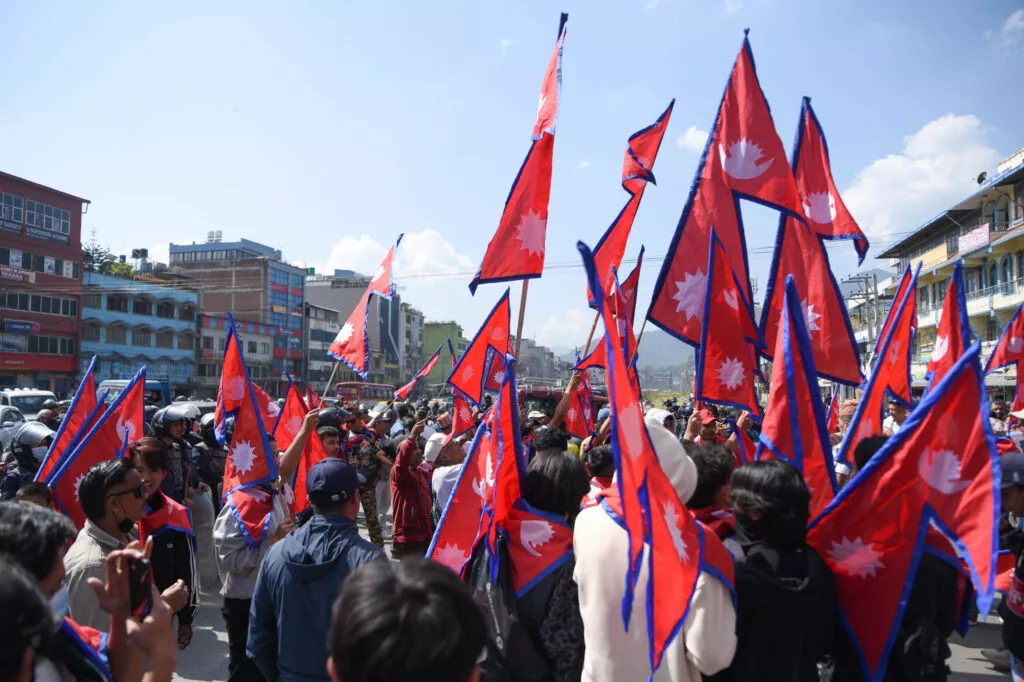
Nepal’s democracy has entered another important moment of reflection and transition. The recent electoral success of the Rastriya Swatantra Party (RSP) reflects a noticeable shift in the country’s political atmosphere and public expectations. For the first time in many years, a political force that emerged largely outside the traditional party establishment has captured the attention and imagination of voters across the country. Its appeal has reached beyond urban centers and younger generations, resonating with citizens of diverse regions, ethnic communities, age groups, and genders. Its central message, anchored in the ideals of democracy, transparency, and good governance, has strongly resonated with people who seek a more accountable and responsive political system.
The rise of the RSP reflects a broader change in Nepal’s democratic culture. After decades in which political leadership was dominated by established parties, many voters—especially young people who grew up in the democratic era, are increasingly eager to see new approaches to governance, institutional reform, and public accountability. The popularity of the party therefore represents not only the success of a single political organization but also a wider public desire for renewal within Nepal’s democratic institutions.
If the RSP moves toward forming or leading a government, Nepal may be entering the early stage of a new political chapter. Such developments are not unusual in evolving democracies; they often mark moments when societies reassess their political priorities and explore alternative leadership models. At the same time, this moment naturally raises important questions about the responsibilities and demands of democratic governance. Electoral success creates expectations among citizens that must eventually be translated into practical policies, administrative efficiency, and long-term national planning.
The enthusiasm surrounding youthful leadership and political newcomers reflects both the hopes and frustrations of a changing society. Many citizens view new leadership as an opportunity to break from past patterns of political competition, bureaucratic inefficiency, and slow decision-making. At the same time, democratic governance requires not only public support but also institutional experience, policy expertise, and the ability to navigate complex economic and diplomatic challenges.
For Nepal, the real test in the coming years will be the ability to transform the energy of political change into stable and effective governance. Public trust, high expectations, and the promise of reform must ultimately be supported by sound policy, capable institutions, and constructive cooperation across the political spectrum. In this sense, the current political moment represents both a hopeful opportunity and a significant responsibility for Nepal’s democratic future.
A New Political Moment in Nepal
Nepal’s contemporary political system has been shaped by a series of profound transformations over the past three decades. The People’s Movement of 1990 marked a historic turning point by ending the absolute monarchy and restoring multiparty democracy, opening the path for broader political participation and democratic governance. Yet the country’s political journey did not remain smooth. The Maoist insurgency from 1996 to 2006 challenged the state and exposed deep social and economic inequalities within Nepali society. The conflict ultimately compelled political actors to reconsider the structure of the state and the nature of national governance.
A decisive moment came with the People’s Movement of 2006, when citizens across the country mobilized to demand democratic reform and peace. The movement led to the Comprehensive Peace Agreement, which formally ended the decade-long conflict and initiated a new era of political transformation. In 2008, Nepal took another historic step by abolishing the centuries-old monarchy and declaring itself a federal democratic republic, setting the stage for the drafting of a new constitution and the restructuring of the state.
These historic transitions were largely guided by established political forces such as the Nepali Congress, the Communist Party of Nepal (UML), and the Maoist movement. Leaders from these parties played central roles in navigating the country through war, peace negotiations, constitution-building, and the complex process of establishing a republican political order. Their contributions helped create the institutional foundations upon which Nepal’s current democratic system stands.
Over time, however, public expectations toward governance have continued to evolve. As Nepal’s society has become more connected, educated, and politically aware, citizens have increasingly demanded greater transparency, efficiency, and responsiveness from their leaders. Concerns about corruption, bureaucratic delays, political fragmentation, and the slow pace of economic development have contributed to growing public debate about the effectiveness of traditional political structures. For many voters, particularly those under the age of forty who have grown up in the democratic era, the political establishment is sometimes perceived as struggling to keep pace with the country’s changing aspirations.
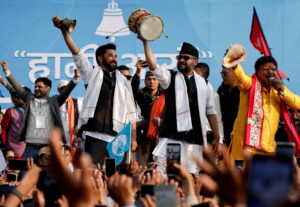
It is within this broader context that the rise of the Rastriya Swatantra Party (RSP) should be understood. The party’s growing popularity reflects not only the emergence of a new political actor but also a wider public desire for renewal, reform, and a more responsive system of governance. Its appeal demonstrates that Nepal’s democracy remains dynamic and capable of adaptation as citizens continue to shape the direction of the nation’s political future.
Populism and the Appeal of Outsider Leadership
Across many democratic societies, periods of public frustration often give rise to political movements that promise renewal and reform. In such moments, voters frequently turn their attention to leaders who present themselves as independent from traditional political establishments. Nepal, like many other democracies, has experienced a similar trend as citizens increasingly seek fresh ideas, new leadership styles, and stronger accountability in governance.
This sentiment became particularly visible during Nepal’s 2022 local elections, when Balen Shah was elected mayor of Kathmandu and Harka Sampang Rai was elected mayor of Dharan as independent candidates. Their victories attracted national attention because they demonstrated that voters were willing to look beyond established party structures. As a young and technologically adept leader, Shah connected with citizens, especially younger voters, through direct communication and active engagement on social media platforms. His campaign emphasized administrative efficiency, urban reform, and a commitment to transparent governance.
Since taking office, Shah’s administration has undertaken initiatives aimed at improving urban management in Kathmandu, including efforts to regulate urban planning, address unauthorized construction, and strengthen municipal enforcement mechanisms. These actions, widely discussed in public discourse, contributed to his growing popularity and reinforced the perception that non-traditional leadership could bring new energy into public administration.

More broadly, his rise reflected a gradual shift in political attitudes, particularly among younger Nepalis. Many began to believe that independent candidates or emerging political movements could offer alternative pathways to governance and challenge long-standing political patterns.
The Rastriya Swatantra Party (RSP) effectively captured this emerging public sentiment at the national level. Its campaign emphasized transparency, accountability, and institutional reform, themes that resonated strongly with voters who wished to see improvements in governance and public service delivery. For many supporters, the party represented an opportunity to encourage greater political responsiveness and a renewed focus on ethical leadership.
At the same time, the transition from political momentum to effective governance requires careful preparation and institutional capacity. Governing a nation involves managing complex economic policies, maintaining balanced diplomatic relations, navigating legislative processes, and implementing long-term administrative reforms. These responsibilities require not only public enthusiasm but also policy expertise, organizational strength, and the ability to work collaboratively within the country’s democratic institutions.
In this context, Nepal’s current political moment offers both opportunity and responsibility. The energy generated by new political movements has the potential to revitalize democratic participation, while the experience accumulated within existing institutions can help ensure stability and continuity. The challenge ahead will be to combine these strengths in a way that strengthens governance and supports Nepal’s long-term national development.
Youthful Leadership and the Question of Political Experience
One of the most visible features of Nepal’s current political transformation is the growing presence of young leaders in national politics. Their emergence reflects the aspirations of a generation that came of age after the restoration of democracy and during the establishment of Nepal as a federal democratic republic. This generation has grown up in a more open political environment, with access to education, technology, and global information networks. Naturally, many young Nepalis hope to see faster economic progress, more efficient governance, and stronger public institutions that can match their aspirations for the future.
The entry of younger leaders into politics therefore represents an important and positive development in Nepal’s democratic evolution. Youthful leadership can bring fresh perspectives, new ideas, and a willingness to experiment with innovative solutions to long-standing challenges. Younger politicians are often more comfortable with digital technologies, more open to modern administrative practices, and more inclined to communicate directly with citizens through new media platforms. In a country where a large portion of the population is under forty, such leaders are often able to connect effectively with the concerns and expectations of younger voters.
At the same time, the responsibilities of governing a nation extend far beyond energy and innovation. Effective governance requires navigating institutional systems that have developed over many decades. Managing national economic policy, conducting diplomacy with neighboring countries such as India and China, negotiating with international development institutions, and coordinating policies among federal, provincial, and local governments all demand significant political experience and administrative skill.
For this reason, the discussion surrounding populism and experience has become an important part of Nepal’s current political dialogue. Democracies are strongest when they are able to balance renewal with continuity. New leadership can introduce creativity and reform, while experienced leaders provide institutional memory, diplomatic understanding, and knowledge of governance processes. The challenge is not to choose between the two, but to allow them to complement one another in strengthening democratic institutions.
The Legacy of Nepal’s Older Political Leaders
While public debate often highlights the limitations of traditional political leadership, it is equally important to acknowledge the historic contributions made by earlier generations of Nepali leaders.
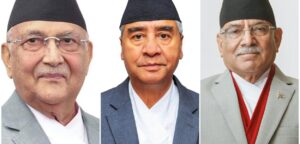
The restoration of multiparty democracy in 1990 was not an easy achievement. It was the result of sustained political struggle and sacrifice by democratic activists and political parties that worked to end authoritarian rule and open space for democratic participation. This movement laid the foundation for Nepal’s modern political system.
Similarly, during the difficult years of the Maoist insurgency, experienced leaders from multiple political parties played crucial roles in guiding the country toward peace. Their efforts ultimately led to the Comprehensive Peace Agreement of 2006, which formally ended the decade-long conflict and opened the door to a new political future.
Another milestone came with the adoption of the Constitution of Nepal in 2015, which established the framework for a federal democratic republic. Drafted after years of negotiation among diverse political forces, the constitution represents one of the most significant political transformations in the nation’s history. Although debate continues over some of its provisions, it remains the foundation of Nepal’s current political system.
The leaders who guided Nepal through these historic transitions possess valuable institutional knowledge and historical perspective. Their experiences in political negotiation, conflict resolution, and state-building can serve as important resources during periods of political change.
Rather than viewing Nepal’s political future as a choice between old and new leadership, it may be more constructive to see it as an opportunity for collaboration between generations. By combining the energy and innovation of younger leaders with the experience and institutional memory of earlier generations, Nepal can continue strengthening its democratic institutions and building a more stable and effective system of governance.
Lessons from Nepal’s Electoral History
Nepal’s democratic experience since the restoration of multiparty politics in 1990 offers important lessons about the relationship between electoral victory and effective governance. Over the past three decades, national elections have repeatedly demonstrated that while strong mandates can create opportunities for reform and stability, they do not automatically guarantee long-term political continuity. Democratic governance requires not only electoral legitimacy but also sustained political cooperation, institutional capacity, and policy consistency.
| Year |
Election Event |
Political Outcome |
Governance Lesson |
| 1991 |
First parliamentary election after restoration of multiparty democracy (following the 1990 People’s Movement) |
Nepali Congress won a majority. Government formed under Prime Minister Girija Prasad Koirala. |
A strong electoral mandate creates optimism, but internal party divisions can weaken governance. |
| 1994 |
Midterm parliamentary election |
Hung parliament. CPN UML formed a minority government under Man Mohan Adhikari. |
Minority governments often struggle to maintain long term policy stability. |
| 2008 |
Constituent Assembly election after the Comprehensive Peace Agreement |
Maoist party emerged as the largest political force. Monarchy abolished and Nepal declared a republic. |
Major political transformation requires broad cooperation to build new institutions. |
| 2017 |
Federal and provincial elections under the 2015 Constitution |
Left alliance (UML and Maoist Centre) secured a strong majority and formed government. |
Even strong electoral mandates can collapse if internal unity and institutional stability weaken. |
The 1991 parliamentary election, the first general election after the People’s Movement of 1990, marked a historic return to democratic rule. In that election, the Nepali Congress secured a clear parliamentary majority and formed the government under Prime Minister Girija Prasad Koirala. The victory generated significant optimism that Nepal had entered a stable democratic era. However, internal party divisions and increasing political competition soon created challenges for governance, illustrating the difficulties of consolidating democratic institutions in a newly restored political system.
Political fragmentation became more visible in the 1994 parliamentary election, which produced a hung parliament. The Communist Party of Nepal (UML) emerged as the largest party and formed a minority government under Man Mohan Adhikari. While the government introduced several social welfare initiatives, the absence of a stable majority made long-term governance difficult, and the country experienced frequent changes in leadership during the following years.
A new phase in Nepal’s electoral history began after the end of the decade-long civil conflict. The 2008 Constituent Assembly election, held after the Comprehensive Peace Agreement, produced a dramatic shift in political dynamics. The Maoist party emerged as the largest political force, reflecting strong public support for political transformation and social restructuring. This election also marked the formal transition from monarchy to republic. However, despite the Maoists’ electoral strength, the complex nature of coalition politics and the challenges of drafting a new constitution made stable governance difficult during the following years.
Nepal witnessed another major electoral moment during the 2017 federal and provincial elections, conducted under the new constitution adopted in 2015. In this election, the left alliance between the Communist Party of Nepal (UML) and the Maoist Centre secured a strong parliamentary majority. Many observers believed that such a decisive mandate could finally bring long-awaited political stability and policy continuity. Initially, the alliance did form a powerful government, and the two parties even merged to create a unified communist party. However, internal disagreements and factional tensions eventually led to the breakdown of the alliance and renewed political uncertainty.
These experiences highlight an important lesson in Nepal’s democratic evolution: electoral victories, even when decisive, must be supported by strong institutions, effective leadership, and political cooperation to produce sustainable governance. Parliamentary majorities can create opportunities for reform and development, but long-term stability depends on the ability of political leaders to maintain unity, build consensus, and strengthen democratic institutions.
As Nepal continues to navigate its democratic journey, these historical experiences provide valuable insights. They remind both political leaders and citizens that the success of democracy ultimately depends not only on electoral outcomes but also on responsible governance, institutional maturity, and a shared commitment to national progress.
Development Achievements Amid Political Turbulence
Despite experiencing frequent political transitions and changes in government over the past three decades, Nepal has made meaningful progress in several key areas of national development. These achievements demonstrate the resilience of the country’s institutions and the determination of its people to move forward even during periods of political uncertainty.
One of the most notable areas of progress has been the expansion of hydropower generation. For many years, Nepal struggled with severe electricity shortages and long hours of load shedding that constrained economic activity and daily life. In recent years, however, sustained investment in hydropower projects has significantly improved the country’s energy situation. Several new hydropower plants have come into operation, increasing domestic electricity production and reducing power shortages. With its vast network of Himalayan rivers, Nepal possesses enormous potential for renewable energy development, and hydropower is increasingly viewed as a strategic sector that could support both national energy security and regional electricity trade with neighboring countries.

Infrastructure development has also advanced considerably. Road networks have expanded across the country, connecting many previously remote districts to national markets and administrative centers. New highways, feeder roads, and rural transport routes have improved mobility for millions of citizens. These improvements have strengthened access to education, healthcare, and economic opportunities, particularly in rural areas where geographic isolation once limited development.
Nepal has also made important progress in aviation infrastructure. The construction and expansion of international airports in Pokhara and Bhairahawa (Gautam Buddha International Airport) represent significant steps toward strengthening tourism and improving regional connectivity. Tourism continues to be one of Nepal’s most vital economic sectors, drawing visitors from around the world who are attracted by the country’s Himalayan landscapes, cultural heritage, and spiritual traditions. Improved airport infrastructure has the potential to support the long-term growth of this sector and diversify tourism access beyond the capital city.
Beyond physical infrastructure, Nepal has also witnessed substantial progress in education, telecommunications, and digital connectivity. Literacy rates and school enrollment have increased significantly over the past decades, expanding educational opportunities for younger generations. At the same time, the rapid spread of mobile technology and internet services has transformed communication across the country. Even in remote regions, mobile networks and digital platforms now enable access to information, online services, and new forms of entrepreneurship.
These developments have contributed to the emergence of a more connected and informed society. Digital connectivity has strengthened civic engagement, encouraged innovation among young entrepreneurs, and expanded opportunities for participation in the global economy.
Taken together, these achievements illustrate that despite political turbulence, Nepal has continued to make steady progress in building the infrastructure and human capacity necessary for long-term development. They also highlight the importance of maintaining policy continuity and institutional cooperation so that future development initiatives can build upon these foundations and support inclusive economic growth.
The Burden of Repeated Crises
Nepal’s development journey has unfolded alongside a series of major crises that have tested the resilience of the nation’s institutions and people. Many of these challenges emerged from circumstances beyond direct political control, yet their impact has profoundly influenced the country’s economic progress, social stability, and governance priorities.
One of the most significant challenges in recent history was the decade-long civil conflict between 1996 and 2006. The insurgency brought deep social and economic disruption to many parts of the country. Thousands of lives were lost, communities were displaced, and infrastructure suffered considerable damage. The conflict also placed immense pressure on state institutions and delayed many development initiatives. Nevertheless, the eventual peace process and the Comprehensive Peace Agreement of 2006 demonstrated Nepal’s capacity to resolve conflict through dialogue and democratic transformation.
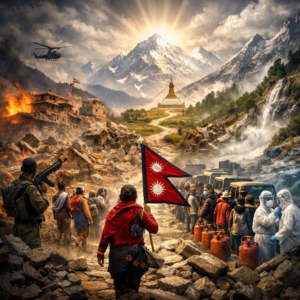
Another major national challenge came with the devastating earthquake of April 2015, one of the most destructive natural disasters in Nepal’s modern history. Nearly 9,000 people lost their lives, and hundreds of thousands of homes, schools, and cultural monuments were damaged or destroyed. Entire communities faced the difficult task of rebuilding their lives and livelihoods. The reconstruction process required substantial national effort and international cooperation, and over time it also highlighted the strength and solidarity of Nepali society during moments of crisis.
In the same year, Nepal faced an additional economic shock when a border blockade disrupted fuel and essential supply chains. The crisis underscored the structural challenges faced by landlocked countries and highlighted the importance of diversifying trade routes, strengthening domestic production, and building greater economic resilience.
More recently, Nepal, like the rest of the world, was deeply affected by the COVID-19 pandemic. The global health crisis disrupted tourism—one of Nepal’s key economic sectors—while also affecting remittance flows, employment opportunities, and small businesses across the country. The pandemic placed significant strain on public health systems and the national economy.
Alongside these challenges, Nepal continues to face natural hazards linked to its unique geography and the growing impacts of climate change. Seasonal floods, landslides, and the risks associated with glacial lake outburst floods remain ongoing concerns for many communities, particularly in mountainous and river basin regions.
Taken together, these overlapping crises have shaped public expectations toward governance and national preparedness. They have reinforced the importance of strong institutions, effective disaster management systems, and long-term development strategies capable of building resilience against future shocks. At the same time, they also illustrate the remarkable perseverance of Nepal’s people, who have repeatedly demonstrated their ability to rebuild, adapt, and move forward despite formidable challenges.
Migration and the Aspirations of a New Generation
One of the most visible features of Nepal’s contemporary economic landscape is the large scale of labor migration. Millions of Nepali citizens are currently employed abroad, particularly in countries of the Gulf region, Malaysia, South Korea, and other parts of Asia and beyond. For many families, overseas employment has become an important pathway to economic stability. The remittances sent home by migrant workers now represent a significant share of Nepal’s national income and play a crucial role in supporting household livelihoods, local economies, and national financial stability.
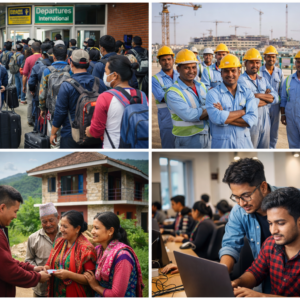
Remittances have helped improve living standards in many communities. They have contributed to better access to education, healthcare, housing, and small business opportunities for countless Nepali families. In many rural areas, the income generated by migrant workers has become an essential pillar of economic life.
At the same time, the scale of migration also reflects structural challenges within Nepal’s domestic economy. While the country has made progress in infrastructure and education, the availability of well-paying employment opportunities at home remains limited compared to the aspirations of a rapidly growing and increasingly educated population. As a result, many young Nepalis choose to work abroad not because they wish to permanently leave their homeland, but because they seek better economic opportunities and financial security for themselves and their families.
This experience has shaped the outlook of Nepal’s younger generation. Many members of Generation Z and young professionals are deeply engaged in discussions about governance, economic reform, and national development. Their expectations for the future are ambitious. Having grown up in an era of global connectivity and digital information, they often compare Nepal’s progress with that of other countries and hope to see faster improvements in infrastructure, employment opportunities, and public services.
At the same time, this generation also understands that the transformation of a national economy is a complex and gradual process. While improved governance, transparency, and institutional reform are essential steps, sustainable development requires long-term planning, consistent policies, investment in human capital, and the gradual expansion of productive industries.
The challenge for Nepal in the coming years will be to create an environment in which the energy, skills, and aspirations of its young citizens can find meaningful opportunities within the country itself. If successful, the same generation that once sought opportunities abroad may increasingly become the driving force behind Nepal’s future economic growth and innovation.
Understanding the Real Process of Development
The experience of highly developed nations around the world demonstrates that meaningful economic transformation is rarely achieved quickly. Development is typically the result of decades of consistent institutional growth, policy continuity, and investment in human and physical capital. Strong legal frameworks, accountable public institutions, efficient bureaucratic systems, and stable environments for investment do not emerge overnight; they evolve gradually through sustained political commitment and careful governance.
Countries that have achieved high levels of prosperity have generally followed a long and disciplined path of development. This path often includes strengthening the rule of law, improving administrative capacity, investing heavily in education and research, and building infrastructure that supports commerce and innovation. Over time, these elements create an environment where entrepreneurship can flourish, industries can grow, and citizens can participate productively in the national economy.
For Nepal, this global experience offers an important perspective. The country possesses many promising advantages, including abundant natural resources, a young and energetic population, expanding connectivity, and a strategic geographic position between two of the world’s largest economies. However, transforming these advantages into sustained economic progress will require long-term planning, policy stability, and broad national cooperation.
Economic development in Nepal will depend on continued investment in education, infrastructure, hydropower and energy production, industrial growth, and technological innovation. Strengthening agricultural productivity, encouraging domestic entrepreneurship, and improving the environment for both domestic and foreign investment will also be important components of future economic progress.
At the same time, Nepal’s development strategy must be accompanied by thoughtful diplomatic engagement. Maintaining balanced and constructive relations with neighboring countries such as India and China, as well as with international partners and development institutions, remains essential for trade, investment, and regional cooperation.
In this context, the emergence of new political actors, including the Rastriya Swatantra Party, reflects the democratic vitality of Nepal’s political system. Yet for any political movement that seeks to lead the country, the ultimate measure of success will lie not only in electoral achievements but also in the ability to translate public enthusiasm into practical policies, effective institutions, and sustainable economic progress.
A Shared Responsibility for the Future
Nepal’s political future need not be viewed as a contest between established leadership and emerging voices. Rather, it can be understood as an opportunity to bring together the energy of a new generation and the experience of those who have guided the country through earlier transformations. In a maturing democracy, progress is often achieved when renewal and continuity complement one another rather than compete.
The rise of younger leaders reflects the aspirations of a society that is increasingly connected, educated, and eager to see improvements in governance and public service. Many members of this generation emphasize transparency, administrative efficiency, and accountability in public life. Their participation brings fresh ideas, technological awareness, and new approaches to citizen engagement.
At the same time, Nepal’s older political leaders carry invaluable historical perspective and institutional memory. Over the past several decades, they have navigated the country through difficult periods of political transition, from the restoration of democracy in 1990 to the peace process that followed the civil conflict and the establishment of a federal democratic republic. Their experiences in negotiation, state building, and constitutional development remain important resources for the nation.
When these strengths are brought together, youthful innovation and seasoned experience, Nepal’s democracy can become more resilient and effective. Constructive collaboration across generations can help strengthen institutions, maintain policy continuity, and ensure that reforms are implemented thoughtfully and sustainably.
Nepal also possesses extraordinary natural and human advantages that provide a strong foundation for future development. The country is rich in human potential, with a hardworking and resilient population both at home and across the global diaspora. Its fertile lands support agriculture across diverse climatic zones, while its remarkable geography stretches from the fertile plains of the Tarai to the green hills of the middle mountains and the majestic white peaks of the Himalayas.
Within this relatively small territory lies an extraordinary range of ecosystems. Nepal is home to immense biodiversity, abundant rivers, forests, flora and fauna, and vast natural resources that hold great potential for sustainable development. The country’s landscapes, from the snow covered Himalayan summits to the lush valleys and subtropical plains, represent not only natural beauty but also opportunities for hydropower, agriculture, tourism, and environmental conservation.
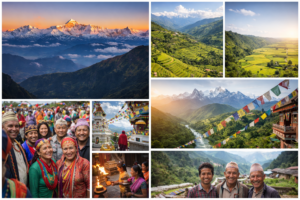
Equally significant is Nepal’s cultural richness. For centuries, diverse ethnic communities, languages, traditions, and spiritual practices have coexisted across the country. This cultural diversity is one of Nepal’s greatest strengths. The nation is a meeting place of civilizations, religions, and traditions where Hinduism, Buddhism, Kirat, and many indigenous belief systems have flourished side by side. This deep spiritual heritage has shaped a society known for its hospitality, tolerance, and cultural harmony.
Nepal’s people themselves remain one of its greatest assets. Known for their warmth, resilience, and welcoming spirit, Nepalis have long carried a reputation for kindness and perseverance. Whether in remote Himalayan villages, the green hills, the plains of the Tarai, or the growing cities, the spirit of community and optimism continues to shape the nation’s social fabric.
The current political moment therefore carries both promise and responsibility. The growing popularity of new political voices reflects a genuine national aspiration for change and improved governance. Yet meaningful transformation requires patience, competence, and a shared commitment to the public good. Democratic progress is rarely the work of a single party or generation. It is the product of sustained cooperation among many actors within society.
Nepal has already demonstrated remarkable resilience. The nation has endured civil conflict, devastating natural disasters, economic disruptions, and profound political restructuring. Each time, its people have shown an extraordinary capacity to rebuild and move forward.
The challenge now is to transform that resilience into a long term strategy for national development, one that balances democratic ideals with effective governance, economic opportunity, and social inclusion. In this sense, the question facing Nepal today is not merely which political party wins elections. The deeper challenge is whether the country can cultivate a political culture capable of turning democratic hope into strong institutions, responsible leadership, and lasting progress for future generations.