

New Study Outlines Bold Strategy to Boost EU Plastic Recycling Through Innovation
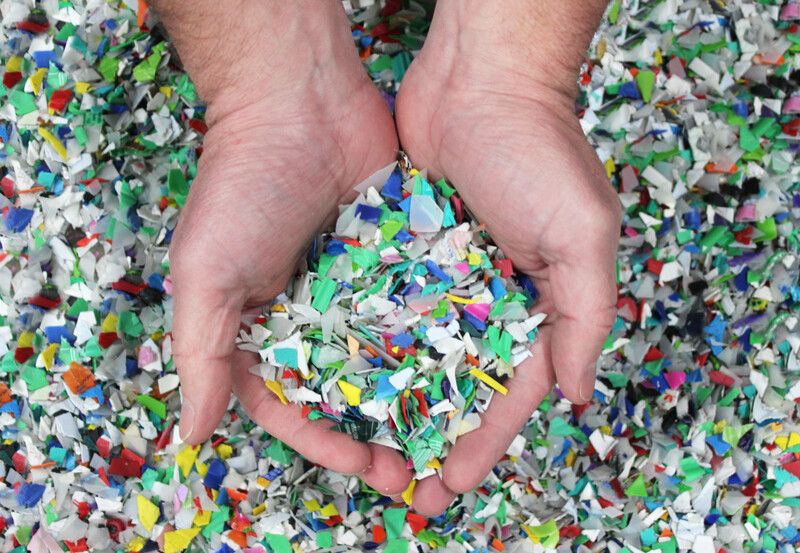
A groundbreaking study from the University of Greenwich and international collaborators proposes a bold new policy roadmap for transforming the European Union’s (EU) plastic recycling infrastructure. Using cutting-edge system dynamics modelling, the research aims to mitigate environmental and supply chain risks while bolstering circular economy resilience.
Amid mounting global concern over climate change and material scarcity, the EU faces a sobering challenge: it produces over 89 million tonnes of packaging waste annually, yet its domestic recycling capacity is limited to just over 10 million tonnes.
For decades, Europe relied on exporting its waste to countries like China, Malaysia, and Vietnam. But that model collapsed in 2018 with the imposition of global waste import bans. The disruption laid bare a critical vulnerability—EU recycling systems were never built for circularity. They were designed for outsourcing.
A Dynamic Response to a Structural Crisis
In response, researchers from the University of Greenwich, in collaboration with Greenovation Solutions (UK) and Westcon-Comstor (US), have developed a dynamic systems model to evaluate how different policy strategies could reshape the EU’s capacity to recycle packaging waste.
Published in the Annals of Operations Research, the study is the first of its kind to test innovation-driven, subsidy-based, and market-oriented policy scenarios across a long-term simulation framework using data from 28 EU member states.
Innovation Policies Deliver Long-Term Transformation
Among the three policy types assessed, innovation-focused strategies—such as R&D grants and tax relief for green tech—proved the most effective over time. These policies drive advancements in material separation, sorting, and remanufacturing, ultimately improving efficiency, reducing costs, and accelerating profitability.
“Supporting innovation isn’t just about future-proofing; it’s about creating scalable, domestic systems that eliminate the need to ship our problems overseas,” said Dr. Li Zhou, co-author and researcher at the University of Greenwich.
By 2040, the model shows innovation-based strategies outpacing all others in terms of recycling capacity growth and economic sustainability.
Subsidies Offer Short-Term Relief but Limited Longevity
Subsidy-based policies—like tax incentives for recyclers and public investment in waste collection—demonstrated early gains but lacked staying power. The model warns that, without accompanying innovation or demand stimulation, subsidies plateau and risk becoming inefficient.
“Subsidies are necessary for early-stage ecosystem support,” the authors note. “But they must evolve in tandem with innovation and market maturity to avoid stagnation.”
Market Mechanisms Spark Immediate Momentum
Market-based strategies—including minimum recycled content mandates, Extended Producer Responsibility (EPR), and public awareness campaigns—were found to be highly effective in the immediate aftermath of disruptive events like the 2018 China Waste Ban. These policies quickly increase demand for recycled materials, prompting manufacturers to expand their use of recycled inputs.
The Optimal Policy Mix: 84% Innovation, 16% Market
The study recommends a strategic policy blend: allocating 84% of resources to innovation-driven approaches and 16% to market-based mechanisms, while phasing out pure subsidy models. This balanced mix is designed to maximize long-term capacity growth while ensuring short-term adaptability to market shocks.
A Blueprint for a Circular, Resilient Future
This research marks the first time such a diverse array of EU recycling policies has been rigorously tested in a dynamic, data-driven simulation. The model accounts for real-world variables—such as inflation, cost structures, and profitability indicators—and simulates disruptions ranging from global bans to economic shocks.
The implications for policymakers and funding agencies are clear:
-
Invest in green innovation ecosystems to meet the EU’s 2030 goal of recycling 70% of packaging waste.
-
Use market-based mechanisms to buffer against short-term shocks, rather than relying on temporary subsidies.
-
Tailor policies to local waste volumes, cost realities, and recycling infrastructure maturity for maximum impact.
Driving the Circular Transition
As the EU faces mounting pressure to close the loop on plastic waste, this research offers more than a diagnosis—it presents a dynamic, science-based prescription. Rooted in systems thinking, economic realism, and technological foresight, the study supports the broader goals of the European Green Deal and the Circular Economy Action Plan.
In the race to build resilient and circular recycling systems, this roadmap stands as a powerful guide for forward-thinking policy and sustainable transformation.