

Rubin Museum’s Tibetan Buddhist Shrine Room Reopens at Brooklyn Museum
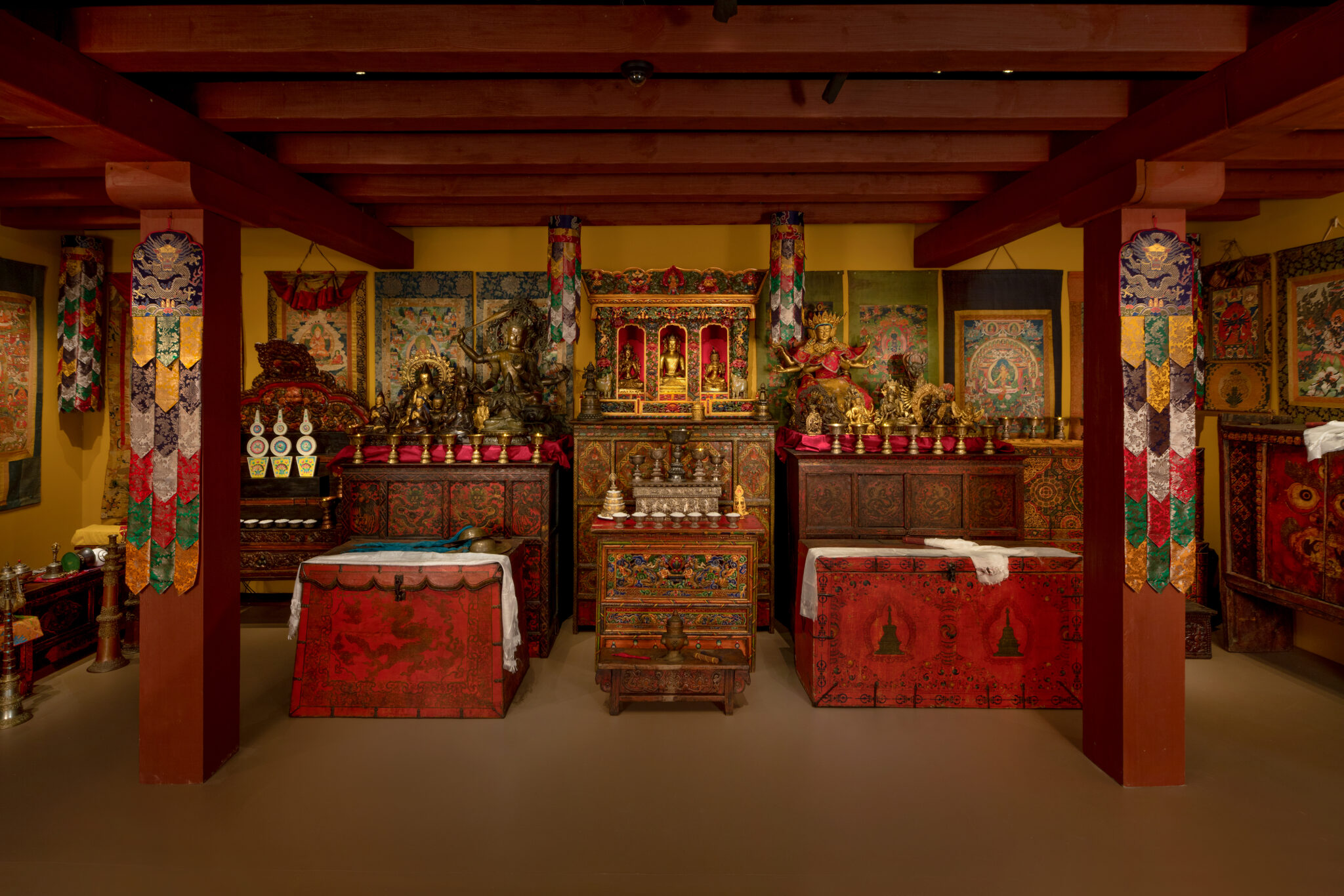
The Rubin Museum of Himalayan Art’s renowned Tibetan Buddhist Shrine Room has reopened to the public in a newly dedicated space at the Brooklyn Museum’s Arts of Asia galleries. Unveiled on June 11, 2025, the installation will remain on view for the next six years as part of a dynamic partnership between the two institutions. Known for its immersive and meditative environment, the Shrine Room is now accessible through the Brooklyn Museum’s general admission ticket, available on a pay-what-you-can basis.
Widely regarded as the heart of the Rubin Museum, the Shrine Room recreates a traditional Tibetan Buddhist household shrine with more than 100 ritual objects and sacred artworks. The display features thangka paintings, sculptures, musical instruments, and ceremonial implements from Tibet, Nepal, and Mongolia, spanning the 12th to the 21st centuries. Arranged on Tibetan-style furniture and adorned with intricate brocade silk textiles, these objects offer a rare opportunity to witness devotional art as it would be experienced in its original religious and cultural context.
Jorrit Britschgi, executive director of the Rubin Museum, described the reopening as an expansion of the museum’s global outreach. “It’s fitting that the Shrine Room—described by many visitors as the heart of the Rubin Museum—will be at home at the Brooklyn Museum for the next six years, where visitors from across the city and beyond can experience Himalayan art in its cultural context,” he said. “The Shrine Room also deepens Brooklyn’s representation of Himalayan art and creates new dialogues within its collections of Asian art.”
Visitors stepping into the Shrine Room are immersed in a multi-sensory environment. Simulated flickering butter lamps illuminate the space, while recorded chants of Tibetan monks and nuns fill the air, and the subtle aroma of incense invites quiet contemplation. Ritual implements, such as vajra scepters, bells, offering bowls, conch trumpets, and handheld drums, are placed according to Tibetan Buddhist traditions. The installation encourages an intimate and contemplative experience that reflects the daily spiritual practices of Tibetan households.
Since its original debut in 2013 at the Rubin’s Chelsea location in Manhattan, the Shrine Room has welcomed more than one million visitors. At its original site, the installation showcased a rotating selection of objects representing the four major schools of Tibetan Buddhism—Nyingma, Kagyü, Sakya, and Geluk. The Rubin’s curators will continue this tradition at the Brooklyn Museum, refreshing the installation periodically to highlight each lineage and provide deeper insight into the artwork’s spiritual and historical significance.
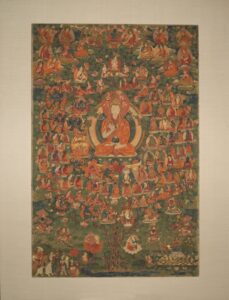
The first cycle at the Brooklyn Museum centers on the Geluk tradition, the youngest of the four schools, founded in the 14th century by Tsongkhapa. This tradition emphasizes monastic discipline, logic, and tantric practice. Among the figures represented are the Indian master Atisha and his disciple Dromton, the future Buddha Maitreya, the bodhisattva Manjushri, and tantric deities such as Chakrasamvara, Vajrayogini, and Vajrabhairava. Protector deities like Yama Dharmaraja and Magzor Gyalmo also feature prominently, reflecting the depth and complexity of Geluk ritual practice.
To enhance visitor engagement, the installation includes an interactive digital touchscreen that allows visitors to explore the meanings behind various shrine elements. This feature introduces the foundational Buddhist concept of the Buddha’s body, speech, and mind through specific objects in the Shrine Room, offering both educational and spiritual insight.
The installation of the Shrine Room is a cornerstone of the Rubin Museum’s transformation into a decentralized museum. Through strategic partnerships, national traveling exhibitions, and digital initiatives, the Rubin aims to make Himalayan art more accessible to communities around the world. This includes programs such as the “Gateway to Himalayan Art” traveling exhibition, the Rubin Himalayan Art Prize, and grants for artists and scholars, and multimedia platforms like Project Himalayan Art.
The collaboration with the Brooklyn Museum, whose Asian art collections underwent major renovation from 2017 to 2023, is a significant step forward in expanding cultural access. With this partnership, the Rubin’s Tibetan Buddhist Shrine Room not only continues to serve as a sacred and contemplative space for New Yorkers but also strengthens the Brooklyn Museum’s commitment to global cultural representation.
Both institutions are united in their mission to inspire deeper reflection, dialogue, and understanding through art. Visitors are encouraged to visit the Shrine Room in person to experience firsthand the beauty, devotion, and rich spiritual traditions of Himalayan cultures.
The Rubin Museum Tibetan Buddhist Shrine Room is organized and provided by the Rubin Museum of Himalayan Art and will be on view at the Brooklyn Museum through April 2031.