
India and Canada Reestablish Diplomatic Ties After Nearly Two Years of Strained Relations
India and Canada have agreed to reestablish high commissions in each other’s capitals, signaling a significant step toward normalizing diplomatic relations nearly two years after ties soured following accusations that India was involved in the killing of a Sikh separatist in Canada.
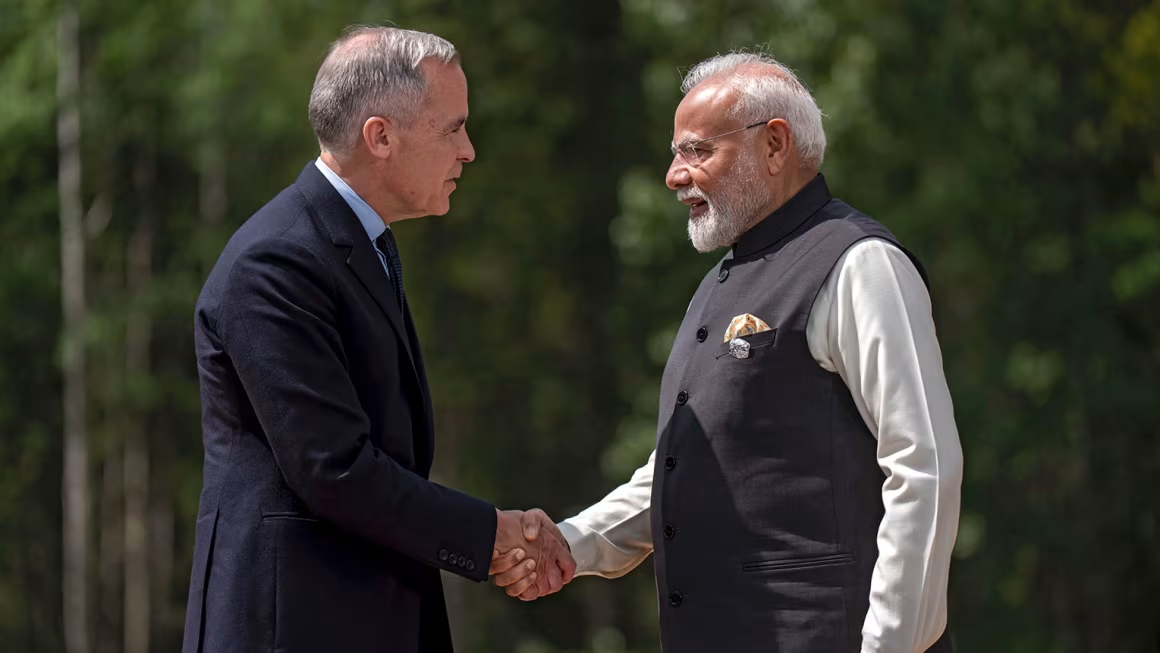
The announcement came after a meeting between Indian Prime Minister Narendra Modi and Canadian Prime Minister Mark Carney on the sidelines of the Group of Seven (G7) summit held in the Canadian Rockies. Carney, who assumed office in March, extended the invitation to Modi despite India not being a G7 member.
According to a statement from the Canadian prime minister’s office, both sides agreed to “designate new high commissioners, with a view to returning to regular services to citizens and business in both countries.”
The diplomatic freeze began in 2023 when then-Prime Minister Justin Trudeau and other Canadian officials publicly accused the Indian government of involvement in the killing of Hardeep Singh Nijjar, a Canadian citizen and prominent Sikh separatist leader, who was fatally shot outside a temple in Surrey, British Columbia.
Canadian authorities claimed they shared evidence with India, but Indian officials denied receiving any credible proof and dismissed the allegations as “absurd and motivated.” The fallout led to mutual expulsions of diplomats, a temporary halt in visa services, and sharp rhetoric from both sides. India accused Canada of harboring extremists and allowing anti-India activities to flourish, claims which Canada rejected.
Despite this recent history, the meeting between Modi and Carney appeared cordial. Carney described it as a “great honor” to host the Indian leader at the summit, acknowledging India’s global significance and ongoing collaboration on international issues.
“India has been coming to the G7 since 2018… and it’s a testament to the importance of your country, to your leadership and to the importance of the issues that we look to tackle together,” Carney told reporters.
Modi, in a post on X (formerly Twitter), described the meeting as “excellent,” highlighting shared values such as democracy, freedom, and the rule of law. “PM Carney and I look forward to working closely to add momentum to the India-Canada friendship,” he wrote.
The Canadian prime minister’s office stated that the leaders discussed enhancing cooperation in technology, digital infrastructure, food security, and critical minerals.
While the meeting avoided direct reference to the Nijjar case, it continues to be a point of contention. Nijjar, a key advocate for Khalistan—an independent Sikh homeland in northern India—was designated a threat by the Indian government, which considers the Khalistan movement a national security concern and has banned related organizations under its anti-terror laws.
The movement, however, maintains support among some Sikh diaspora communities abroad, where freedom of speech protections allow more open advocacy for separatist causes.
During the summit in Alberta, Sikh protesters were seen waving Khalistan flags and calling for justice in Nijjar’s case. Some voiced anger over Modi’s presence in Canada, while others reiterated demands for accountability in the killing.
Asked about Nijjar’s murder during a press conference after meeting Modi, Carney stated, “There is a judicial process that’s underway, and I need to be careful about further commentary.” He had previously confirmed that the matter was discussed with Modi during earlier communications.