
Lumbini Avoids UNESCO ‘In Danger’ List Amid Nepal’s Renewed Conservation Push
July 12, 2025
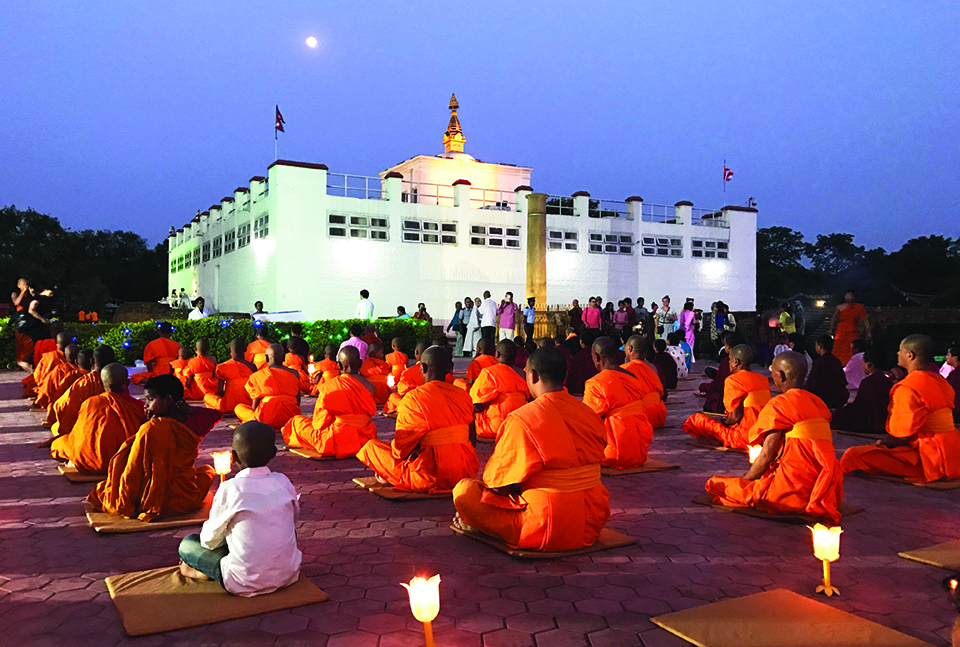
Lumbini, the sacred birthplace of the Buddha and a UNESCO World Heritage Site since 1997, has narrowly avoided being placed on the List of World Heritage in Danger following recognition of Nepal’s substantial conservation efforts and policy reforms. The decision was made during the 47th session of the UNESCO World Heritage Committee, currently underway in Paris, France.
Chaired by Bulgarian heritage expert Professor Nikolay Nenov, the committee announced on Thursday that Lumbini would not be listed as “in danger” this year. However, it will send a reactive monitoring mission to assess the site’s on-ground conservation status and implementation of UNESCO guidelines. The final decision regarding its status will depend on the findings of this mission.
Background: Rising Concerns Since 2022
The push to consider Lumbini for inclusion on the endangered list began after a 2022 monitoring report by UNESCO-appointed experts Roland Lin Chih-Hung and Professor Yuga Kariya, who had been dispatched by the World Heritage Centre and the International Council on Monuments and Sites (ICOMOS). The report raised alarms over unregulated development, construction of large structures, and insufficient heritage safeguards in Lumbini’s core and buffer zones.
As a result, Lumbini was tentatively placed under review for potential danger listing during the 46th session of the Committee held in New Delhi in 2024. At that time, an amendment proposal from India delayed the decision. UNESCO then issued a formal 10-point directive to Nepal through its Paris embassy, seeking clarifications and concrete actions by February 1, 2024.
Nepal’s 12-Point Response and Institutional Reforms
Nepal responded with a 12-point action plan, submitted alongside a detailed State of Conservation (SOC) report, outlining reforms in conservation policy, legal frameworks, and institutional responsibilities. The Lumbini Development Trust (LDT), the agency overseeing heritage management, took the lead in implementing these reforms.
Sanuraja Shakya, member-secretary of the LDT, confirmed that all 12 directives were fully addressed. “We responded with substance—not just promises. From new policy frameworks to on-site improvements, we’ve covered all fronts,” Shakya said.
Integrated Management Framework and Sector Strategies
UNESCO officials noted that Nepal’s adoption of a new Integrated Management Framework and five sector-specific strategies—focused on archaeology, visitor management, natural disaster mitigation, local development, and Buddhist community engagement—was a key factor in the favorable decision.
“These strategies are not only plans on paper,” said Gyanin Rai, senior director at the LDT, who attended the Paris session. “They are already being operationalized on the ground.”
The LDT has also enhanced site conservation, including high-tech preservation work on the Ashoka Pillar, Marker Stone, and Nativity Sculptures to prevent moisture seepage and maintain environmental cleanliness.
In the Maya Devi Temple, Nepal undertook structural and visitor-friendly upgrades such as painting, installation of ceiling fans, lighting, and improved electricity systems—efforts that UNESCO welcomed as meaningful steps in heritage stewardship.
Averting the Danger List, For Now
Despite the progress, the Committee stressed that the current decision is conditional. Lumbini has been granted a one-year reprieve, during which a reactive monitoring team will visit and evaluate actual implementation on-site. Based on their findings, the Committee will determine whether Lumbini requires danger listing during its next session.
UNESCO defines reactive monitoring as its process of assessing the state of conservation for sites at risk, as stipulated in Paragraph 169 of the Operational Guidelines for World Heritage.
“Ultimately, UNESCO wanted action—not paperwork,” Rai added. “To that end, we hosted the World Heritage International Conference, invited global experts, and opened our process to critical feedback. That made a difference.”
Historical and Future Significance
Lumbini was inscribed as a World Heritage Site in 1997 for its spiritual and archaeological importance as the birthplace of Siddhartha Gautama, the historical Buddha. Yet for years, the UN agency has expressed concern over uncoordinated development, such as the controversial construction of an assembly hall and other large structures in the heritage zone.
During the extended 45th Committee session held in Riyadh, Saudi Arabia, in September 2023, the World Heritage Committee sought urgent clarification regarding such construction and requested that Nepal submit comprehensive answers.
With Thursday’s decision, Nepal now has both a responsibility and a rare opportunity to ensure that Lumbini not only retains its heritage status but serves as a global model for managing sacred and archaeological sites in harmony with local development.
As the 47th session continues in Paris until July 16, UNESCO is expected to monitor how member states like Nepal balance conservation with growing tourism and infrastructure pressures.