
His Eminence Tulku Ngawang Lapsum Rinpoche Bestows Konchog Chidue Empowerment in California
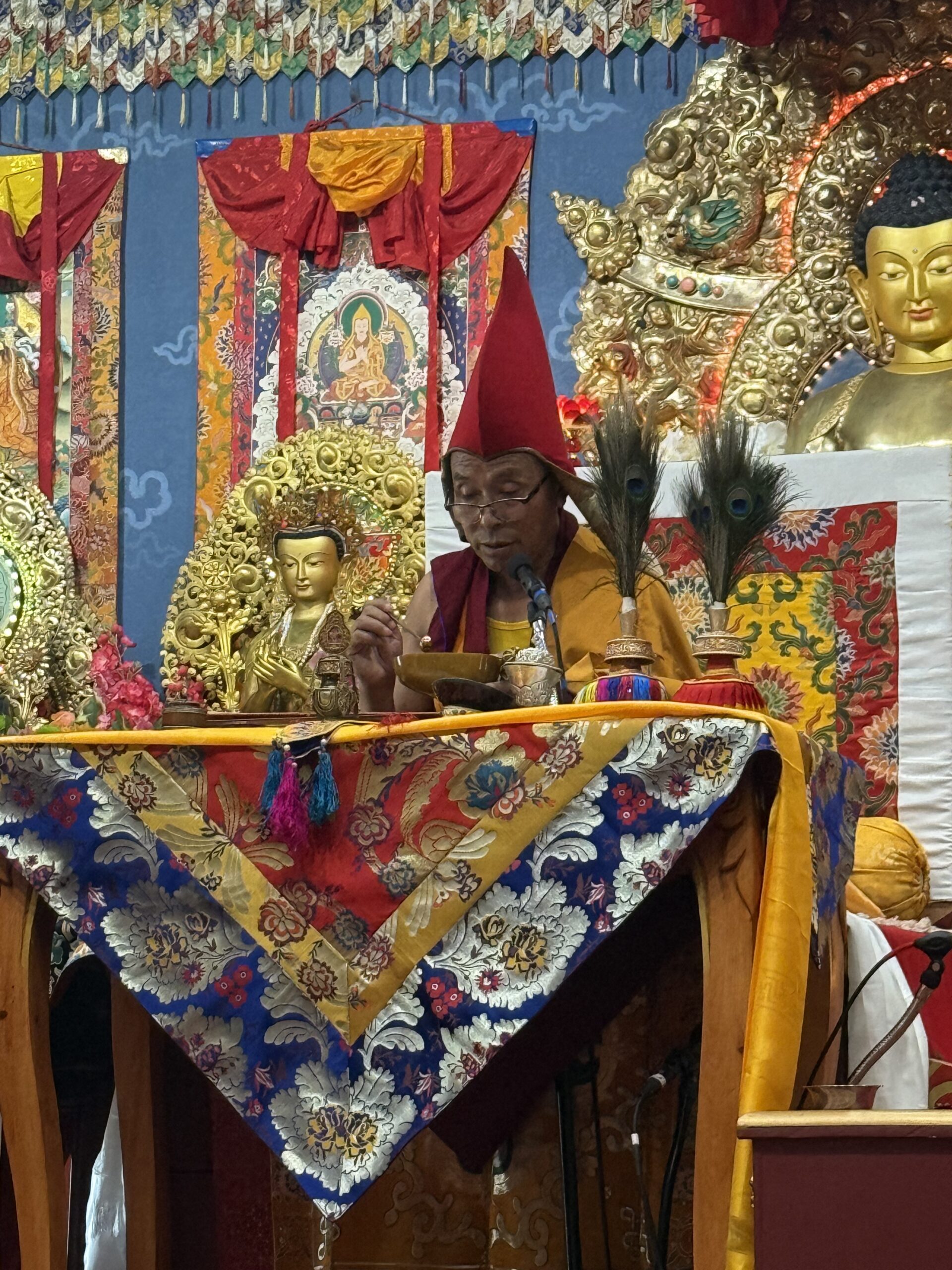
The morning sun fell gently upon the golden roofs of Gyuto Monastery in Richmond, California, casting a soft glow over its gardens where prayer flags whispered in the breeze. Inside, the resonant hum of chants, the fragrance of juniper incense, and the expectant silence of hundreds of devotees created a sacred stillness. It was here that the California Sherpa Association welcomed His Eminence Tulku Ngawang Lapsum Rinpoche, a teacher whose very presence seemed to bridge the old Himalayan highlands with the present shores of the East Bay of California.
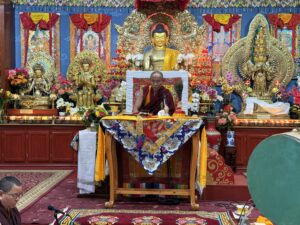
The day began with a Puja, a ritual that seemed to open not only the gathering but also the hearts of those present. When Rinpoche took his seat, his words in the Sherpa language, later translated into English by a Geshe, flowed with both the intimacy of ancestral speech and the clarity of timeless truth. He spoke of impermanence, of the precious refuge in the Buddha, Dharma, and Sangha, of the inescapable web of karma and suffering, and above all, of compassion as the breath of all true practice.
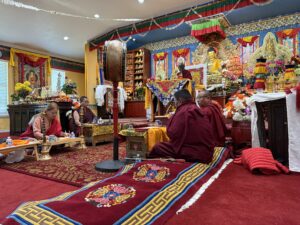
Yet, what lent his teaching such gravity was not only his wisdom but also the lineage he carries. Rinpoche is revered as the reincarnation of Lama Ngodup Dorje, a great Dzogchen master and fourth-generation descendant of the Jatang Choying Rangdrol of the Jangter tradition. The Jangter, or Northern Treasure cycle, belongs to the ancient Nyingma school of Tibetan Buddhism, a treasury of teachings first revealed in the 14th century by Rigdzin Godemchen, one of the great tertöns, or treasure-revealers. These teachings, hidden centuries earlier by Guru Padmasambhava himself, emphasize the Great Perfection, Dzogchen, which points directly to the luminous, unchanging nature of mind.
In this way, the teachings shared that day were not merely words spoken in a hall, but a living current flowing from the highlands of Tibet, Bhutan, and Nepal, through centuries of masters and meditators, into the heart of the diaspora community gathered in California.
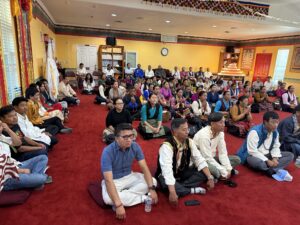
The empowerment bestowed was the Konchog Chidue Tsewong, an intensive long-life practice of Dzogchen and Jangter. In this ritual, Guru Padmasambhava appears as the embodiment of the three kayas and the three roots — Guru, Yidam, and Dakini — as the very deity of longevity. Through this blessing, Rinpoche transmitted not just a teaching but a force, an energy of vitality that seemed to ripple quietly through the assembly. Devotees sat in silence, some with eyes closed, some with heads bowed, as if they felt their own lives being woven more closely into the eternal fabric of compassion.
Outside the hall, the members of the California Sherpa Association had prepared a communal lunch, where the scent of Himalayan flavors mingled with laughter and conversation. What had been a spiritual ritual became also a community feast, binding together the sacred and the ordinary, the monastery and the world outside its gates. For many, the day was more than a religious event. It was a reminder that even far from the snowy valleys of Solukhumbu or the sacred caves of Tibet, the stream of Dzogchen flows unbroken. Through teachers like His Eminence Tulku Ngawang Lapsum Rinpoche, the treasures of Jangter continue to shine, not as relics of a distant past, but as living guidance for a world still in search of compassion, wisdom, and wholeness.