

California Moves Forward With $23 Billion Plan to Offset Federal Cuts to Scientific Research
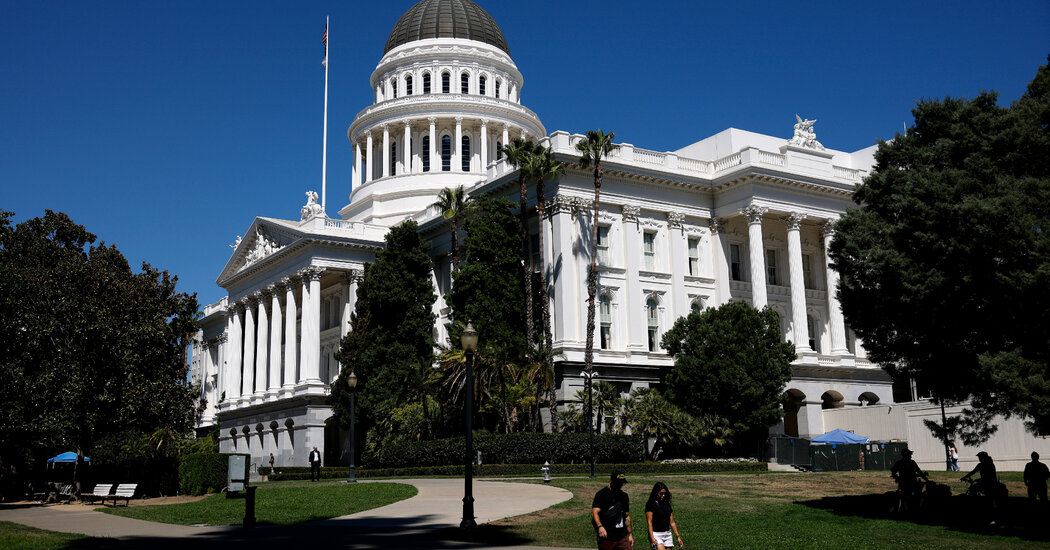
Sacramento, Sept. 14 – California lawmakers are advancing an ambitious $23 billion bond measure that would restore funding for scientific research in the state, responding to concerns over shrinking or uncertain federal support for critical fields ranging from medical innovation to climate science.
The proposal, Senate Bill 942, seeks voter approval to allow the state to borrow $23 billion through bonds to create what some supporters describe as a “California version of the National Institutes of Health.” The money would be used to back long-term research initiatives, sustain laboratories, and secure the state’s leadership in scientific innovation at a time when Washington has pulled back from certain commitments.
If approved, the plan would represent one of the largest state-level investments in science in U.S. history. Proponents say California, home to Silicon Valley, world-renowned universities, and cutting-edge biotechnology firms, has both the resources and responsibility to step in when federal funding falters.
“Scientific research is too important to be left vulnerable to political swings in Washington,” said one of the bill’s co-sponsors. “This bond will ensure California continues to lead in medical discoveries, environmental resilience, and technological breakthroughs that benefit the entire nation.”
Federal Cuts Drive State Action
The move comes in the wake of budget cuts and grant suspensions at federal agencies such as the National Institutes of Health (NIH) and the National Science Foundation (NSF). Critics of the Trump administration’s fiscal policy argue that these cuts endanger long-term projects in cancer treatment, clean energy development, pandemic preparedness, and artificial intelligence.
California legislators argue that the state cannot afford to wait for federal funding to stabilize. They point out that scientific research not only advances public health and environmental protection but also fuels the state’s economy by creating high-paying jobs and attracting global talent.
How the Plan Would Work
The $23 billion would be raised through state-issued bonds, which California would repay over several decades with interest. Funding would be distributed to universities, medical centers, and research institutions across the state.
While the precise allocation remains under debate, the plan envisions major investments in:
-
Biomedical and health sciences, including cancer research, genetics, and infectious disease prevention.
-
Climate and environmental research, particularly in wildfire prevention, drought resilience, and clean energy.
-
Technology and engineering, supporting next-generation innovations in computing, artificial intelligence, and sustainable manufacturing.
The measure also calls for the creation of a state-run research agency that would coordinate projects and ensure funding continuity. This would mirror the structure of the California Institute for Regenerative Medicine (CIRM), which was established by voters in 2004 through a $3 billion bond initiative after federal restrictions limited stem cell research.
Support and Opposition
The proposal has drawn strong backing from universities, medical research centers, and environmental organizations that warn of stalled progress without reliable funding. “California has always been at the forefront of discovery,” said a UC Berkeley spokesperson. “This investment would help us continue groundbreaking work in health, energy, and technology that benefits people around the world.”
However, critics argue that issuing $23 billion in bonds could burden taxpayers and add to California’s already strained budget. Fiscal conservatives in the legislature question whether the state should assume federal responsibilities. “This is essentially California trying to replace Washington,” one lawmaker said. “But our taxpayers will be paying the bill for decades.”
Next Steps
The bond proposal must first pass the legislature before being placed on a statewide ballot, likely in 2026. If voters approve, California would begin issuing bonds and disbursing funds in phases, with oversight mechanisms to track accountability and results.
Governor Gavin Newsom has not yet formally endorsed the plan, but he has previously expressed support for state-led efforts in climate science and public health when federal funding fell short.
As the debate continues, California is positioning itself not only as a hub of innovation but also as a bulwark against political and fiscal shifts in Washington. If enacted, the $23 billion plan could reshape the future of U.S. research by putting California in the unusual position of filling the gap left by federal science funding cuts.