
False Allegations Against Monasteries Threaten Peace and Harmony

Recent statements made by some individuals claiming that Buddhist monasteries in and around Kathmandu keep weapons or engage in political activities related to so-called “Free Tibet” have caused deep concern among Buddhist devotees, scholars, and peace-loving citizens. These allegations are entirely false and irresponsible. They misrepresent the true nature of Buddhist institutions and damage Nepal’s reputation as the birthplace of the Buddha, a global symbol of peace and wisdom.
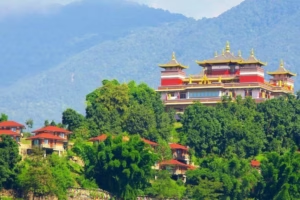
For centuries, Buddhist monasteries have served as centers of meditation, compassion, and moral education. They have guided people on the path of peace and ethical living. The monks and nuns who dedicate their lives to these monasteries follow the sacred principles of nonviolence, compassion, and discipline. To accuse these holy places of harboring weapons or engaging in political activities is not only untrue but also deeply disrespectful to the Buddha’s teachings and to the spiritual values that Nepal has offered to the world.
The Buddha, once known as the light of Asia, has become a guiding light for the entire world. His teachings are no longer confined to religion alone; they are now studied and respected by scientists, psychologists, and thinkers as profound insights into the nature of human consciousness. Across the world, from homes and temples to universities and public spaces, people honor the Buddha as a symbol of peace, compassion, and awakening.
It is, therefore, deeply unfortunate that in the very land where the Buddha was born, some acts of insensitivity and misunderstanding toward Buddhist heritage continue to appear. There have been instances where Buddha statues have been destroyed, monastic lands interfered with, and Buddhist devotees treated with disrespect. Such actions are not merely acts of ignorance; they harm Nepal’s image as a peaceful nation and as the guardian of the Buddha’s legacy.
History reminds us that the Buddha’s message of equality, kindness, and liberation from suffering often challenged the power structures of his time. Because he opposed caste discrimination and cruel practices like animal sacrifice, his teachings faced resistance from those who benefited from social inequality. In Nepal’s own history, the suppression of Buddhism during the Rana period remains a painful chapter. The imprisonment and exile of Bhikkhu Amritananda and several other monks for simply promoting Buddhist education and art were dark moments that violated the principles of religious freedom. Buddhist scriptures were confiscated, monasteries were restricted, and those who spoke of compassion were punished.
Although Nepal has moved forward into a democratic and inclusive era, traces of misunderstanding still remain. The destruction of Buddha statues in Kankre Bihar and Tilottama, unfair treatment of Buddhist cultural practices, and now the circulation of false statements about monasteries all show that more awareness and respect are still needed.
The recent accusations that monasteries in Kathmandu are influenced by foreign forces or store weapons are not supported by any evidence. Such rumors are dangerous because they create mistrust and division among people who have lived together peacefully for centuries. They also undermine the tireless work of Buddhist institutions that contribute to education, health care, cultural preservation, and humanitarian service.
Buddhist monasteries are not political centers; they are sanctuaries of peace, learning, and reflection. The monks and nuns who live there follow strict moral codes that prohibit violence and political involvement. Their daily lives are dedicated to prayer, teaching, and helping others overcome suffering. Any claim that associates these institutions with political or violent activity is an attack on the principles of truth and compassion that form the heart of Buddhism.
It is now the duty of the government, the media, and all responsible citizens to speak out against such misinformation. False speech can destroy social harmony and peace. Respecting the truth is not only a moral obligation but also an essential part of protecting Nepal’s national and spiritual dignity.
Nepal has a special place in the world as the land of Lumbini, the birthplace of the Buddha. This heritage belongs not only to Buddhists but to all humanity. It is a treasure of peace that must be preserved with wisdom and care. To protect it, we must replace rumor with understanding, prejudice with respect, and hatred with compassion.
The Buddha said, “Hatred never ends through hatred; it ends only through love.” These words are timeless and they guide us even today. Let all who respect truth and peace stand together to defend the dignity of Buddhist monasteries and the message of the Enlightened One. Let Nepal continue to shine as the Buddha’s land, a source of peace, coexistence, and moral clarity for the world.