
Mass Climate March Fills the Streets of Belem as COP30 Reaches Its Halfway Point

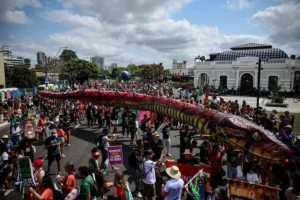
BELEM, Brazil — Thousands of environmental activists swept through the streets of Belem on Saturday, transforming the city into a powerful display of global climate mobilization as the United Nations COP30 climate conference reached its midpoint. The halfway mark of these annual negotiations has traditionally become a day of mass demonstrations, and this year’s march drew one of the largest crowds yet.
Demonstrators wore symbolic clothing to convey the urgency of their demands. Some dressed in black to mourn the era of fossil fuels, while hundreds wore red shirts to honor activists who have lost their lives defending land, forests and Indigenous rights. Others carried towering banners, displayed bright flags or chanted as speeches and music echoed from trucks outfitted with sound systems and raised platforms.
Leading one group was Marisol Garcia, a Kichwa woman from Peru, who said the march was meant to remind world leaders that climate decisions must center on human wellbeing. “We are here to demand more humanized decisions,” she said, surrounded by Indigenous activists carrying culturally significant signs.
The march covered about four kilometers and passed near the COP30 venue, where earlier in the week activists had twice surrounded the conference site. One of the actions caused delays entering the venue and resulted in two security guards suffering minor injuries.
Inside the conference halls, negotiators held a full day of discussions focused on fulfilling earlier commitments. A major topic was the plan to mobilize three hundred billion dollars each year from wealthier nations to support developing countries as they transition away from fossil fuels, adapt to worsening climate impacts and recover from climate related disasters.
For many protesters, Belem provided a more open environment for public expression than recent summits held in countries with tighter restrictions on street demonstrations. With fewer limitations in place, thousands took to the streets in a display that many described as energetic, hopeful and urgent.
Ana Heloisa Alves, a twenty seven year old youth leader, said it was the largest demonstration she had ever participated in. “This is incredible,” she said. “You cannot ignore all these people.” Alves marched to defend the Tapajos River, which some fear may be threatened by commercial development plans. Her group held signs stating, “The river is for the people.”
Others noted the growing diversity of the global climate movement. Pablo Neri, a coordinator with the Movimento dos Trabalhadores Rurais Sem Terra in the state of Para, said climate negotiations must include a wider range of voices. “The climate movement is expanding,” he said. “It is becoming a movement led by the people.”
One striking absence from the gathering was the United States government. With President Donald Trump dismissing climate science and withdrawing from the Paris Agreement, the United States chose not to send a delegation. The empty US chair inside the venue became a symbol of its absence.
Women from the Interstate Movement of Coconut Breakers of Babacu marched in formation wearing dome shaped hats woven from Babacu palm fronds. They called for greater access to palm trees that are central to their culture and livelihoods. “Marching is not only about climate resistance,” said coordinator Vitoria Balbina. “It is also about protecting our way of life.”
As the demonstration moved uphill, a wide sea of red, white and green flags swept through the streets. Residents gathered on balconies and outside storefronts to watch, many raising their phones to capture the moment. One man carrying groceries paused to say, “Beautiful.”
The COP30 conference continues through Friday. Although expectations for major new agreements are limited, observers hope to see progress on earlier pledges, especially financial support for nations most vulnerable to the climate crisis. Outside the talks, the message from protesters was clear and urgent: the world cannot afford any more delays.