
Why Mount Kailash Remains Sacred and Unclimbed: A Confluence of Faith, Ecology, and Respect for Nature

Mount Kailash, rising to about 6,638 meters on the remote Tibetan Plateau, is one of the most sacred mountains on Earth and remains unclimbed to this day. Unlike other Himalayan peaks that have become symbols of conquest and adventure, Kailash is revered as a divine axis of the world. Its sanctity, shared across multiple religions, combined with environmental sensitivity and deep cultural ethics, has kept it free from human intrusion.
For Hindus, Mount Kailash is the eternal abode of Lord Shiva and Goddess Parvati. It is believed that Shiva resides at its summit in a state of deep meditation, governing the cosmic cycle of creation and destruction. Circumambulating the mountain, known as parikrama, is considered one of the highest spiritual acts, capable of cleansing a lifetime of sins. Importantly, Hindu tradition strictly forbids climbing the mountain, as the summit is seen not as a goal to be reached but as a divine presence to be revered from afar.
In Tibetan Buddhism, Kailash is known as Mount Kang Rinpoche, meaning Precious Jewel of Snow. It is associated with Demchok, a deity representing supreme bliss. Buddhists believe that walking one full kora around the mountain can erase the sins of a lifetime, while 108 circumambulations can lead to enlightenment. The mountain is also deeply connected to the legendary yogi Milarepa, who is said to have defeated a Bon master in a spiritual contest not by physical ascent, but through inner realization, reinforcing the idea that spiritual attainment surpasses physical conquest.
The Bon religion, which predates Buddhism in Tibet, also regards Mount Kailash as sacred. For Bon followers, it is the seat of Sipaimen, the sky goddess, and the center of the spiritual universe. Similarly, in Jainism, Kailash is known as Mount Ashtapada and is believed to be the place where the first Tirthankara, Rishabhadeva, attained liberation. This rare convergence of four major religious traditions makes Kailash unique in the world, a shared sacred geography beyond political and cultural boundaries.
Historically, there have been almost no serious attempts to climb Mount Kailash, largely out of respect. In the early twentieth century, some Western explorers expressed interest, but none proceeded. In 1985, famed mountaineer Reinhold Messner was reportedly offered permission by Chinese authorities to climb Kailash. Messner later stated that he refused, saying that climbing Kailash would mean conquering something that is not meant to be conquered. According to him, anyone who attempted to climb Kailash would be challenging the beliefs of millions, and failure would be inevitable not because of technical difficulty, but because of moral and spiritual transgression. Since then, no permits have been issued, and the mountain remains officially closed to climbers.
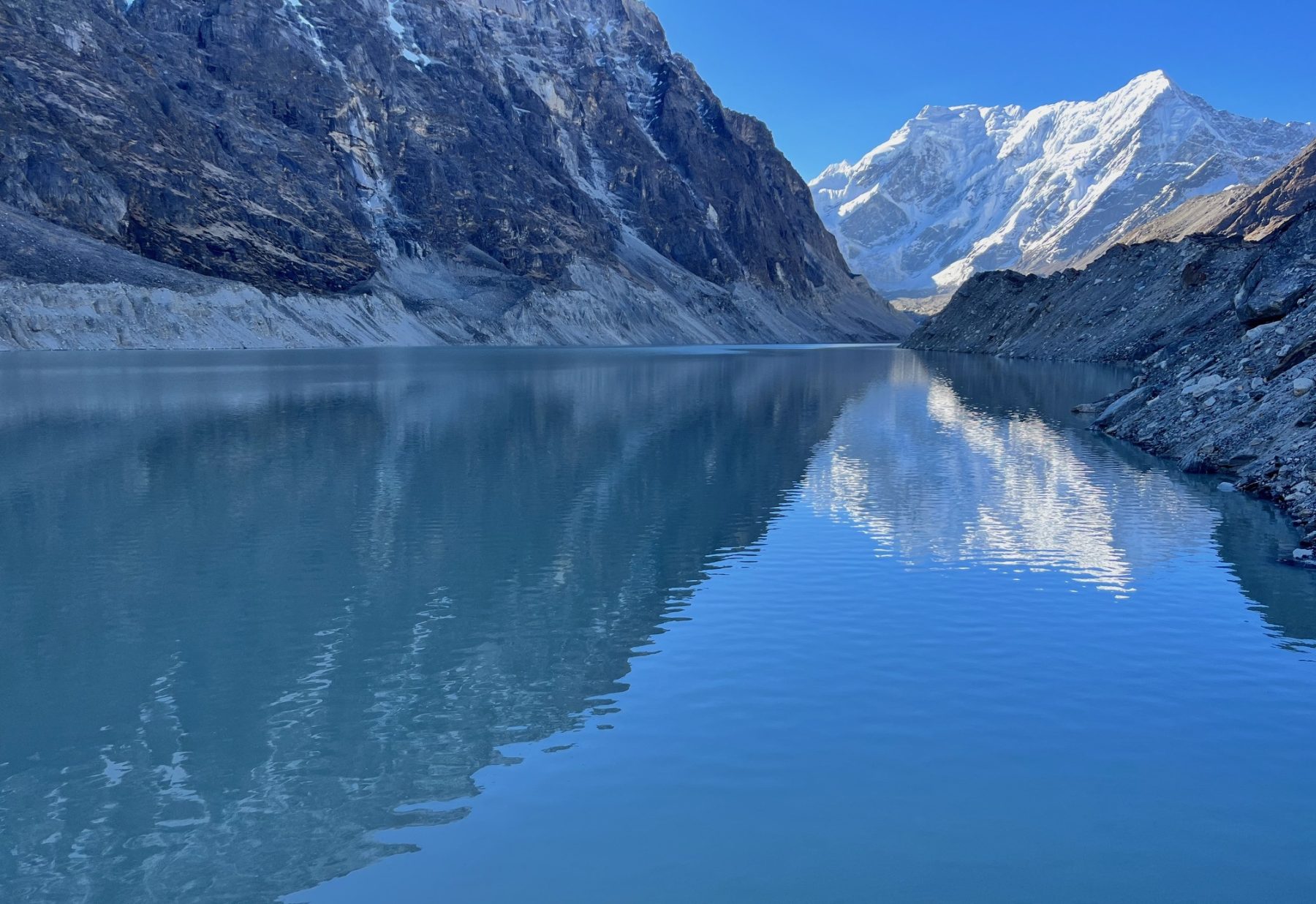
Beyond spirituality, Mount Kailash holds immense environmental and ecological importance. It is the source region of four of Asia’s great rivers: the Indus, Sutlej, Brahmaputra, and Karnali, which collectively sustain hundreds of millions of people across South and Southeast Asia. The mountain and its surrounding landscape form a delicate high-altitude ecosystem with glaciers, wetlands, and unique biodiversity. Disturbance from climbing expeditions would risk polluting headwaters, damaging fragile soils, and accelerating glacial degradation in a region already vulnerable to climate change.
The absence of climbing has helped preserve Kailash in a near-pristine state. Unlike many Himalayan peaks scarred by waste, fixed ropes, and human remains, Kailash stands untouched. Pilgrimage in the region is tightly regulated, focused on walking routes rather than summit attempts, which minimizes ecological impact while sustaining local livelihoods through low-intensity spiritual tourism.
Mount Kailash ultimately represents a different relationship between humans and mountains. It challenges the modern idea that value lies in reaching the top. Instead, it teaches restraint, humility, and reverence. In a world where even the highest peaks have become crowded and polluted, Kailash remains a powerful reminder that some places gain meaning precisely because they are never climbed.
Its untouched summit is not a symbol of human failure, but of collective respect. Across religions, cultures, and centuries, Mount Kailash endures as a sacred center of the natural and spiritual world, protected not by fences or laws alone, but by belief, ethics, and a shared understanding that not everything is meant to be conquered.