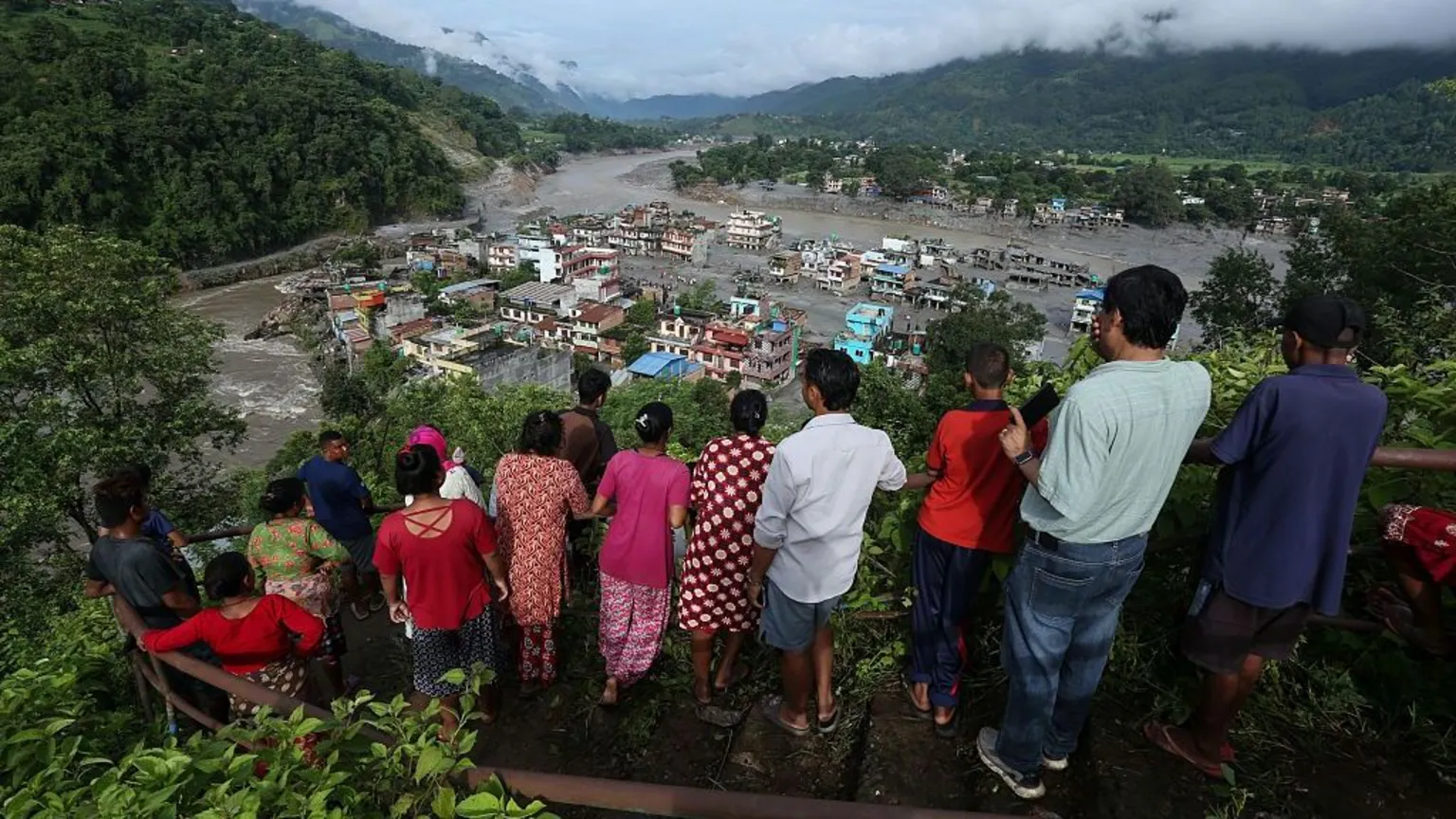

From the Himalayas to the United Nations: Nepal’s Call for Climate Justice
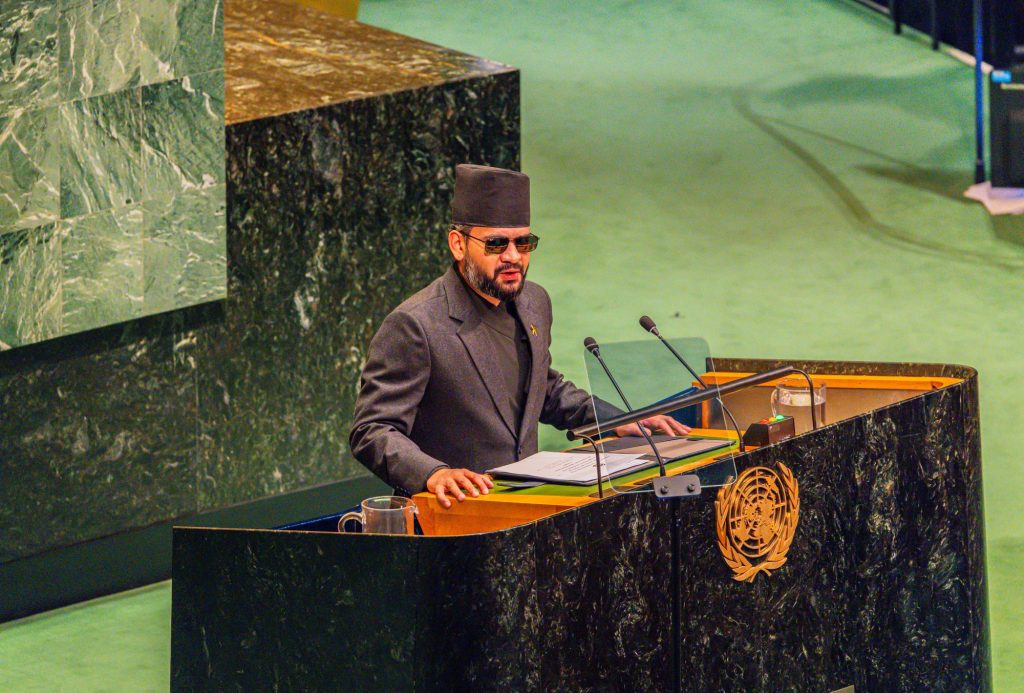
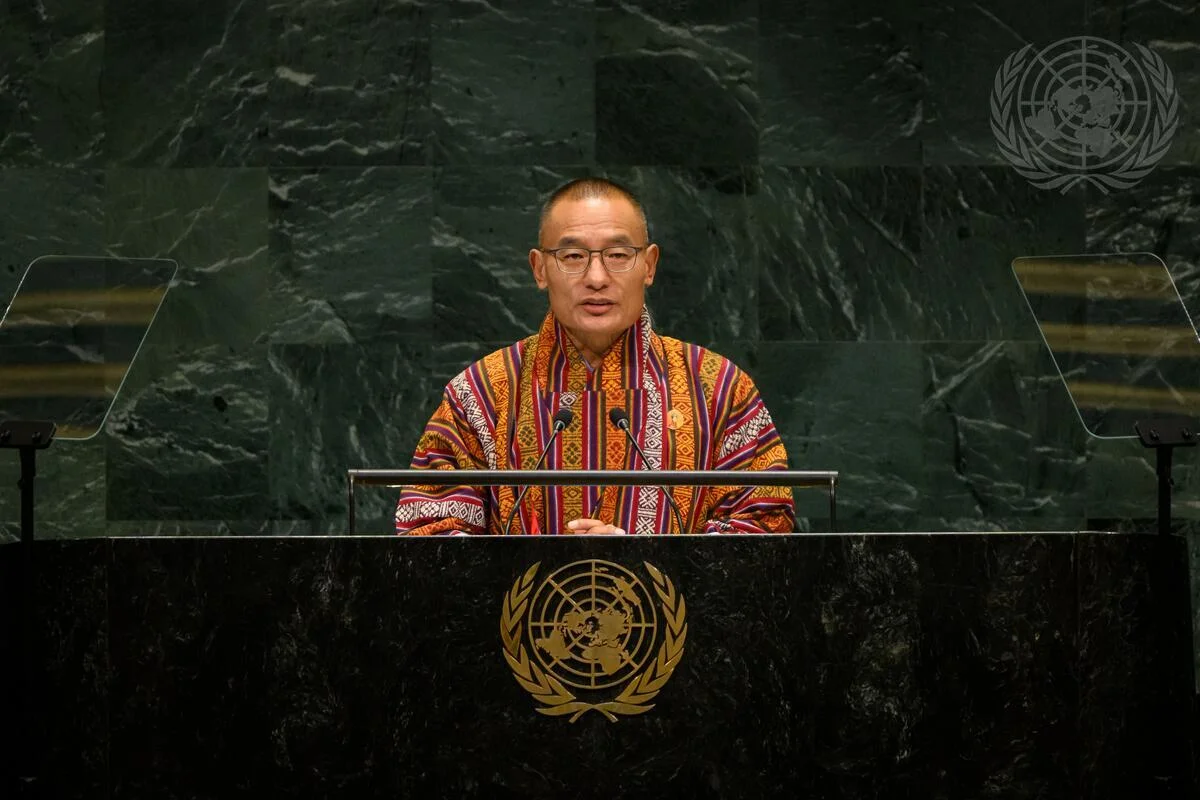
When Nepal’s Prime Minister Balendra “Balen” Shah stood before the 81st United Nations General Assembly in New York, he was representing a Himalayan nation still confronting the human, environmental and economic consequences of a devastating climate-related disaster. Yet his message went beyond Nepal’s immediate tragedy. At the center of his address was a larger question facing the international community: Who is primarily responsible for the climate crisis, who is paying its greatest price, and who should bear the responsibility for responding to its consequences?
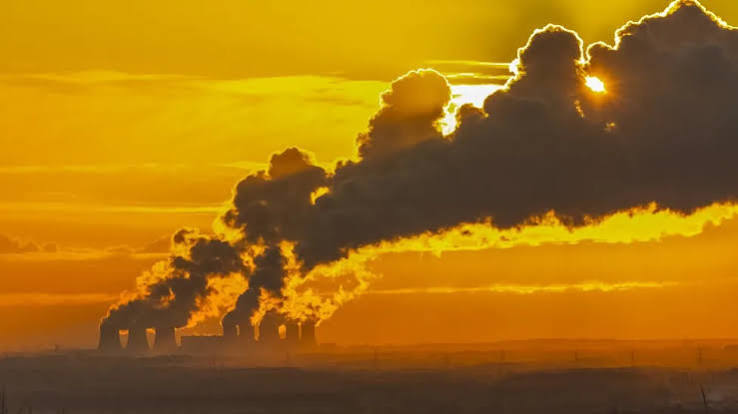
That question lies at the heart of climate justice. Nepal contributes only a tiny fraction of global greenhouse-gas emissions, yet its mountains, glaciers, rivers and communities are increasingly exposed to the consequences of a warming planet. In his address, Shah drew attention to retreating glaciers, unstable mountain landscapes, extreme rainfall, floods and other climate-related risks confronting the Himalayan region. His central argument was therefore based on a profound imbalance: countries that have contributed relatively little to global warming can nevertheless suffer some of its most destructive consequences.
One of the strongest elements of Shah’s address was his effort to move the discussion beyond traditional disaster relief. Humanitarian assistance after a catastrophe is essential, but climate justice asks a deeper question. If climate-vulnerable developing countries repeatedly have to borrow money to rebuild roads, bridges, schools, hospitals and communities destroyed by increasingly severe climate-related disasters, they can become trapped in a cycle of disaster, debt and reconstruction. Shah therefore called for greater access to grant-based international climate finance rather than forcing vulnerable countries to assume additional debt simply to rebuild what has been destroyed.
His use of the words “Relief, Rehabilitation, Reconstruction, Responsibility, Reparation and Resilience” captured this broader argument. Relief and reconstruction deal with what happens after disaster strikes. Responsibility and reparation raise questions about the causes of the climate crisis and the obligations of the international community. Resilience looks toward the future and asks how countries such as Nepal can prepare for disasters that are likely to become more frequent or severe. Together, these ideas attempted to shift the international discussion from charity toward justice.
This distinction is particularly important for Nepal. Climate justice is not simply a request for wealthy nations to donate more money after a flood or landslide. It concerns the structure of the international response itself. Countries with much greater historical greenhouse-gas emissions generally possess far greater financial and technological resources than countries such as Nepal. Yet climate-vulnerable nations often have limited fiscal capacity to adapt to climate change or recover from major disasters. When they must borrow to rebuild, climate vulnerability can become economic vulnerability as well.
Shah also sought to demonstrate that the Himalayan climate crisis cannot be treated as Nepal’s problem alone. The Himalayas form part of an interconnected ecological and hydrological system extending across national borders. Glaciers, rivers, monsoon systems and watersheds do not recognize political boundaries. What happens in high mountain regions can eventually affect agriculture, water security, infrastructure and livelihoods far downstream. His proposal for a Himalayan Climate Resilience Mechanism involving Nepal, India and China therefore represented one of the more substantive policy ideas in the speech. Such cooperation could potentially include scientific research, satellite information, monitoring of dangerous glacial lakes, stronger early-warning systems and coordinated responses to cross-border climate threats.
The proposal is also diplomatically significant. Nepal lies between India and China, two major powers with enormous populations and their own strategic interests. Bringing the three countries together around Himalayan climate science and disaster preparedness would not be simple. Yet climate change also provides an area in which practical cooperation could transcend some political differences. A dangerous glacial lake or transboundary flood does not distinguish between nationalities. Shared scientific information and early-warning systems could save lives on all sides of a border.
International attention, however, should not be confused with international action. A powerful speech can generate attention, and images of devastated Himalayan communities can generate sympathy, but neither automatically produces climate justice. Governments can express solidarity, international institutions can issue statements and donors can provide emergency assistance, while the underlying structural problems remain largely unchanged. Climate justice requires sustained action on climate finance, adaptation, loss and damage, technology transfer, scientific cooperation and the representation of vulnerable countries in international decision-making.
There is also an important distinction between responsibility abroad and responsibility at home. Nepal has legitimate grounds to demand greater international climate support, but climate justice cannot become an excuse for weaknesses within Nepal itself. The country must also strengthen environmental governance, disaster preparedness, land-use planning, infrastructure standards, early-warning systems and regulation of development in environmentally fragile areas. International responsibility and domestic responsibility are not contradictory. Wealthier and historically high-emitting countries can have greater obligations internationally while Nepal simultaneously improves its own capacity to protect its people.
This is why the idea of resilience deserves particular attention. Nepal cannot substantially alter the trajectory of global greenhouse-gas emissions on its own. Its contribution to the global total is simply too small. But Nepal can reduce vulnerability through better science, stronger institutions, responsible infrastructure, community preparedness and regional cooperation. At the same time, it can use international diplomacy to argue that adaptation costs should not fall disproportionately on people who played little role in creating the crisis.
Shah’s address also presents Nepal with a diplomatic opportunity. Internationally, Nepal has long been associated with Mount Everest, the Himalayas, trekking, Buddhism and its geographic position between India and China. The accelerating climate crisis gives Nepal an opportunity to develop another international role: as a Himalayan voice in the global climate-justice debate. Nepal’s mountains provide compelling evidence of planetary environmental change, while its relatively low emissions give the country a basis for advocating the interests of climate-vulnerable nations.
But establishing such a role requires more than one speech at the United Nations. Nepal would need sustained climate diplomacy, credible scientific research, cooperation with other mountain nations, stronger engagement with international climate institutions and consistent participation in global negotiations. The proposed Himalayan Climate Resilience Mechanism would need to move from a speech to diplomatic discussions and eventually to practical cooperation if it is to have lasting significance.
There is also a deeper lesson in Nepal’s message. The Himalayas may appear distant to someone living in New York, London, Beijing or another part of the world, but the climate system does not respect such psychological or political distance. Melting glaciers affect rivers; changing rivers affect agriculture and settlements; environmental disruption can affect migration, economies and regional stability. The Himalayan climate crisis is therefore both local and global. It demonstrates the fundamental interdependence between mountains, water, ecosystems and human societies.
The real measure of Shah’s address will not be the attention it received in the days following his appearance at the United Nations. It will be whether climate finance becomes more accessible to vulnerable countries, whether loss-and-damage mechanisms deliver meaningful support, whether Nepal, India and China can cooperate more closely on Himalayan climate risks, and whether Nepal itself strengthens resilience and environmental governance at home.
The Himalayas are already sending a warning through melting ice, unstable landscapes, changing water systems and increasingly destructive disasters. Shah carried that warning to the United Nations and placed Nepal’s climate-justice concerns before the international community. The world has been presented with Nepal’s case. The more difficult question now is: will that appeal lead to meaningful action, or will climate justice remain another powerful phrase repeated after each new disaster?