
Bhutan Takes Gelephu Mindfulness City to the World Stage at UN General Assembly
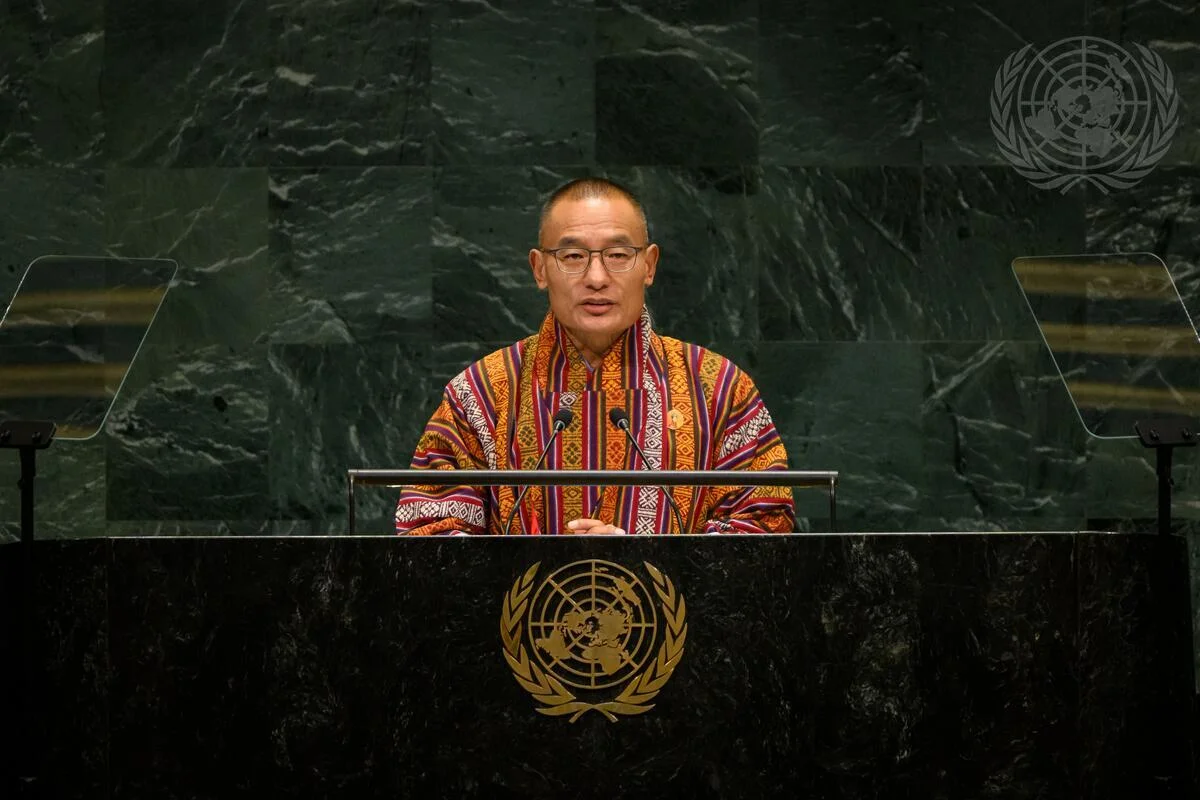
New York — Bhutan has taken its ambitious Gelephu Mindfulness City (GMC) project to the global stage, presenting it before the United Nations General Assembly as a new model of development that seeks to bring together economic prosperity, technological innovation, environmental conservation and human well-being.
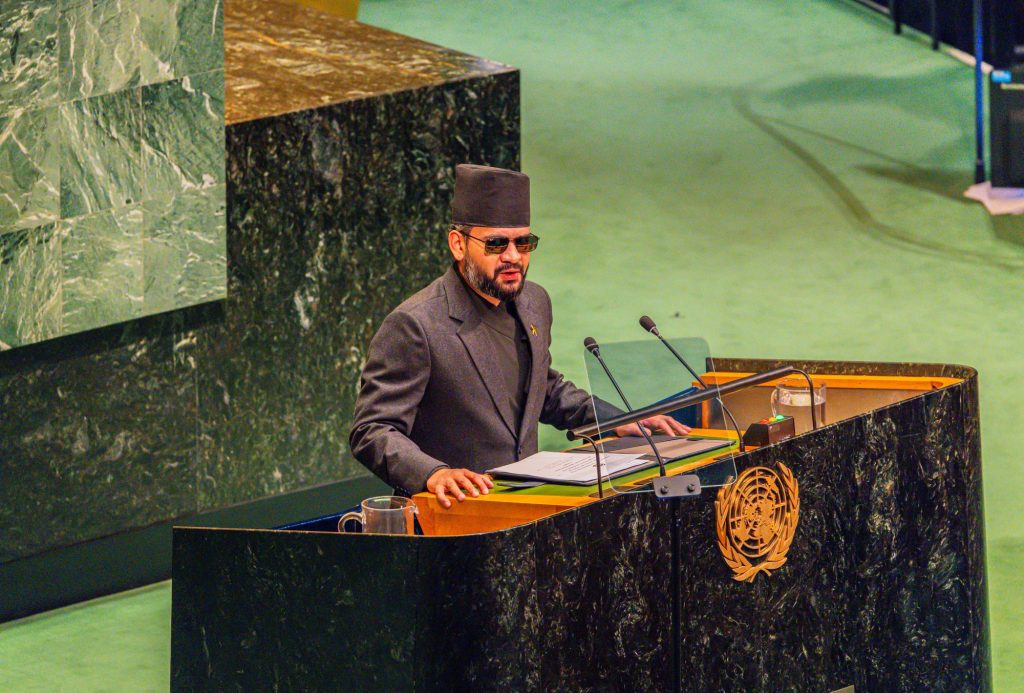
Addressing the 81st Session of the United Nations General Assembly in New York, Bhutanese Prime Minister Tshering Tobgay highlighted Gelephu Mindfulness City as one of the country’s most significant long-term development initiatives. The project, envisioned by Bhutan’s King Jigme Khesar Namgyel Wangchuck, is being developed in southern Bhutan along the border with India as a Special Administrative Region designed to attract international investment, technology, businesses and skilled professionals.
In an unusual opening to his presentation of the project, Tobgay told the General Assembly that he had come before the international community “not as a Prime Minister, but as a salesman.” His message was an invitation to investors, entrepreneurs, innovators and development partners around the world to participate in building the city. “Come and build it with us,” he told the international audience.
Covering more than 4,000 square kilometres, Gelephu Mindfulness City is envisioned as much more than a conventional urban development project. Bhutan aims to establish a city where economic activity and technological advancement can coexist with forests, rivers, biodiversity and the country’s cultural and spiritual traditions. The project has been granted significant administrative autonomy, giving Bhutan an opportunity to develop new regulatory and institutional frameworks suited to an emerging international economic centre.
Environmental sustainability remains at the heart of the project. Bhutan, internationally recognized for placing environmental conservation at the centre of its national development philosophy, wants Gelephu to demonstrate that economic growth does not necessarily require sacrificing nature. Instead of treating forests, rivers and wildlife as barriers to development, the GMC vision seeks to integrate them into the city’s economic, social and physical landscape.
Prime Minister Tobgay also emphasized Bhutan’s renewable-energy potential. The country plans to substantially expand its clean-energy capacity in the coming years, with renewable electricity expected to support emerging industries including artificial intelligence, data centres, advanced manufacturing and scientific research. In this vision, Bhutan’s abundant hydropower and other renewable resources could become an important foundation for attracting energy-intensive technology industries while maintaining relatively low-carbon development.
At the same time, Gelephu is being envisioned as a centre for spirituality and human development. Bhutan plans to incorporate Vajrayana Buddhist institutions, monasteries, meditation and retreat centres, libraries and centres of learning into the broader development of the city. This creates one of the project’s most distinctive ideas: a modern economic centre where technology companies and spiritual institutions, entrepreneurs and monks, and artificial intelligence and meditation could exist within the same urban environment.
Gelephu’s geographic location is equally important to Bhutan’s strategy. Situated along Bhutan’s southern border with the Indian state of Assam, the city could provide the landlocked Himalayan kingdom with greater access to India’s vast economy while strengthening connections between South Asia and Southeast Asia. Bhutan is also developing major infrastructure to support this ambition, including an international airport, improved road links, digital infrastructure and a railway connection with India’s extensive rail network.
The Prime Minister used his UN address to make a direct appeal for global investment, expertise and technology. He said artificial-intelligence and data-centre projects were progressing and that projects worth billions of dollars were under discussion. Tobgay compared Gelephu Mindfulness City to a large startup, but one beginning with significant advantages, including land, renewable energy, political commitment, institutional autonomy and proximity to one of the world’s largest markets.
The project also represents an important evolution of Bhutan’s internationally recognized development philosophy of Gross National Happiness. For decades, Bhutan has argued that national progress should not be measured solely through economic growth but should also consider environmental conservation, cultural preservation, good governance and human well-being. Gelephu Mindfulness City seeks to test whether those principles can be applied within a globally connected, technologically advanced and investment-driven economic centre.
First publicly announced by King Jigme Khesar Namgyel Wangchuck in December 2023, the project has gradually emerged as a central component of Bhutan’s long-term economic strategy. Its success, however, will depend on the country’s ability to attract sustained investment, build major infrastructure, develop skilled human resources and establish effective institutions while protecting the environment and preserving the cultural values that distinguish Bhutan’s development model.
By presenting Gelephu Mindfulness City before the United Nations, Bhutan has now taken that vision beyond its Himalayan borders. Prime Minister Tobgay’s message was not simply an invitation to invest in another new city. It was a proposal to explore whether economic prosperity, advanced technology, environmental responsibility and spiritual well-being can develop together rather than in competition with one another.
For a small Himalayan nation situated between two of the world’s largest economies, Gelephu represents an extraordinarily ambitious experiment. Whether the vision can be fully translated into reality remains to be seen, but Bhutan’s message at the United Nations was clear: it wants the international community not merely to observe the experiment, but to participate in building it.