
Buddha Jayanti in Solukhumbu: A Harmonious Fusion of Faith, Art, and Endurance

Solukhumbu, Nepal – May 2025
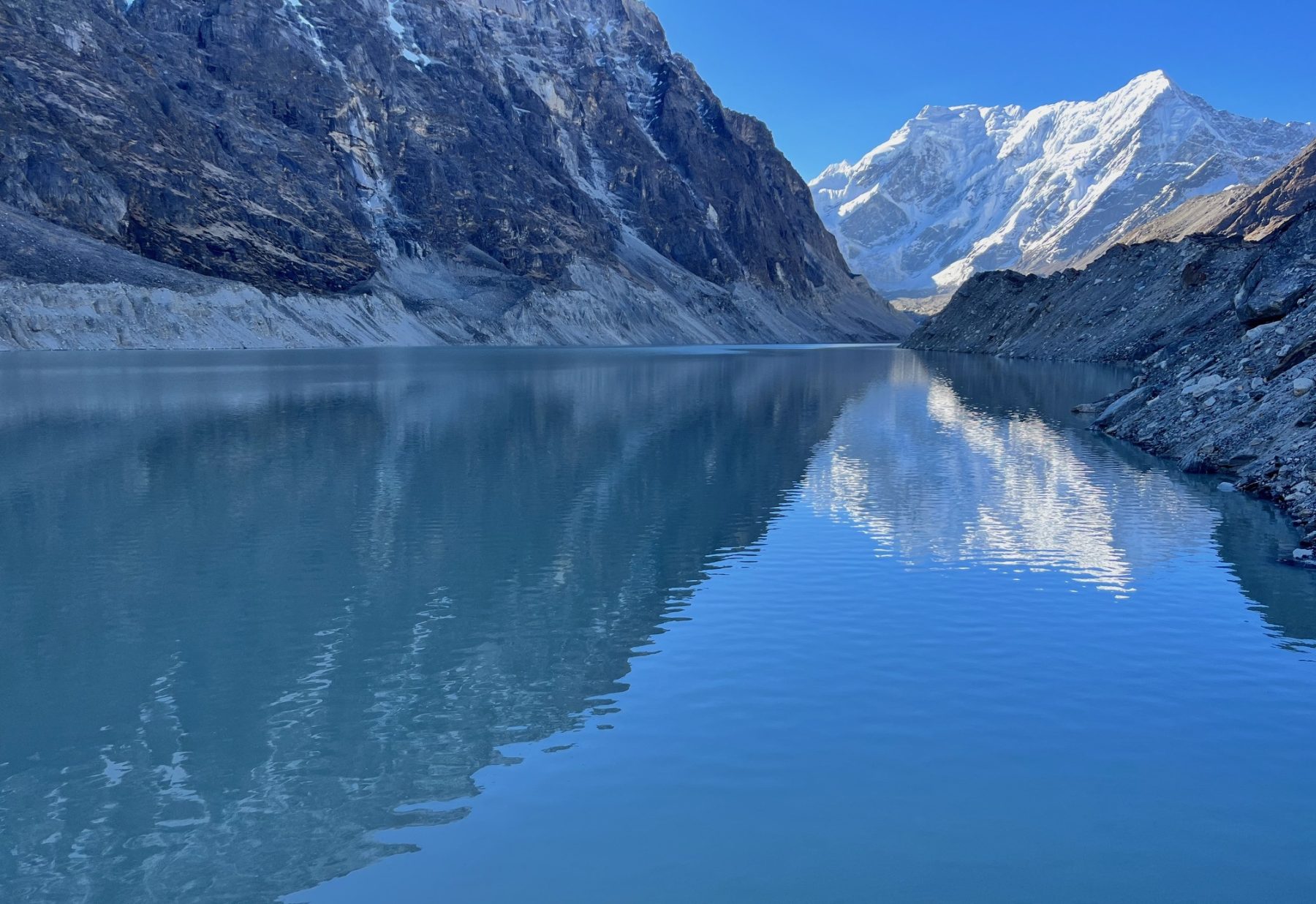
In the shadow of the mighty Numbur and Karyolung mountains, where ancient monasteries perch on windswept ridges and prayer flags whisper through the rhododendron forests, a remarkable chapter in Solukhumbu’s cultural history was written during the 2569th Buddha Jayanti. For the first time, the sacred Buddha Jayanti was celebrated with a unique confluence of tradition, athleticism, and artistic expression, transforming the tranquil town of Salieri into a vibrant canvas of devotion and community.
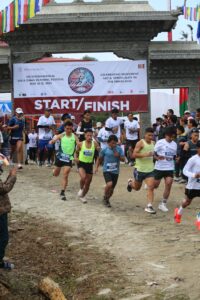
Running with Purpose: The First International Saka Dawa Marathon
On May 10 and 11, the inaugural International Saka Dawa Running Festival took off with resounding energy, aiming to spotlight SolukSahumbu as a hub for spiritual tourism and wellness. The event was more than a marathon, blessed by chanting monks and cheered on by locals. It was a pilgrimage in motion, weaving through a trail of monasteries from Thekchen Pema Chholing to Thuptenchholing, Junbesi, Chiwong Monastery, and beyond.
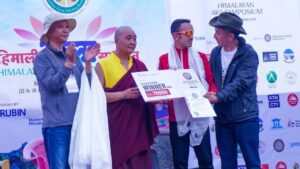
In the 42.2 km full marathon, Karan Rawal of the Nepal Army surged across the finish line in 3 hours, 19 minutes, and 8 seconds, claiming the men’s title. Sunsari Rokaya, also of the Nepal Army, dominated the women’s category. They were each awarded NPR 75,000, along with medals and certificates. Kul Bahadur Basnet and Milan Rai followed in second and third place for the men, while Anita Rai of Solukhumbu and Chhoki Sherpa of Okhaldhunga stood tall in the women’s rankings, earning NPR 50,000 and NPR 35,000, respectively.
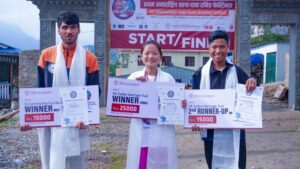
The 21 km Half Marathon celebrated Man Kumar Rokka, Gopal Tamang, and Kiran Thulung in the men’s division; Pasang Lhamu Tamang, Shornima Sherpa, and Ang Phurba Sherpa led the women’s. Their efforts were honored with medals, certificates, and prizes of NPR 35,000, 25,000, and 15,000, respectively.
In the 11 km heritage trail race, which snaked through ancient monasteries like Chyalsa, Namdol Chholing, and Chiprong Gonpa, Shiva Rayamajhi, Tank Bahadur Karki, and Dipeshhang Rai claimed victory among the men. Royal Rai emerged triumphant among the women. These participants received medals, certificates, and prizes of NPR 25,000, 20,000, and 15,000, respectively.
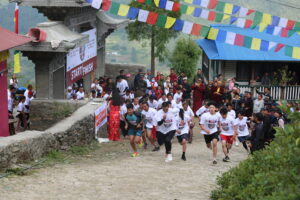
On May 10, the opening day, over 540 runners joined the Community Fun Run through Salleri Bazaar, inaugurated by Mr. Namgel Jangbu Sherpa, the Mayor of Solu Dudhkunda Municipality—signaling the community’s embrace of health, unity, and cultural pride.
All awards were graciously distributed by Tenji Sherpa, President, and Ngima Tendu Sherpa, General Secretary of Thekchen Pema Chholing Monastery.
A Community United: Cultural Showcase and Meditative Reflection
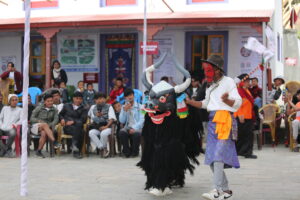
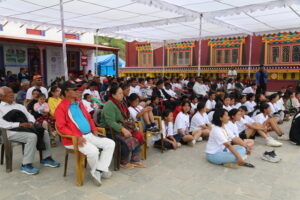
May 12—the sacred day of Buddha Purnima—began with a grand spiritual procession led by Trulku Pema Tharchen Rinpoche. Monks and laypeople walked together, carrying Buddhist flags, incense and hope through the streets of Salleri Bazaar, back to the monastery, where cultural performances unfolded like petals in bloom.
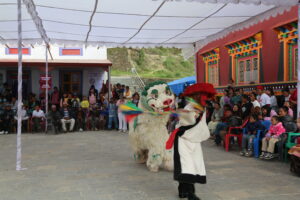
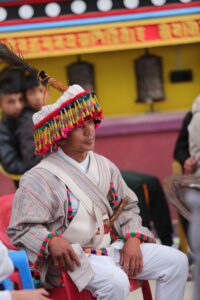
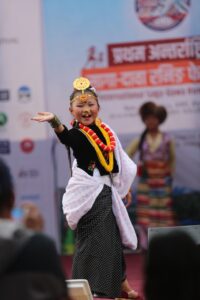
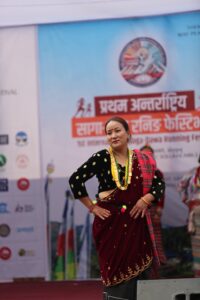
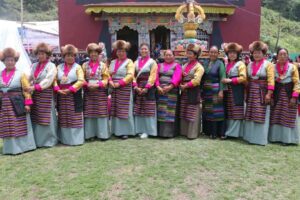
Dancers from the Sherpa, Tamang, Magar, Newar, and other ethnic communities shared stories through movement, music, and traditional dress. Organized by Pema Teckchen Monastary and led by Nepal Tamang Ghedung along with Sherpa Sangh, Magar Sangh, Newa Debu Deba and etc, the event honored the diverse spirit of Solukhumbu.
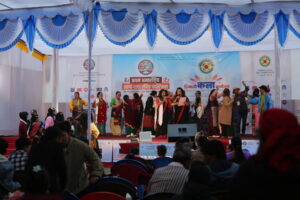
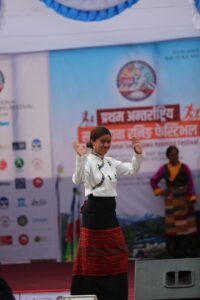
Adding a modern rhythm to the celebrations, a two-day fashion show choreographed by celebrity Bishal Gurung—brought a vibrant fusion of tradition and trend. Local youth and adult modeled garments that echoed their heritage while stepping into the future with confidence.
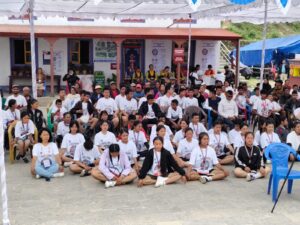
Meanwhile, under quiet skies, meditation teacher Iswar Chandra Bidya Sagar Shrestha from the Byom Kusuma Dharma Sangh offered open sessions and spiritual counseling, inviting all to turn inward even as the outer world danced with celebration.
An Artistic Awakening: Nepal’s First Himalayan Art Symposium
Running parallel to the festivities was a quieter, more contemplative celebration—the first Himalayan Art Symposium, held from May 12 to 18. Under the spiritual guidance of Thekchen Pema Chholing Monastery and in collaboration with New York’s Rubin Museum of Art, the symposium brought together artists, monks, and visionaries.
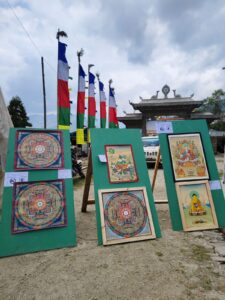
Inaugurated by Naradmani Hartamchhali, Chancellor of the Nepal Academy of Fine Arts, and later concluded by Palsangmu Sherpa, Head of the Academy’s Archaeology and Fine Arts Department, the symposium was both blessing and legacy.
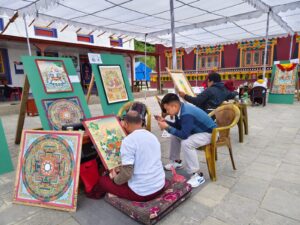
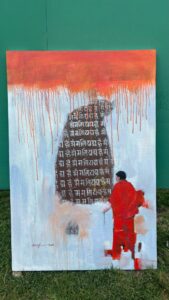
Seventeen artists gathered to breathe life into the five Buddhist virtues—Loving Kindness, Compassion, Sympathetic Joy, Equanimity, and Wisdom—using brush, pigment, and patience. Their works spoke quietly but deeply, echoing the silence of the surrounding peaks.
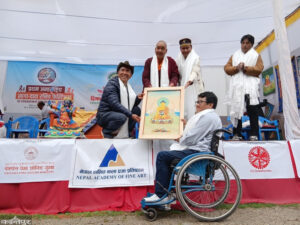
In a special moment, Angel Basnet of Jhapa was awarded first prize in the youth art competition, with Anish Bahadur Nembang and Pooja Rai receiving second and third. Each was honored with a certificate and prizes of NPR 25,000, 20,000, and 15,000, respectively.
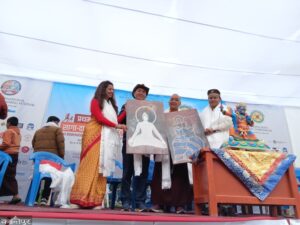
Over thousands of visitors passed through the art halls, where traditional Thangka painting demonstrations and mural work unveiled the soul of Himalayan art. Elder artists, many of whom had spent decades restoring sacred art in monasteries, were joined by younger voices—including differently-abled artists from Bodhisattvas in Action (BIA). Together, they explored “Himalayan Canvas Chronicles” through workshops, films, and dialogue.
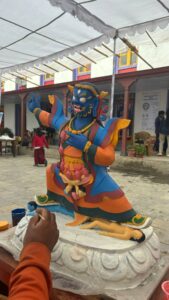
A highlight came when a sculptor, working silently over four days, completed a Mahakala statue on-site—later gifted to the monastery in an act of reverent offering.
“These events were meant to share the Buddha’s teachings through art, involve our youth, raise awareness of health and heritage, and promote sustainable tourism in lower Solukhumbu,” explained President Tenzi Sherpa.
A Vision for the Future
Encouraged by this year’s resounding success, Thekchen Pema Chholing Monastery and Solududhkunda Municipality have already marked their calendars: May 1–3, 2026, will host next year’s Buddha Jayanti, community fun run, and long-distance races. There are plans to expand the Himalayan Art Symposium to include mask-making, Torma sculpting, musical traditions, and symbolic textile arts, aiming to reclaim Solu’s rightful place as a beacon of Himalayan cultural richness.
As the final prayer flags fluttered beneath the full moon of Buddha Purnima, a Solukhumbu stood transformed: a place where mountains echo not only the chants of monks but also the footsteps of runners, the colors of artists, and the hopes of a community moving together toward spiritual and cultural renewal.
Photo courtesy: Thekchen Pema Chholing Monastery