
Global South Unites Ahead of COP30: ‘Make Climate Polluters Pay’ Gains Momentum

KATHMANDU, October 25 — As nations prepare for the landmark COP30 climate summit in Brazil next year, communities across the Global South are intensifying their demand for justice and accountability from the world’s largest carbon emitters. Under the banner “Make Climate Polluters Pay,” grassroots movements, civil society networks, and international environmental organizations have come together to call for reparations from fossil fuel corporations and wealthy nations whose historic emissions have driven the escalating climate crisis.
The campaign—coordinated by global alliances such as Greenpeace International, Climate Action Network, and the Loss and Damage Collaboration—calls for concrete commitments on climate finance, compensation for irreversible losses, and immediate support for vulnerable communities already suffering devastating impacts. The movement’s momentum comes as 2024 marked a grim milestone: the first year global average temperatures exceeded the 1.5°C threshold above pre-industrial levels, signaling that the world has entered the era of climate breakdown.
A Growing Call for Accountability
“Communities in the Global South are living the consequences of a crisis they did not cause,” said a statement from Greenpeace International. “We are demanding that major polluters and rich governments take responsibility for the damage their emissions have inflicted on our lives, livelihoods, and ecosystems.”
The campaign will feature symbolic demonstrations across Asia, Africa, and Latin America. In Odisha, India, activists will unveil a 30-meter-long “climate bill” printed on traditional saree fabric in early November—representing the immense financial and human costs borne by those on the climate frontlines. Similar events are planned in Dhaka, Manila, Nairobi, and Lima, highlighting the shared struggles of communities grappling with floods, droughts, and rising seas.
According to a new analysis by Professor James Rising of the University of Delaware and Dr. Lisa Rennels of Stanford University, the total economic damages linked to carbon emissions from just five major oil and gas corporations between 2016 and 2025 could surpass USD 5 trillion. The study underscores a growing consensus among economists and climate scientists that fossil fuel companies should be held legally and financially accountable for their contribution to global warming.
Nepal’s Rising Climate Toll
For Nepal, a nation at the heart of the Himalayas and among the most climate-vulnerable in the world, the crisis is escalating at an alarming pace. Data from Nepal’s Department of Hydrology and Meteorology (DHM) indicate that national average temperatures have already risen 0.7°C above pre-industrial levels by 2023. The warming trend is driving extreme weather patterns, glacial melt, and ecosystem collapse.
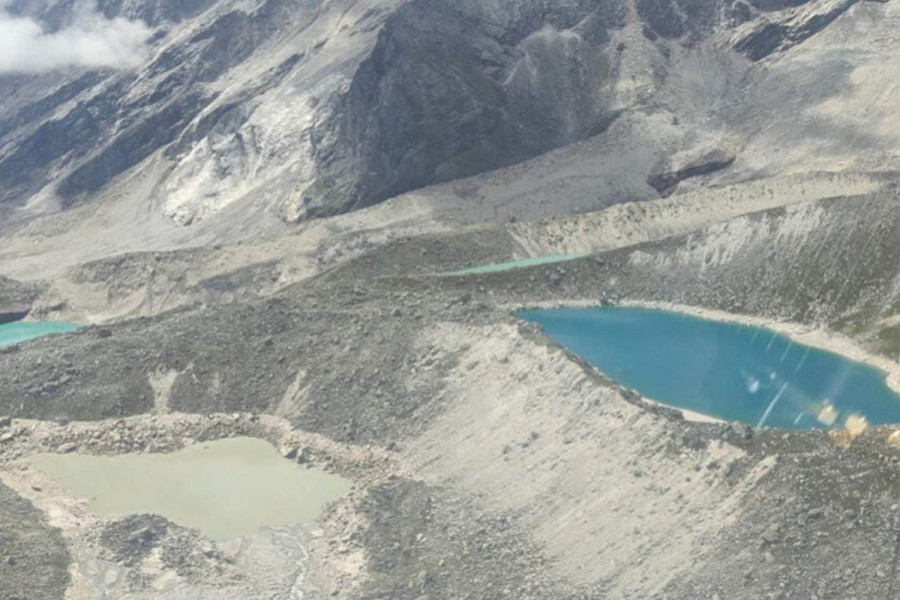
Himalayan glaciers—critical water sources for nearly two billion people downstream—are now melting 65% faster than a decade ago, posing a long-term threat to both mountain and lowland communities. Recent years have seen a series of devastating disasters:
-
2017 Terai floods affected 1.7 million people and caused an estimated USD 584 million in damages—nearly 2% of Nepal’s GDP.
-
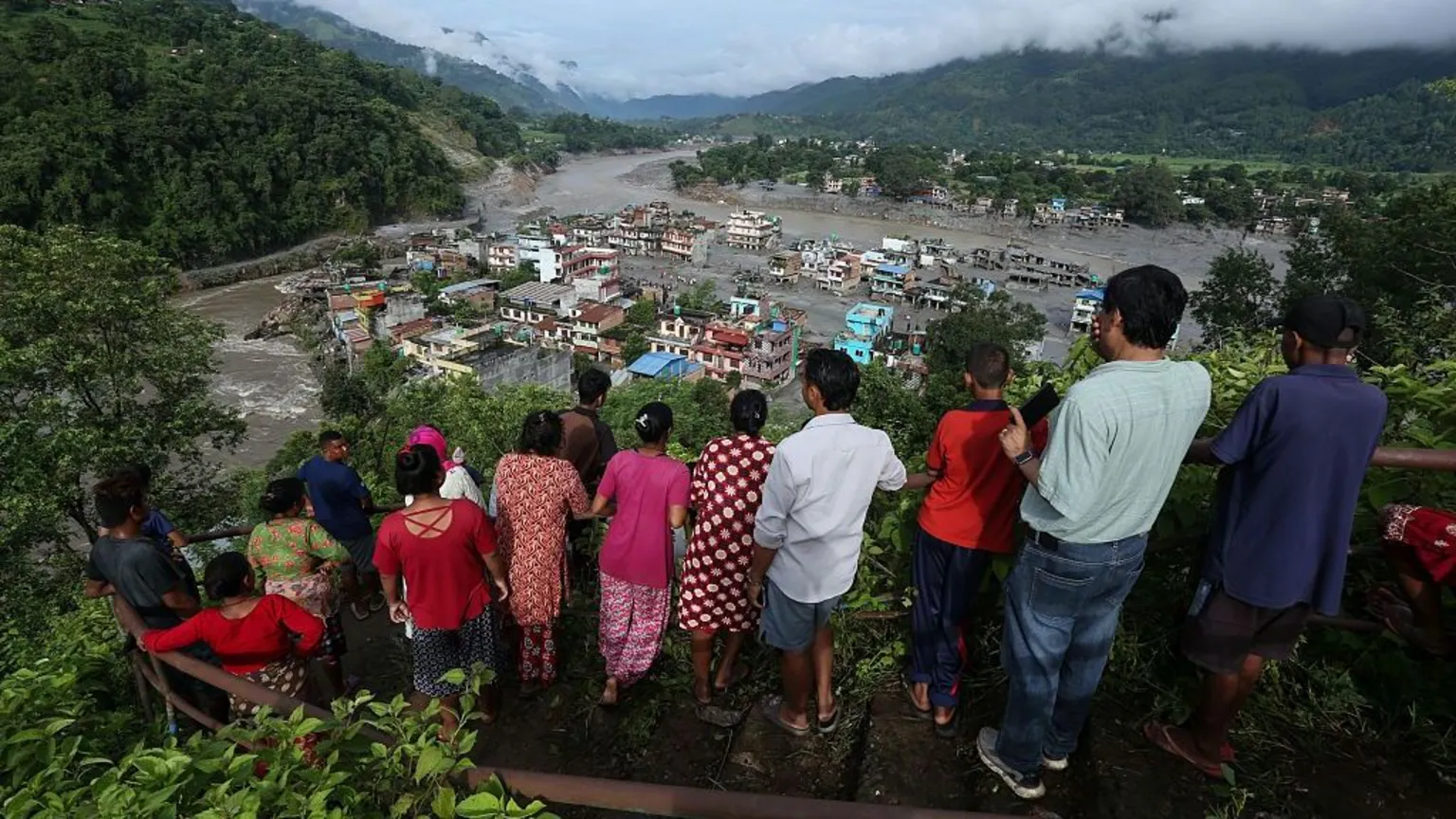
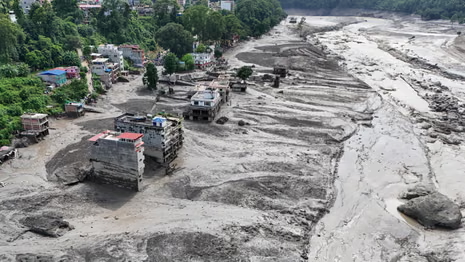
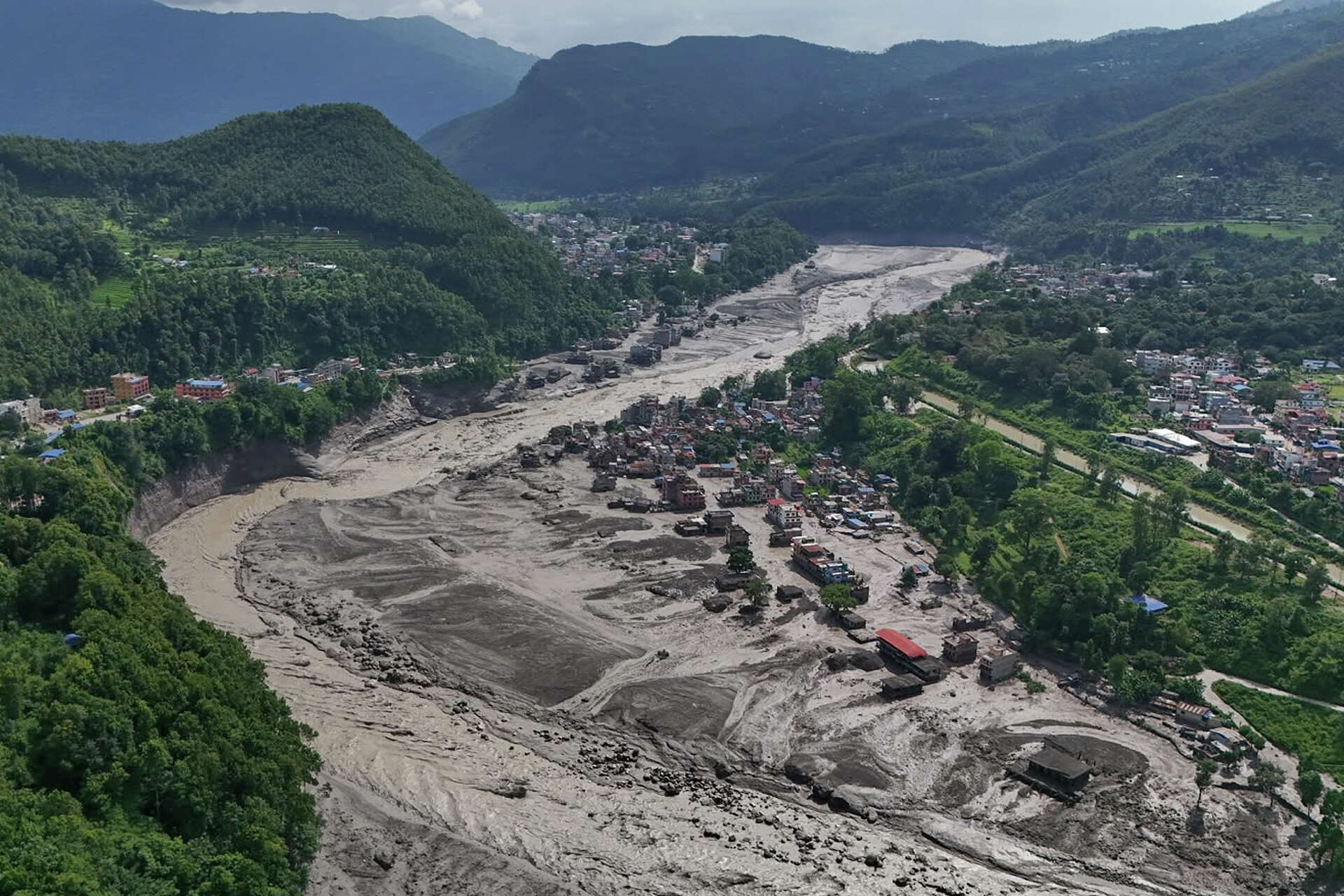
2021 Melamchi flash floods destroyed major infrastructure, including roads and water supply systems.
-
2024 monsoon floods killed over 100 people and displaced thousands across 11 districts, causing damages of NPR 46.68 billion (~USD 350 million).
The World Bank estimates that Nepal’s annual climate-related losses now exceed USD 270 million, with flooding alone accounting for nearly 60% of those damages. Meanwhile, rising temperatures and erratic rainfall patterns have taken a severe toll on agriculture, which employs 65% of Nepal’s population. Farmers across the Terai and mid-hill regions report declining crop yields, prolonged droughts, and soil degradation, while unplanned urbanization has triggered urban flash floods and the spread of vector-borne diseases in cities like Kathmandu and Pokhara.
The Broader South Asian Context
Across South Asia, the human cost of climate inaction is mounting. Bangladesh faces worsening coastal erosion and displacement; India’s heatwaves are breaking records; and Pakistan continues to recover from the 2022 floods that submerged one-third of the country. Scientists warn that without urgent climate finance and systemic emission reductions by rich nations, these crises will only deepen.
Civil society leaders from Nepal, India, and Bangladesh are urging COP30 negotiators to operationalize the Loss and Damage Fund established under COP27, ensuring direct access to financial support for the most affected countries. They argue that voluntary pledges and token aid are no longer sufficient; what’s needed is an enforceable global mechanism to make polluters pay.
Toward a Just Transition
The “Make Climate Polluters Pay” campaign is not only a call for compensation—it is also a vision for a just and equitable transition to renewable energy. Activists emphasize that climate justice must include protecting Indigenous knowledge systems, empowering women, and ensuring that the shift away from fossil fuels benefits those most affected by the crisis.
“Justice means repair, restoration, and accountability,” said Neha Sinha, South Asia coordinator for the campaign. “Communities that have protected forests, rivers, and glaciers for generations are losing everything while corporations continue to profit. That must change.”
As COP30 approaches, the world will be watching how governments respond to the mounting pressure for accountability. For the millions living at the mercy of floods, droughts, and melting glaciers, the demand is clear: it’s time for the world’s biggest polluters to pay their fair share.