

Two UC Berkeley Professors Share 2025 Nobel Honors for Breakthroughs in Chemistry and Physics

BERKELEY, Calif., October 8, 2025 — The University of California, Berkeley is celebrating a historic week after two of its distinguished faculty members won the 2025 Nobel Prizes in Chemistry and Physics for their groundbreaking scientific contributions.
Omar Yaghi Wins 2025 Nobel Prize in Chemistry
UC Berkeley Professor Omar M. Yaghi was awarded the 2025 Nobel Prize in Chemistry for his pioneering work in metal-organic frameworks (MOFs), a class of crystalline materials known for their porous structures and remarkable ability to capture, store, and transform molecules. He shares the prize with Susumu Kitagawa of Kyoto University and Richard Robson of the University of Melbourne.
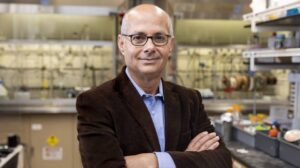
Professor Yaghi’s research has fundamentally changed how scientists design materials at the molecular level. Through the field of reticular chemistry, which he helped establish, Yaghi developed a method to link metal ions and organic molecules into highly ordered frameworks. These MOFs have vast internal surface areas, allowing them to perform extraordinary tasks such as harvesting water from desert air, capturing carbon dioxide, and storing gases safely and efficiently.
Speaking after the announcement, Yaghi said he was “astonished and deeply grateful,” adding that the award honors not just his work but the entire field of chemistry dedicated to solving global challenges through molecular design.
Yaghi, who joined UC Berkeley after teaching at Arizona State University, the University of Michigan, and UCLA, has been recognized for decades as one of the most influential chemists of his generation. His Nobel Prize marks the 28th awarded to UC Berkeley faculty members.
John Clarke Wins 2025 Nobel Prize in Physics
A day earlier, John Clarke, Professor Emeritus of Physics at UC Berkeley, was named one of the 2025 Nobel laureates in Physics. He shares the honor with Michel H. Devoret and John M. Martinis for their pioneering research in quantum phenomena in superconducting circuits.
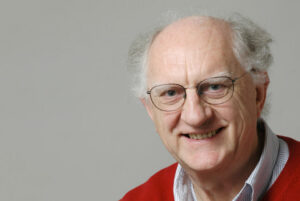
Their work demonstrated that quantum mechanical effects—once believed to occur only at the atomic scale—can also be observed in larger, man-made electrical circuits known as Josephson junctions. This discovery opened the door to the development of superconducting qubits, which form the foundation of modern quantum computers.
Clarke’s laboratory at Berkeley played a crucial role in these early breakthroughs. In the 1980s, both Devoret and Martinis worked under his guidance, conducting experiments that revealed how quantum energy levels could be observed and controlled in electronic circuits. These insights have since become central to the rapidly advancing field of quantum technology.
In a university statement, UC Berkeley Chancellor Rich Lyons praised Clarke’s lifelong dedication to science, calling his achievements “a testament to Berkeley’s enduring leadership in the physical sciences.”
A Historic Week for UC Berkeley
The twin Nobel victories underscore UC Berkeley’s reputation as a global center for discovery and innovation. Yaghi’s research is helping address pressing environmental challenges through molecular design, while Clarke’s discoveries continue to shape the future of computing and quantum engineering.
The 2025 Nobel Prizes will be formally presented in Stockholm this December, where both laureates will receive their medals and diplomas. For UC Berkeley, the recognition marks not just two extraordinary achievements, but a reaffirmation of the university’s role at the forefront of science and technology.