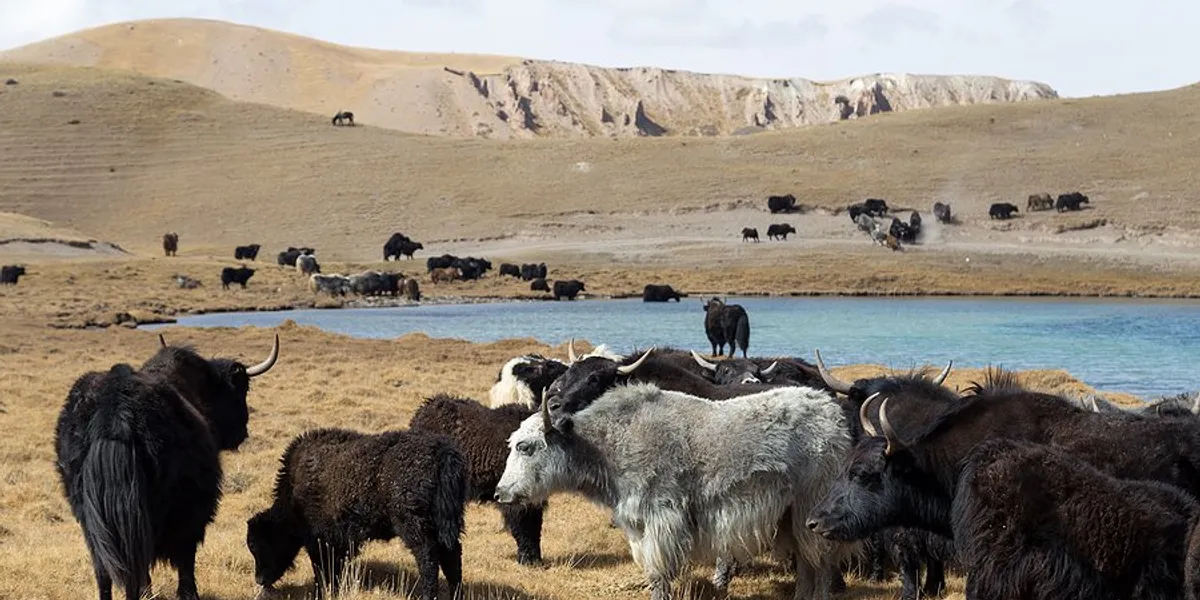
LADAKH, India — As dusk settles over the rugged, high-altitude plains of India’s Ladakh region, 32-year-old Tsering Dolma guides a group of yaks into a stone corral, her one-year-old son strapped to her back. Surrounded by wind-swept wilderness, Dolma is one of the few remaining traditional herders in this remote corner of the Himalayas, where life has long depended on the seasonal snowmelt that sustains the grasslands her yaks graze on. But now, the snow comes late, the rain is erratic, and the grass is thinning.
“Winters used to be colder, and we had more snow,” Dolma says. “Now, it’s warmer, and water is scarce.”
In Ladakh, a region bordering Tibet and once a key stop along the Silk Route, women play a central role in yak herding—milking, wool gathering, and making dairy products by hand. Seventy-three-year-old Kunzias Dolma, a lifelong herder, begins her day at 5 a.m. milking yaks and crafting yak butter, spinning a prayer wheel in one hand as she works with the other. “We’ve done this all our life,” she says, “but the climate is changing.”
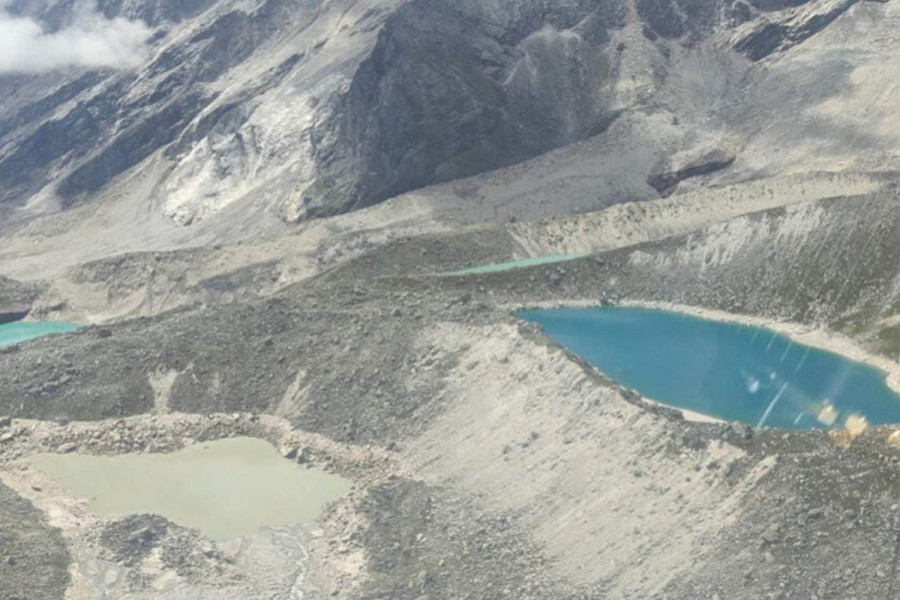
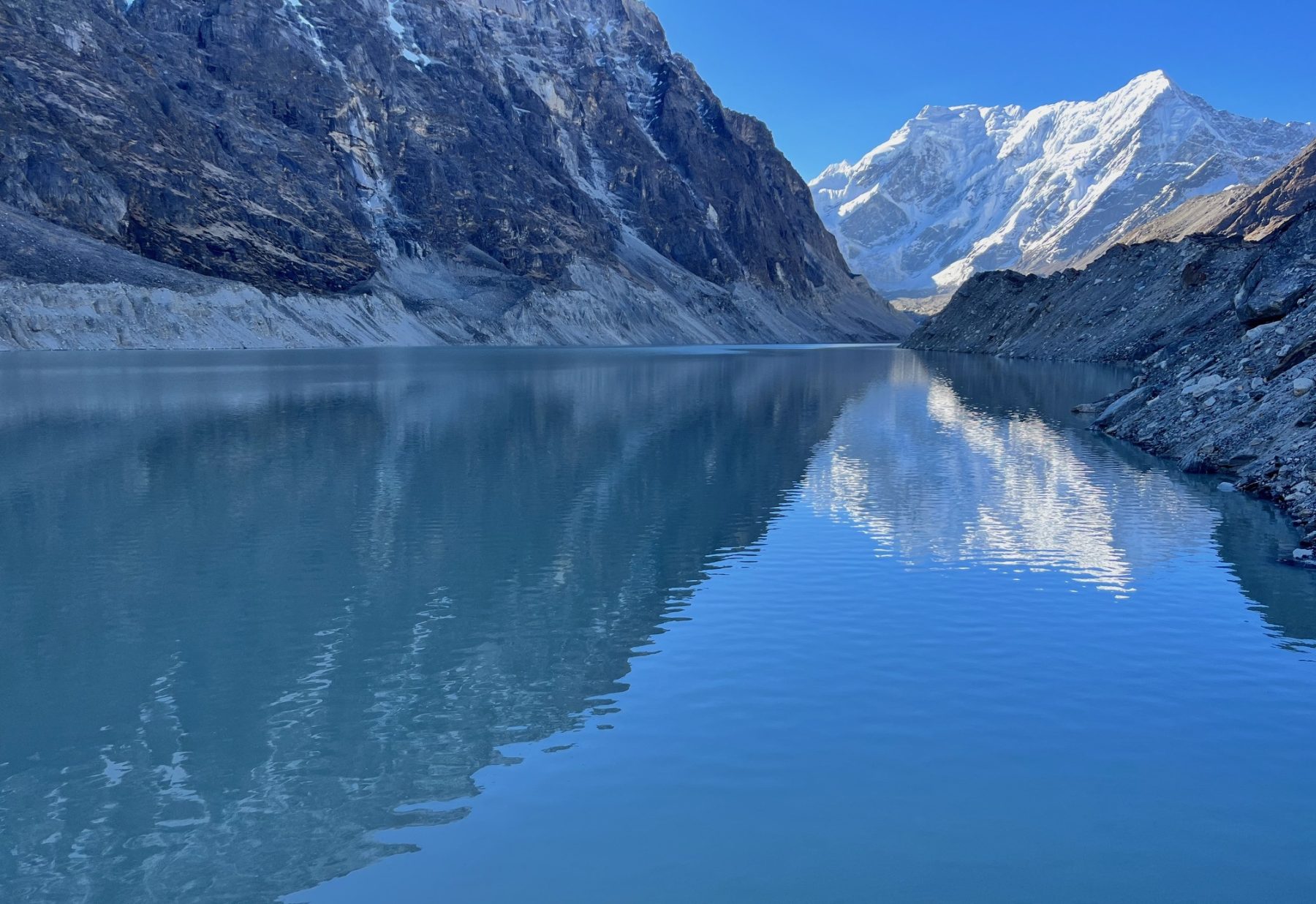
Ladakh’s delicate ecosystem, situated over 3,000 meters (nearly 10,000 feet) above sea level, is especially vulnerable to global warming. Over the past 40 years, the average temperature in the region has risen by 3°C (5.4°F). As glaciers melt more quickly, and rainfall becomes unpredictable, yaks—animals adapted to cold climates—struggle to find adequate food and shelter. Their numbers are declining: the government estimates Ladakh’s yak population dropped from nearly 34,000 in 2012 to under 20,000 in 2019.
The changes aren’t lost on veteran herders. “There was more grass, more snow, and more wildlife,” recalls 70-year-old Thering Norphel. Now, he says, the mountains are bare rock, and the pastures are overrun with weeds and less-nourishing shrubs.
This decline threatens more than just livelihoods. According to Tashi Dorji, a rangelands expert with the International Centre for Integrated Mountain Development, yak herders serve as vital stewards of Ladakh’s alpine ecosystem. “Without herders,” he explains, “invasive plants spread, native grasses vanish, and wildlife like snow leopards and blue sheep lose their habitats. The land suffers.”
Warmer temperatures have also increased bacterial infections in yaks, according to livestock officer Stanzin Rabgais. Still, Rabgais believes yak products—like the exceptionally soft wool from calves—could gain value if better marketed, potentially giving yak herding an economic lifeline.
But the appeal of herding is fading. Younger Ladakhis are opting for jobs in the military, tourism, or other sectors. As roads improve and tourism booms, many see more promising futures elsewhere. “The younger generation doesn’t want this life,” says Norphel. “They prefer stable jobs and education over harsh mountain labor.”
Still, a few young people choose to stay. Among them is 32-year-old Punchuk Namdol, who remains committed to the ancestral way of life despite the odds. “Before, herding was all we knew,” he says. “Now, fewer want to do it. But someone must care for the yaks.”
Unless more young Ladakhis follow Namdol’s path, traditional yak herding—along with the cultural and ecological harmony it supports—may fade into memory. As Dorji warns, “This is not just about yaks. It’s about the survival of a people, a landscape, and a centuries-old relationship between the two.”