
First Dharma Chakra Day (Chokhor Duchen): Celebrating the Buddha’s First Turning of the Wheel of Dharma
First Dharma Chakra Day, known in Tibetan as Chokhor Duchen, is one of the four most sacred festivals in the Buddhist calendar. It commemorates the day when Shakyamuni Buddha delivered his first sermon after attaining enlightenment. This historic event marks the beginning of the Buddha’s teaching career and the establishment of the Buddhist Sangha, or community of disciples. More than 2,500 years later, Buddhists around the world continue to observe this day with deep devotion, remembering the Buddha’s compassion in sharing the path that leads from suffering to liberation.
After attaining enlightenment beneath the Bodhi Tree at Bodh Gaya in present-day Bihar, India, the Buddha remained in meditation for several weeks, reflecting on the profound truth he had realized. According to Buddhist tradition, he initially hesitated to teach because he believed the truth was so deep and subtle that most people would find it difficult to understand. Seeing the needs of the world, the deity Brahma Sahampati respectfully requested the Buddha to teach for the benefit of those who were ready to awaken. Out of boundless compassion, the Buddha accepted this request and decided to share his realization with others.
The Buddha first thought of teaching his former meditation teachers, Alara Kalama and Uddaka Ramaputta, but learned that both had already passed away. He then remembered the five ascetics who had practiced with him during the years of severe austerities before his enlightenment. These five practitioners had abandoned him when he rejected extreme self-mortification in favor of what later became known as the Middle Way. Knowing they possessed the sincerity and discipline to understand the Dharma, the Buddha journeyed from Bodh Gaya to Deer Park at Sarnath, near the ancient city of Varanasi in northern India.
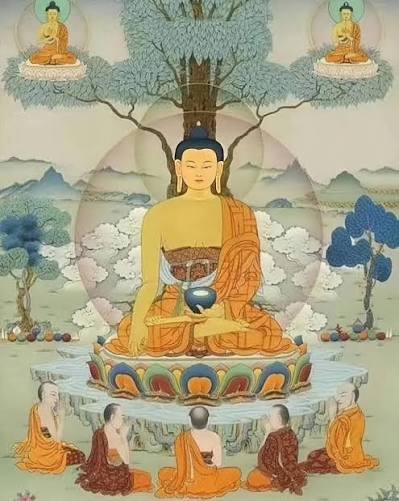
When the Buddha arrived at Deer Park, the five ascetics at first refused to honor him because they believed he had abandoned the spiritual path. However, as they observed his calm demeanor, radiant presence, and extraordinary peace, they recognized that he had undergone a profound transformation. They welcomed him, listened attentively, and became the first audience to hear the Buddha’s teachings. These five disciples were Kondanna (Kauṇḍinya), Vappa, Bhaddiya, Mahanama, and Assaji. Among them, Kondanna became the first person to realize the Buddha’s teaching and attain the first stage of enlightenment, known as stream-entry. The Buddha joyfully declared, “Kondanna has understood,” marking the birth of the Buddhist Sangha.
This historic event is known as the First Turning of the Wheel of Dharma because it represents the moment when the Buddha first set the Dharma, or universal truth, into motion. The Sanskrit term Dharmachakra literally means “Wheel of Dharma” or “Wheel of Truth.” Just as a wheel rolls forward and continues its journey, the Buddha’s teachings began with this first sermon and gradually spread throughout India, Asia, and eventually the entire world. This teaching laid the foundation upon which all later Buddhist philosophy and practice were built.
The Buddha’s first discourse, known as the Dhammacakkappavattana Sutta, introduced the Four Noble Truths, which remain the central teaching of Buddhism. The first Noble Truth explains that suffering, or dukkha, is an unavoidable part of human existence. Birth, aging, sickness, death, separation from loved ones, disappointment, and dissatisfaction are experiences common to all people. The Buddha was not teaching pessimism; rather, he encouraged people to honestly recognize the realities of life so that genuine freedom could be achieved.
The second Noble Truth identifies the cause of suffering as craving, attachment, and ignorance. Human beings continuously seek lasting happiness through wealth, possessions, status, relationships, and personal identity. Because everything in life is impermanent, attachment to these changing conditions inevitably leads to disappointment and suffering. The Buddha explained that our ignorance of the true nature of reality causes us to cling to what cannot permanently satisfy us.
The third Noble Truth offers hope by teaching that suffering can come to an end. Since suffering has causes, it can also be eliminated by removing craving, attachment, hatred, and ignorance. This complete freedom from suffering is known as Nirvana, the highest state of peace, wisdom, and liberation. The Buddha emphasized that liberation is attainable through personal understanding and practice rather than through blind faith or ritual alone.
The fourth Noble Truth presents the practical method for ending suffering: the Noble Eightfold Path. This path consists of Right View, Right Intention, Right Speech, Right Action, Right Livelihood, Right Effort, Right Mindfulness, and Right Concentration. These eight practices are traditionally grouped into the three trainings of wisdom, ethical conduct, and mental discipline. Rather than being followed one after another, they support one another and are practiced together throughout one’s life. The Noble Eightfold Path provides a complete guide for cultivating wisdom, compassion, moral responsibility, and inner peace.
Another important teaching given during the first sermon was the Middle Way. Before his enlightenment, Siddhartha Gautama experienced both the luxury of palace life and the hardship of extreme asceticism. He realized that neither indulgence nor self-torture leads to awakening. Instead, genuine wisdom develops through a balanced life grounded in ethical conduct, meditation, and insight. The Middle Way continues to offer valuable guidance in today’s world, where many people struggle between excessive materialism, relentless competition, and emotional burnout.
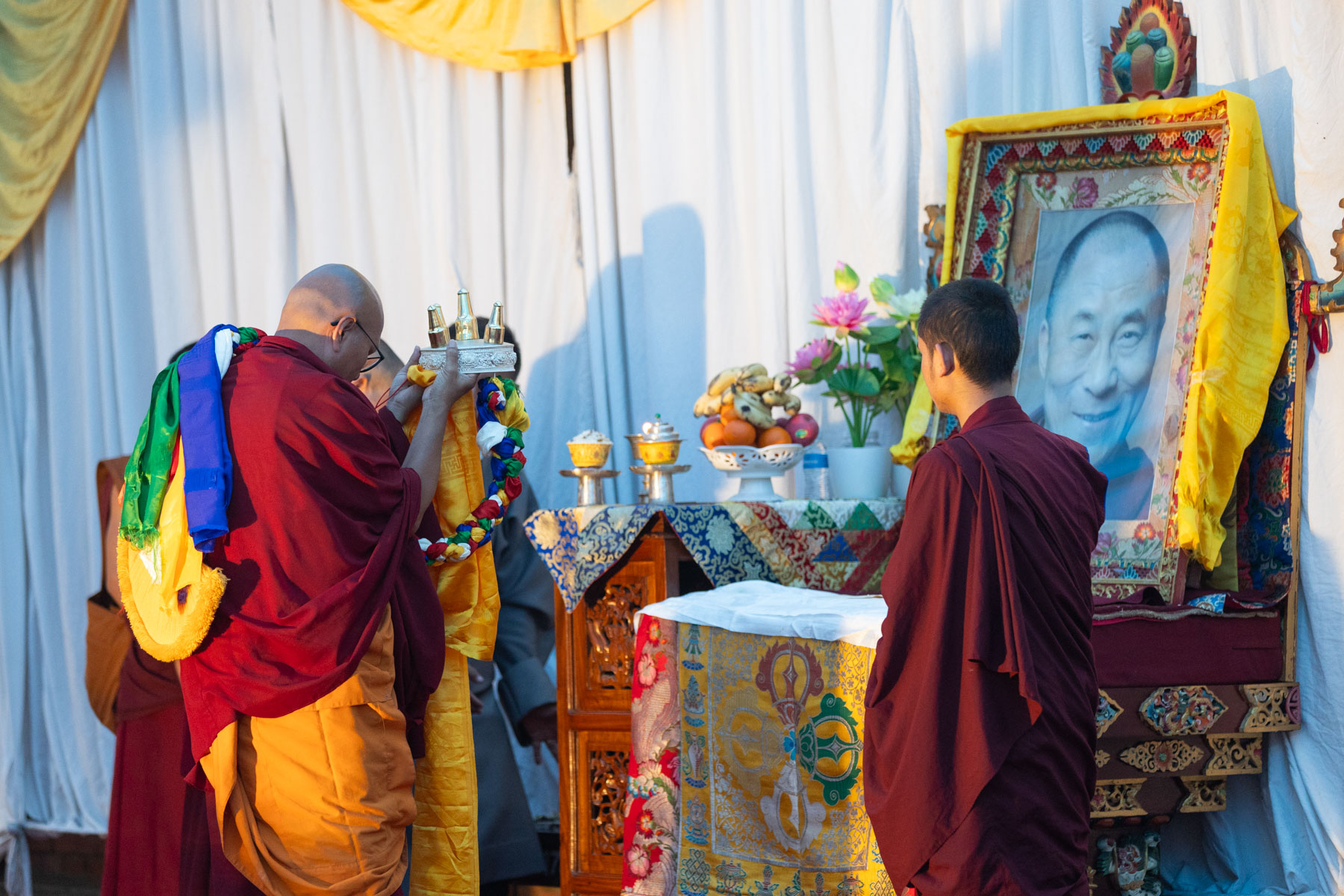
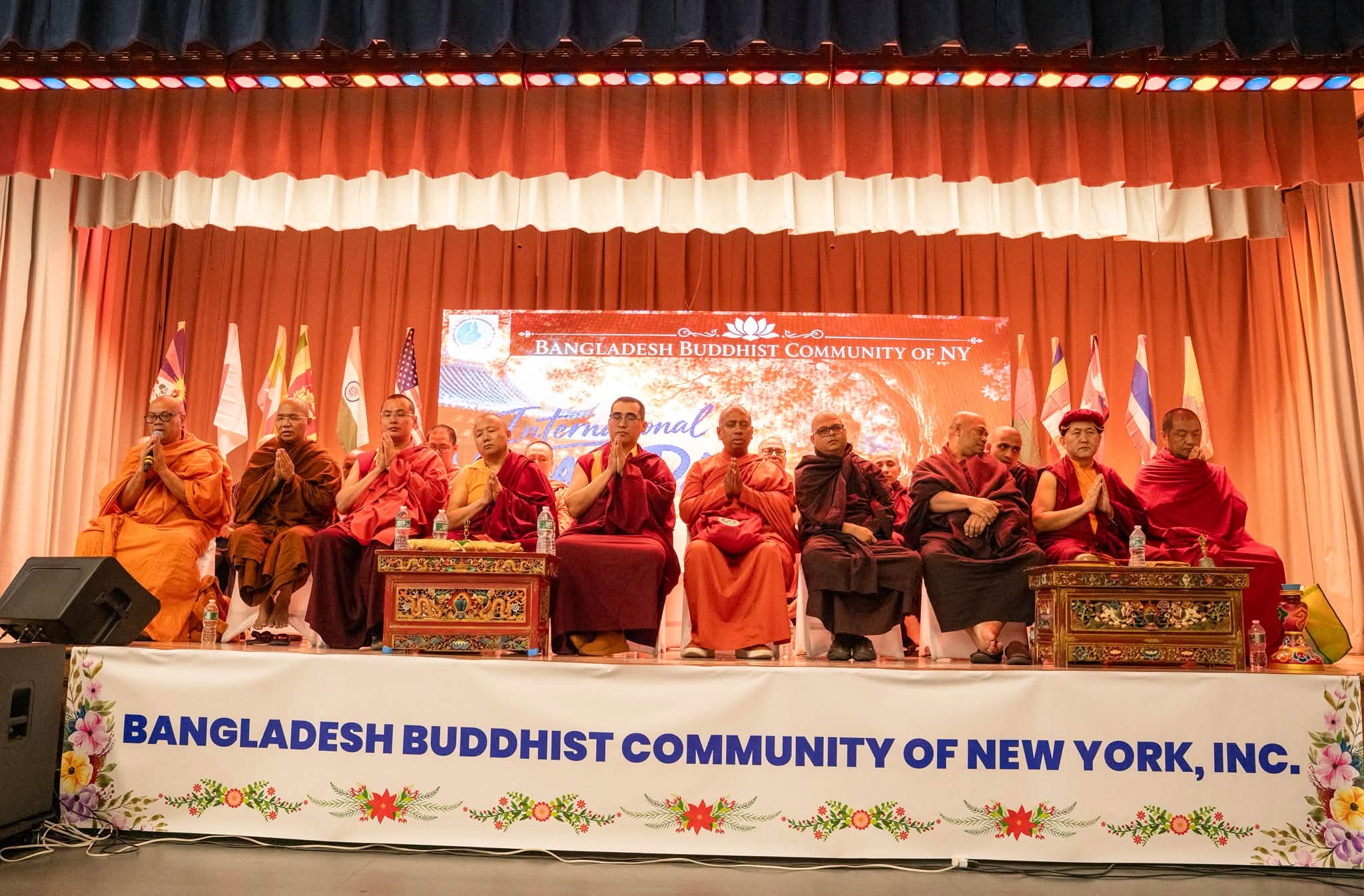
Today, Buddhists throughout Tibet, Nepal, Bhutan, India, Sri Lanka, Thailand, Myanmar, Japan, Korea, Mongolia, and many Western countries celebrate First Dharma Chakra Day with great devotion. Monasteries conduct special prayer ceremonies and teachings on the Four Noble Truths. Devotees visit temples to make offerings of flowers, butter lamps, incense, and candles. Many observe the Eight Precepts, practice meditation, recite sutras, perform acts of generosity, circumambulate stupas, sponsor prayers, and dedicate merit for the welfare of all sentient beings. In Himalayan Buddhist communities, it is widely believed that positive actions performed on this sacred day generate especially great merit because of its connection to the Buddha’s first teaching.
The significance of First Dharma Chakra Day extends far beyond its historical importance. The Buddha’s first teaching remains remarkably relevant in the modern world. Although technology has transformed human civilization, problems such as stress, anxiety, depression, conflict, greed, loneliness, and environmental destruction continue to affect millions of people. The Four Noble Truths help individuals understand the underlying causes of suffering rather than merely treating its symptoms. Likewise, the Noble Eightfold Path provides practical guidance for living with integrity, compassion, mindfulness, and wisdom amid the complexities of contemporary life.
The Buddha’s teachings also encourage ethical communication, responsible leadership, peaceful coexistence, and respect for all forms of life. Right Speech reminds us to avoid falsehood, gossip, and harmful language, while Right Livelihood encourages occupations that do not exploit people or damage the environment. Mindfulness and meditation have become widely recognized in healthcare, psychology, education, and leadership development, demonstrating the enduring relevance of principles first taught at Sarnath more than twenty-five centuries ago.
First Dharma Chakra Day is therefore much more than a religious celebration. It is a reminder of humanity’s capacity for wisdom, compassion, and transformation. On this sacred day, Buddhists remember not only the Buddha’s enlightenment but also his decision to share his realization with others for the benefit of all beings. His first sermon established the foundation of Buddhism and offered humanity a timeless path toward understanding suffering, cultivating compassion, and attaining lasting peace. As long as people continue to practice the teachings of the Four Noble Truths and the Noble Eightfold Path, the Wheel of Dharma continues to turn, inspiring countless individuals to live with greater wisdom, kindness, and awareness.