
A New Generation Steps Forward: The Rise of Sudan Gurung as Home Minister
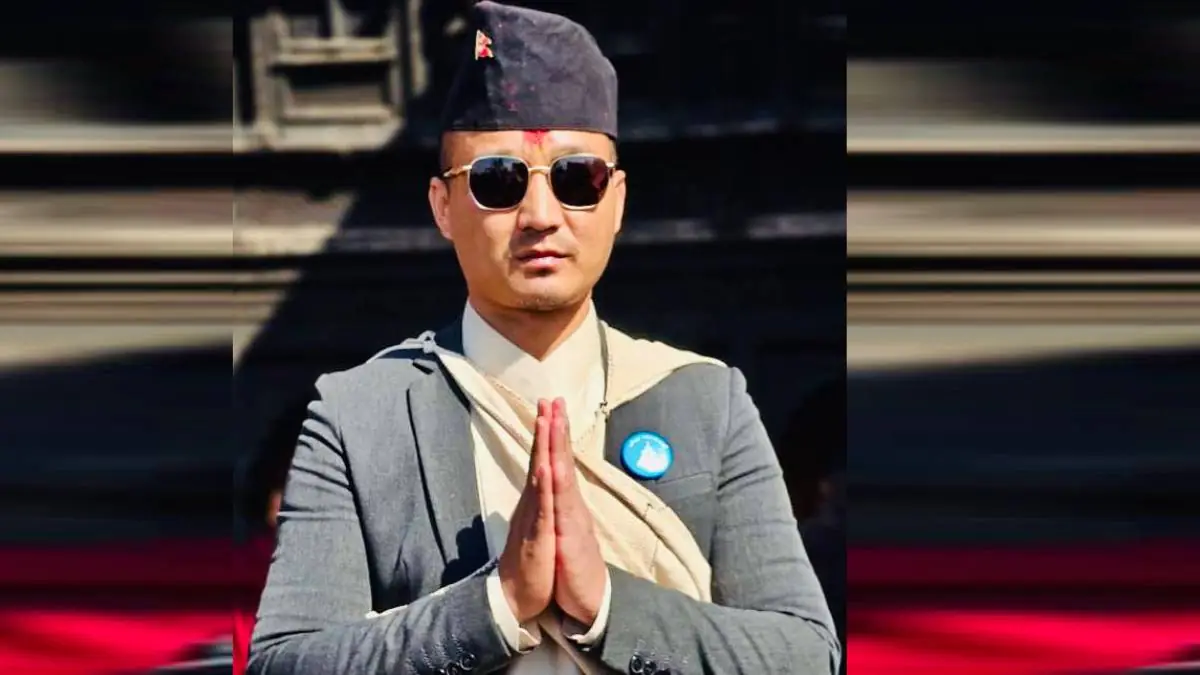
KATHMANDU, March 2026
In the long and evolving narrative of Nepal’s democracy, there are moments when change does not arrive with noise, but with quiet certainty. The appointment of Sudan Gurung as Home Minister in the cabinet of Prime Minister Balendra Shah is one such moment, where the pulse of a new generation finds its place within the structure of the state.
Elected from Gorkha 1, a constituency shaped by history, sacrifice, and political consciousness, Gurung’s victory carries both symbolic and practical weight. Gorkha is not merely a geographic constituency. It is a landscape where the idea of Nepal itself has often been tested and redefined. That a young leader from this region now holds one of the most sensitive ministries speaks to a deeper shift within the national psyche.
Sudan Gurung’s journey into national leadership did not follow the conventional path of gradual ascent through established hierarchies. Instead, it emerged from a period of civic awakening led by Nepal’s younger generation. During the Gen Z movement, when frustration against institutional stagnation began to take visible form, Gurung became one of the few figures capable of transforming energy into direction. He emphasized discipline in protest, responsibility in expression, and clarity in demands. Rather than allowing dissent to fragment, he helped shape it into a constructive democratic force.
His leadership during this period was marked by an ability to listen as much as to lead. He understood that movements are not sustained by slogans alone, but by trust, organization, and a shared sense of purpose. Through coordinated efforts, he helped connect student groups, professionals, and civic actors across regions, creating a network that would later influence formal political outcomes.
This capacity for dialogue and coordination became particularly significant during the formation of the interim government under Prime Minister Sushila Karki. At a time when Nepal faced political uncertainty and the risk of institutional paralysis, Gurung played a vital behind the scenes role in facilitating consensus. He worked to bridge ideological divides, encouraging cooperation over confrontation, and contributing to a transition that remained anchored within constitutional frameworks. His role during this phase demonstrated that leadership is not always visible, but often most effective when it operates with restraint and purpose.
Equally important has been his contribution to strengthening the Rastriya Swatantra Party. In a political environment often characterized by fragmentation, Gurung helped consolidate reform oriented forces, contributing to the merging and alignment of emerging political energies. This effort was not merely organizational. It was ideological. It sought to create a platform where governance could be reimagined through transparency, accountability, and citizen engagement.
Beyond the formal sphere of politics, Gurung’s work through Hami Nepal reflects a consistent commitment to society at the grassroots level. Through this organization, he has been involved in humanitarian relief, youth empowerment initiatives, and community support programs. Whether responding to local crises or supporting long term development efforts, his engagement has remained grounded in direct human connection. It is within these interactions that his understanding of governance has been shaped, not as an abstract system, but as a lived reality affecting everyday lives.
Despite these contributions, his appointment as Home Minister has generated a wave of skepticism, particularly across digital platforms. Critics have questioned whether a leader of his age possesses the administrative experience required to manage internal security, law enforcement, and national stability. These concerns reflect a broader tension within Nepal’s political culture, where authority has traditionally been associated with seniority.
Yet, there is an emerging counter narrative. Many see in Gurung not a departure from capability, but a redefinition of it. In a rapidly changing society, leadership increasingly requires adaptability, ethical clarity, and the ability to engage with a population that is more informed, more connected, and more demanding than ever before. Gurung’s background in civic mobilization, his experience in consensus building, and his direct engagement with communities offer a different but relevant form of preparation.
Those who have observed his work closely describe him as composed under pressure, decisive in action, and grounded in principle. His boldness is not characterized by impulsiveness, but by a willingness to take responsibility in moments that require clarity. His capability lies not only in what he has achieved, but in how he has approached each challenge, with discipline, patience, and a long term vision.
For Nepal’s younger generation, his rise carries a meaning that extends beyond politics. It reflects the possibility that participation can evolve into leadership, that voices raised in civic spaces can shape national decisions, and that the distance between aspiration and authority is not fixed.
As Nepal moves forward under the leadership of Prime Minister Balendra Shah, the presence of Sudan Gurung in the Home Ministry represents more than a change in personnel. It represents a shift in trust, a recognition that the future of the nation must be shaped by those who will inherit it.
In this moment, Nepal does not simply witness the appointment of a young minister. It witnesses the gradual emergence of a new political culture, one that values integrity alongside experience, courage alongside caution, and vision alongside tradition.
And within that emergence, the story of Sudan Gurung becomes not only a personal journey, but a reflection of a nation learning to believe in its own renewal.

Shechen Center New York Opens, Bringing a Living Buddhist Lineage to the Heart of New York City
1 week ago