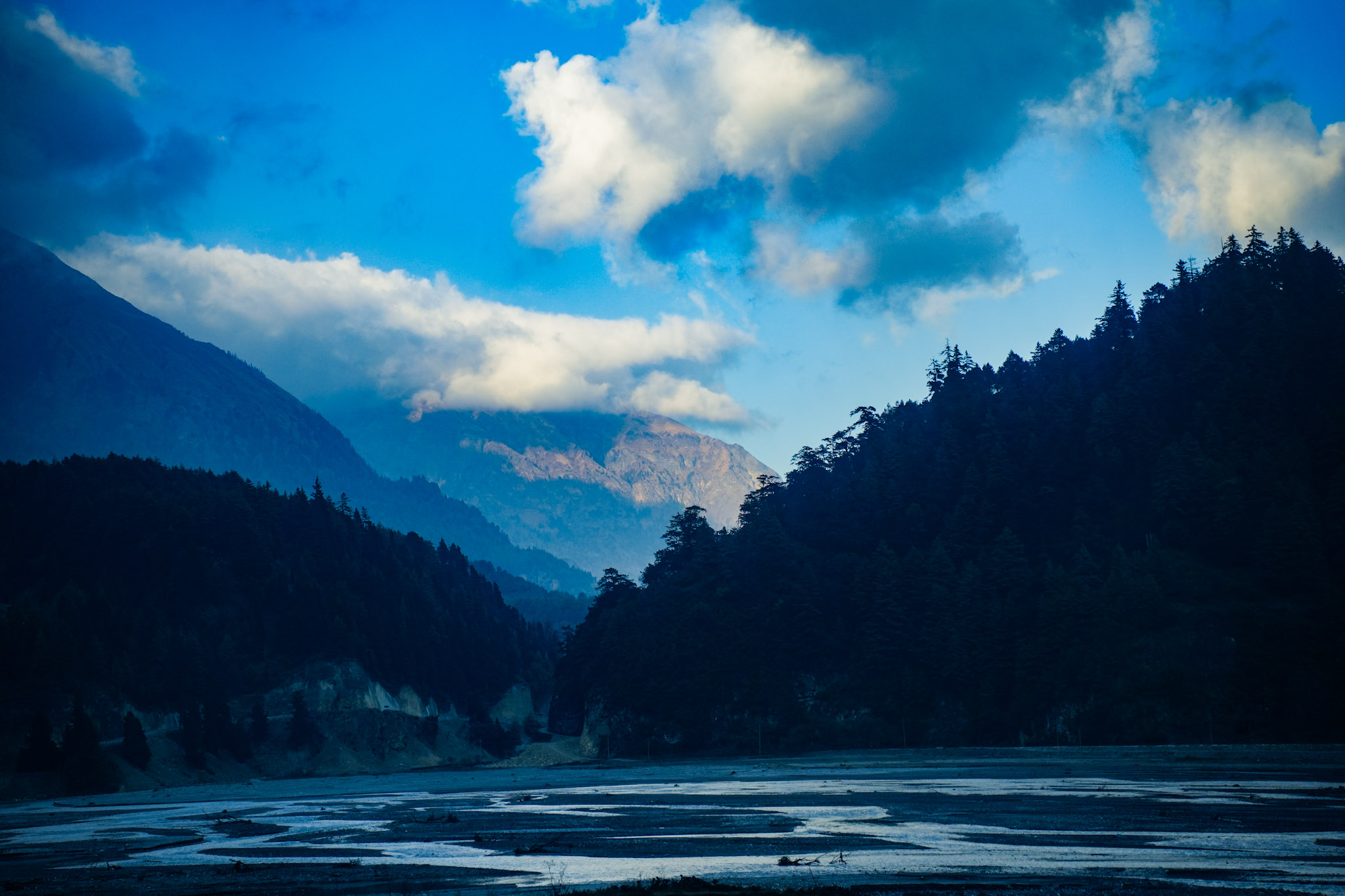

Everest at the Crossroads of Glory, Greed, and Survival
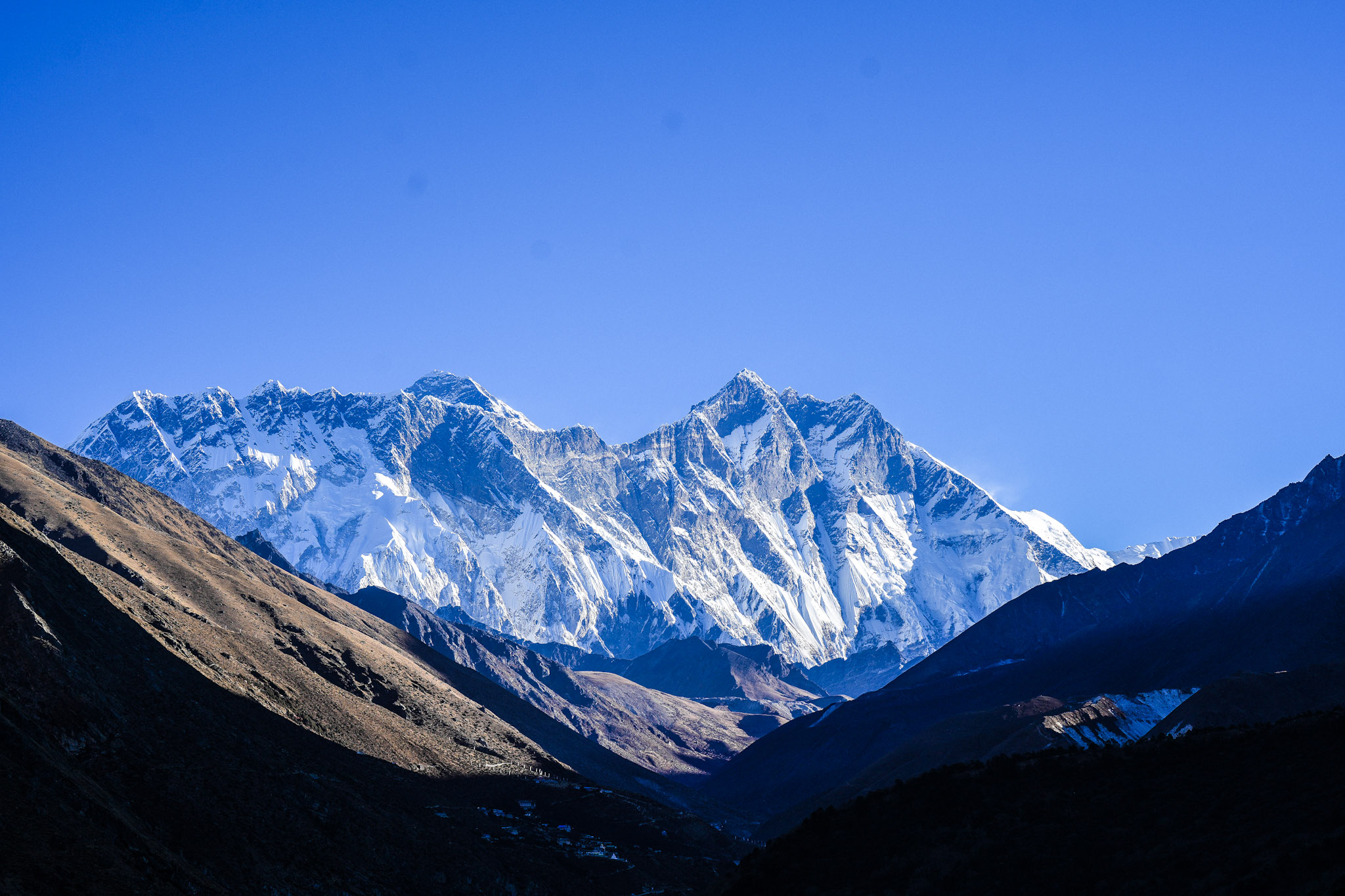
Every year on International Everest Day, the world celebrates the triumph of human endurance represented by the first successful ascent of Mount Everest in 1953 by Tenzing Norgay and Edmund Hillary. Their historic climb symbolized courage, resilience, humility, and the extraordinary relationship between humanity and nature. But more than seventy years later, Everest stands at a troubling crossroads. The mountain that once represented the ultimate challenge of the human spirit is increasingly becoming a symbol of overcrowding, commercialization, environmental destruction, and human excess.
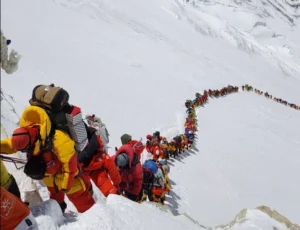
The image of climbers standing in long lines near the summit, waiting for hours in the death zone at over 8,000 meters, has shocked the world in recent years. This spring, Everest witnessed yet another historic record when 274 climbers reportedly reached the summit from the Nepali side in a single day, the highest single-day summit total ever recorded in Everest’s history. Such scenes raise uncomfortable but necessary questions. Has Everest become too commercialized? Has the sacred and dangerous nature of the mountain been reduced to a profitable tourism industry? And most importantly, who is responsible for protecting the Himalayas before irreversible damage is done?
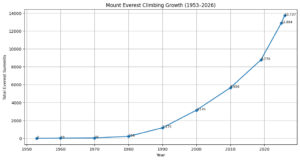
Since the first ascent in 1953, more than 12,000 summits have been recorded on Everest, while over 340 climbers have lost their lives on the mountain. Many bodies still remain frozen along the slopes, becoming silent reminders of the mountain’s unforgiving reality. Yet despite these dangers, the number of climbers continues to grow each year. The reason is simple: Everest has become more accessible than ever before. Modern climbing technology, commercial expedition companies, advanced weather forecasting, helicopter rescues, high-flow oxygen systems, satellite communication, and fixed ropes have transformed Everest climbing into something far different from the era of early Himalayan expeditions.
Everest remains dangerous, but it is no longer the same unknown frontier it once was. Today, with enough financial resources, a person with limited mountaineering experience can attempt Everest under the guidance of commercial teams. In many ways, the mountain has shifted from an elite mountaineering challenge to a global adventure industry. Social media has further accelerated this transformation. For some climbers, reaching Everest is no longer only about personal discovery or spiritual meaning, but also about prestige, online recognition, sponsorship, and public image. The summit photograph itself has become part of the attraction.
This commercialization has brought undeniable economic benefits to Nepal. Everest tourism supports thousands of jobs, especially among Sherpa communities whose strength, skill, and sacrifice remain the foundation of Himalayan mountaineering. Many families depend upon climbing income for education, healthcare, and survival. Therefore, simplistic calls to completely ban Everest climbing ignore the economic realities faced by mountain communities. However, acknowledging economic dependence does not mean ignoring the growing dangers and environmental consequences.
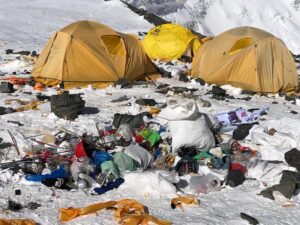
The pollution crisis on Everest has become impossible to deny. Decades of expeditions have left behind discarded oxygen cylinders, plastic waste, torn tents, ropes, food containers, batteries, and even human waste. Cleanup campaigns have removed tons of garbage from Everest, yet the problem continues to grow as climbing numbers increase. The responsibility cannot be placed solely on climbers. Governments issuing large numbers of permits, commercial expedition operators prioritizing profit, international tourism industries, and the global culture of consumption all share responsibility for the degradation of the Himalayas.
The deeper tragedy is that the Himalayas are not merely tourist destinations or climbing products. For Himalayan communities, these mountains hold profound spiritual, cultural, and ecological significance. Everest, known locally as Sagarmatha in Nepal and Chomolungma in Tibet, has long been regarded with reverence. The modern mentality of “conquering” mountains increasingly reflects a dangerous attitude toward nature itself, one based on domination rather than respect.
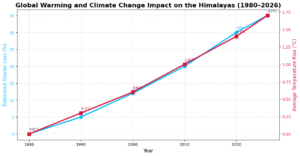
At the same time, climate change is rapidly transforming the Himalayas. Scientists have warned that Himalayan glaciers are melting at alarming rates due to global warming. Ice formations are becoming unstable, avalanches are more unpredictable, and weather patterns are increasingly erratic. Sherpas and mountain workers face growing risks each climbing season as the mountain environment changes. The crisis extends far beyond Everest. The Himalayan glaciers provide water for hundreds of millions of people across Asia. The destruction of these fragile ecosystems would have consequences reaching far beyond Nepal.
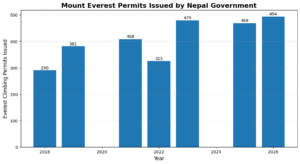
This reality demands serious policy reform. Nepal’s government must reconsider the unrestricted expansion of climbing permits. Everest cannot continue indefinitely under the logic of unlimited commercial growth. Climbers attempting Everest should be required to demonstrate prior high-altitude mountaineering experience. Stronger environmental regulations must be enforced. Waste management systems should become mandatory and strictly monitored. Expedition companies must be held accountable for inexperienced clients and unsafe overcrowding. Most importantly, Sherpa climbers and high-altitude workers deserve far greater protection, insurance, compensation, and recognition for the immense risks they carry on behalf of the global mountaineering industry.
Yet the issue ultimately extends beyond regulations. Everest has become a reflection of modern civilization itself. Humanity now possesses technology capable of making even the world’s highest mountain more accessible. In the future, advancements in equipment, weather prediction, artificial intelligence, communication systems, and rescue infrastructure may make Everest climbing even easier. But technological progress alone does not guarantee wisdom. In fact, the easier Everest becomes technologically, the greater the danger that humanity loses its sense of humility toward nature.
Perhaps the most important question today is not whether Everest should be closed, but whether humanity can rediscover balance and responsibility before the Himalayas are permanently damaged. Mountains are not infinite resources. Nature cannot endlessly absorb human greed, ambition, and waste.
International Everest Day should therefore become more than a celebration of records and achievements. It should also become a day of reflection about what Everest truly represents in the twenty-first century. The mountain has inspired generations because it stood beyond ordinary human limits. But today, the greatest challenge may no longer be climbing Everest itself. The greater challenge may be learning how to protect it.
The Himalayas do not belong only to climbers, governments, or tourism industries. They belong to the future of humanity itself.

Shechen Center New York Opens, Bringing a Living Buddhist Lineage to the Heart of New York City
1 week ago