
His Holiness Dalai Lama’s 91st Birthday Celebrated in Northern California

By Lhakpa G. Sherpa
BERKELEY, California, July 5, 2026 — Beneath the summer skies of the San Francisco Bay Area, thousands of Tibetans, friends of Tibet, and supporters from across Northern California gathered at Longfellow Middle School in Berkeley on Sunday to celebrate the 91st birthday of His Holiness the 14th Dalai Lama. More than a birthday celebration, the gathering became a profound expression of compassion, gratitude, interfaith harmony, and the enduring hope of the Tibetan people living in exile.
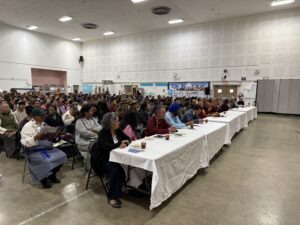
Organized by the Tibetan Association of Northern California (TANC) under the leadership of President Kunjo Tashi, the event brought together monks, community leaders, elected officials, diplomats, representatives of various faiths, and families from throughout the region to honor a spiritual leader whose message of nonviolence, compassion, and universal responsibility continues to inspire millions around the world.
The celebration began with traditional Long-Life Prayers led by venerable monks. As sacred chants echoed through the hall, hundreds of devotees joined in offering heartfelt prayers for His Holiness’s continued good health, long life, and the fulfillment of his lifelong aspiration to cultivate peace, compassion, wisdom, and harmony among all beings.
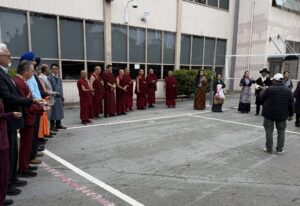
Following the prayer ceremony, participants gathered on the school grounds for the traditional Sangsol ceremony. Holding white roasted barley flour in their hands and raising their voices in the ancient Tibetan victory chant, “Ki Ki So So Lha Gyalo!”, they cast their offerings into the sky while praying for the long life of His Holiness the Dalai Lama, the preservation of Tibetan religion and culture, peace throughout the world, and the well-being of all sentient beings. The ceremony reflected centuries of Tibetan spiritual tradition, expressing gratitude to nature, invoking blessings, and reaffirming the inseparable relationship between humanity and the natural world.
The formal program opened with the national anthems of Tibet and the United States, symbolizing both the Tibetan people’s enduring hope for their homeland and their gratitude to the United States for providing freedom and opportunity to Tibetans living in exile.

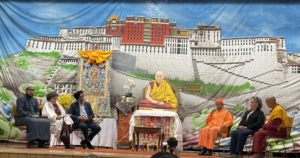
One of the most inspiring moments of the celebration was the interfaith gathering. Religious leaders representing Buddhism, Christianity, Hinduism, Islam, Sikhism, and Judaism stood together on one stage, embodying the very principles that His Holiness has championed throughout his life. Although each faith follows different traditions, the leaders affirmed that compassion, justice, peace, forgiveness, kindness, and service to humanity are values shared by all religions.
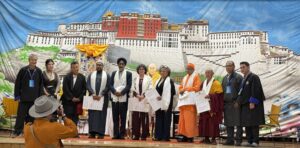
Echoing His Holiness’s lifelong teaching that “my religion is kindness,” they reminded the audience that before we belong to any religion, nationality, or ethnicity, we are first and foremost human beings who share the same hopes, fears, and aspirations. Together they affirmed a common declaration that compassion is stronger than hatred, hope is stronger than fear, and our shared humanity is stronger than division, pledging to continue building bridges among communities while fostering peace, mutual understanding, and universal human values.
The celebration was attended by numerous distinguished guests, including El Cerrito Mayor Gabe Quinto, Richmond Mayor Eduardo Martinez, Contra Costa County Supervisor John Gioia, Consul (Economic and Visa) of India Abhishek Kumar Sharma, Richmond City Councilmember Soheila Bana (District 4), together with other elected officials, community leaders, educators, and representatives of civic organizations.
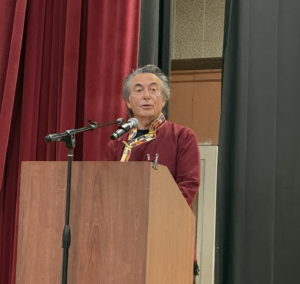
Supervisor John Gioia noted that the combined counties of Contra Costa and Alameda are home to the third-largest Tibetan community in the United States. He praised the Tibetan community for enriching Northern California through cultural preservation, volunteerism, civic engagement, and a deep commitment to compassion.
He also announced that Contra Costa County had awarded a US$50,000 grant to support the Tibetan Sunday School in Richmond, recognizing the importance of preserving the Tibetan language, history, and culture for future generations growing up in exile.
Speaking personally, Supervisor Gioia expressed heartfelt gratitude to Tibetan nurse Tenzin, recalling the compassionate care she provided to his son during a life-threatening illness while he was hospitalized for nearly two months. He described her kindness as a living reflection of the compassion taught by His Holiness the Dalai Lama.
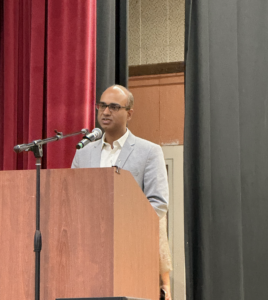
Representing the Government of India, Consul Abhishek Kumar Sharma described His Holiness as a spiritual leader not only for Tibet but for humanity for the entire world. He praised the Tibetan Association of Northern California for bringing together leaders of different faiths to celebrate the universal values of compassion, love, nonviolence, and peaceful coexistence.
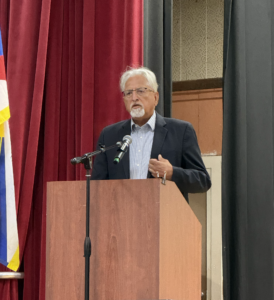
Richmond Mayor Eduardo Martinez reflected on the humanitarian traditions shared by India and the United States. He noted that India opened its doors to His Holiness the Dalai Lama and tens of thousands of Tibetan refugees in 1959, while the United States has continued to provide refuge and opportunity to people seeking freedom from persecution around the world.
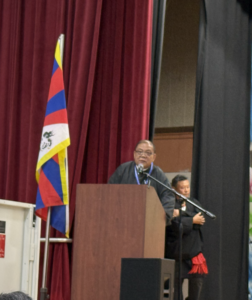
In his keynote address, President Kunjo Tashi briefly recounted the remarkable life of His Holiness, from his recognition as the Fourteenth Dalai Lama and his escape into exile following the Chinese occupation of Tibet, to becoming one of the world’s foremost advocates of compassion, dialogue, environmental responsibility, religious harmony, and universal human values. He also expressed heartfelt gratitude to the Government and people of India for providing refuge to His Holiness and the Tibetan people for more than six decades, enabling Tibetan religion, language, and culture to survive and flourish in exile.
Unlike previous years, the Tibetan Association of Northern California intentionally omitted cultural performances and entertainment. Instead, this year’s celebration was dedicated to remembrance, reflection, and prayer following the tragic death of Lobga Rangzen, a Tibetan activist who died after setting himself on fire outside the United Nations headquarters in New York on July 2, 2026. According to reports, his final act was intended to draw international attention to the unresolved question of Tibet, the preservation of Tibetan identity, and the hope shared by many Tibetans that His Holiness the Dalai Lama may one day return peacefully to his homeland.
A special prayer ceremony was held in his memory. Monks chanted traditional Buddhist prayers while community members stood in silent reflection, dedicating merit for his peaceful rebirth and praying for the alleviation of suffering throughout Tibet and the world. The solemn ceremony reminded those present that the Tibetan struggle is not merely a political issue but also a deeply human story of displacement, resilience, faith, and hope.
According to the International Campaign for Tibet, 170 Tibetan self-immolations have been documented worldwide since 2009. Many of those who undertook these tragic acts left messages calling for religious freedom, the protection of the Tibetan language and culture, respect for human rights, and the return of His Holiness the Dalai Lama to Tibet. At the same time, His Holiness has consistently urged Tibetans to pursue the path of compassion, nonviolence, and dialogue, emphasizing that lasting peace can never be achieved through hatred.
The significance of preserving Tibetan identity has become even more pronounced amid changing policies inside Tibet. China’s Law on the Promotion of Ethnic Unity and Progress, which came into effect on July 1, 2026, seeks to strengthen what the Chinese government describes as a shared national identity among all ethnic groups. While Chinese authorities present the law as a measure to promote national unity and social cohesion, Tibetan organizations and many international human rights advocates have expressed concern that its implementation could further limit the use of the Tibetan language, the practice of Tibetan Buddhism, traditional cultural customs, and community-based education by encouraging greater assimilation into a unified national identity.
For many Tibetans living inside Tibet, these developments have intensified concerns about preserving their language, religion, and cultural heritage. For Tibetans living in exile, they have reinforced a profound responsibility to safeguard those traditions for future generations. Tibetan schools, monasteries, cultural organizations, and community associations throughout the world, including those in Northern California- continue to play an essential role in teaching the Tibetan language, preserving Buddhist philosophy, celebrating traditional festivals, and passing on centuries-old cultural traditions to young Tibetans born outside their ancestral homeland.
Throughout the celebration, one message resonated above all others: the greatest tribute to His Holiness the Dalai Lama is not merely to celebrate his birthday but to live according to his teachings, choosing compassion over hatred, dialogue over violence, wisdom over ignorance, and humanity over division.
As thousands departed carrying white khatas and renewed hope, the gathering became far more than a birthday celebration. It stood as a living testament to the enduring spirit of the Tibetan people and to the timeless vision of His Holiness the Dalai Lama, that compassion has the power to transcend borders, religions, cultures, and generations, illuminating the path toward a more peaceful, just, and humane world.