
Learning from Bhutan: A Himalayan Path to Development Without Conquering Nature
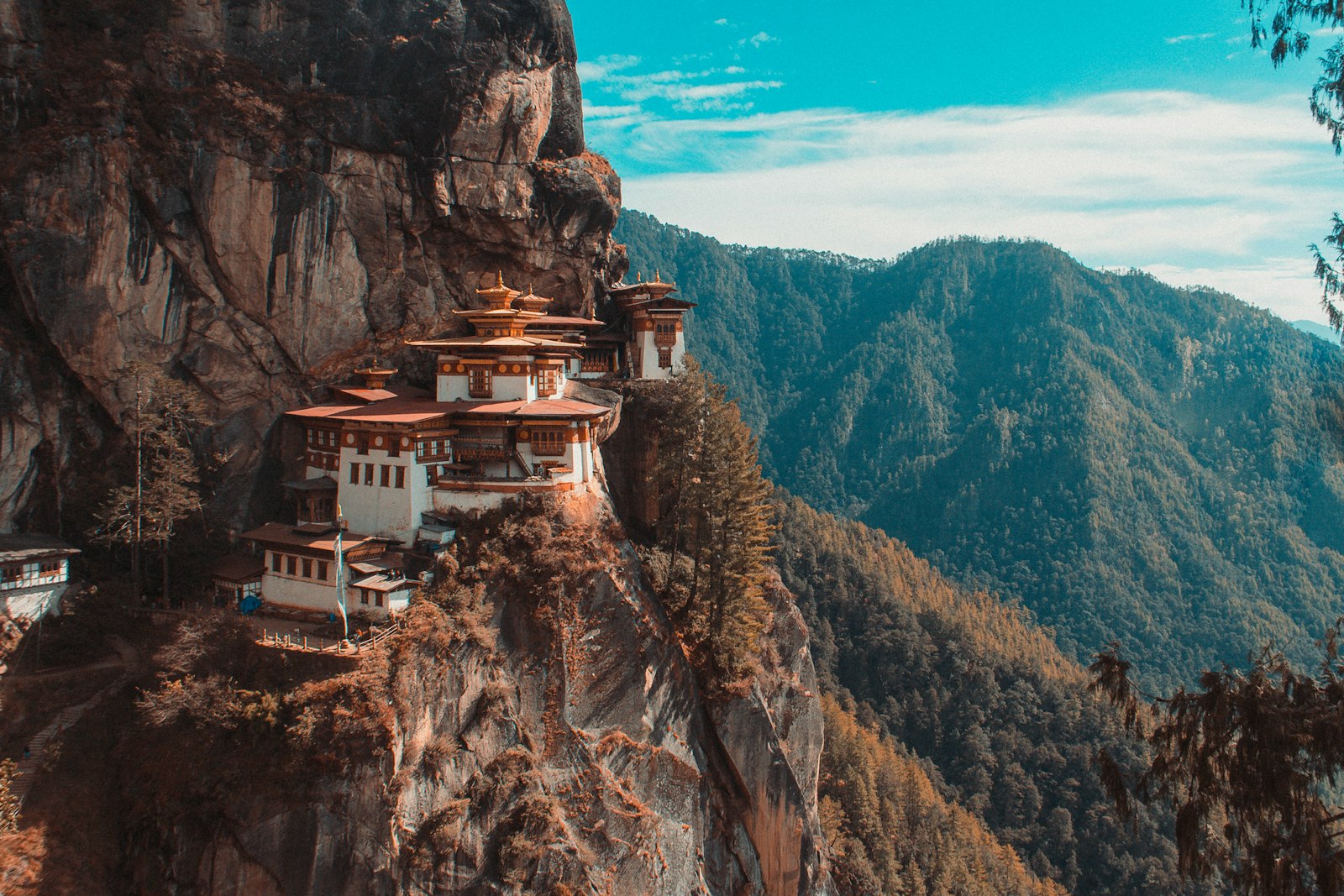
Nepal and Bhutan are two Himalayan nations connected by geography, culture, fragile mountain ecosystems, forests and rivers, as well as traditions that have long regarded nature with spiritual significance. Yet the two countries have often followed different approaches to the relationship between economic development and environmental protection. Nepal has enormous natural wealth and has achieved internationally recognized successes, particularly through community forestry. Bhutan, however, offers an important lesson in placing environmental protection at the foundation of national development rather than treating conservation as something to consider only after roads, cities, tourism projects and businesses have already been planned.
Perhaps the clearest example is Bhutan’s treatment of its forests. Article 5 of Bhutan’s Constitution requires that at least 60 percent of the country’s total land remain under forest cover for all time. This transforms forest conservation from a temporary government program into a constitutional responsibility. Bhutanese government sources report that more than 70 percent of the country remains forested, while large areas are protected through national parks, wildlife sanctuaries and biological corridors. These forests are not simply beautiful landscapes. They absorb carbon, protect watersheds, reduce soil erosion, provide wildlife habitat and strengthen the country’s resilience against environmental change.
Bhutan is also widely described as carbon-negative because its forests absorb more greenhouse gases than the country emits. Bhutan’s National Environment Commission has reported annual carbon sequestration of approximately 9.47 million tonnes of carbon-dioxide equivalent compared with emissions of about 3.8 million tonnes. Nepal, too, has made significant progress in forest conservation, with forest and other wooded land covering roughly 46 percent of its territory. Nepal’s community forestry model is itself an international success. The lesson from Bhutan, therefore, is not that Nepal has failed, but that forests, watersheds, wetlands and fragile mountain ecosystems should be treated as permanent national infrastructure rather than land waiting for another economic use.
One of the most ambitious contemporary examples of Bhutan’s environmental philosophy is Gelephu Mindfulness City, a new Special Administrative Region being developed in southern Bhutan. The project seeks to combine economic development, technology, international investment, Bhutanese culture, spirituality and environmental stewardship. What makes Gelephu particularly interesting for Nepal is not simply its modern architecture or economic ambitions, but the philosophy underlying its planning: instead of forcing nature to adjust to a city, the city is being designed to adjust itself to nature.
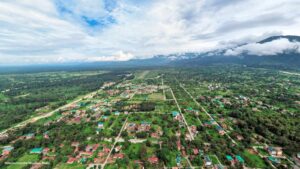
The original Gelephu master plan recognizes dozens of rivers and streams flowing through the area. Instead of treating them merely as obstacles to development, the waterways help determine the structure of the city. Riverside agricultural areas and paddy fields are envisioned as spaces that can absorb and accommodate water during periods of flooding while also supporting biodiversity. Wildlife corridors are incorporated into planning, including consideration for elephant movement. Permeable surfaces are proposed to allow rainwater to enter the soil, while local materials such as timber, stone and bamboo feature prominently in the architectural concept. Agriculture is not simply pushed outside the city; it is integrated into the landscape.
There is an important lesson here for Nepal. A river is not simply the narrow channel through which water happens to flow during the dry season. Its natural territory includes floodplains, wetlands, sediment pathways and areas into which it may expand during intense rainfall. Nepal has repeatedly experienced disasters in places where settlements, roads, hotels and other infrastructure have expanded close to rivers or onto vulnerable slopes. Too often, development takes place first and expensive concrete walls, embankments and other protective structures are constructed afterward. A more environmentally mindful approach would reverse that sequence: first understand where the river needs to flow, where the hillside is unstable and where nature needs space, and only then decide where permanent infrastructure should be built.
This principle is increasingly important because climate change is altering the Himalayan environment. Historical rainfall patterns can no longer be treated as completely reliable guides to future risk. Extreme precipitation, floods, landslides, changing snow patterns and glacial hazards can threaten communities far beyond the high mountains. Nepal therefore needs stronger scientific mapping of floodplains and geological hazards, strict construction standards and meaningful buffer zones along vulnerable river corridors. Instead of continually asking how engineering can control nature, planners should sometimes ask how infrastructure can move away from nature’s path.
Gelephu also provides a useful example of connecting environmental responsibility with local economic development. The concept incorporates agriculture, local materials and environmentally sensitive design rather than assuming modernization means replacing everything traditional with imported products and concrete. Nepal could similarly give greater priority to local and organic agricultural production, traditional crops, locally appropriate construction materials, renewable energy, handicrafts and community-based enterprises. Local production can create employment while reducing unnecessary transportation, supporting rural economies and preserving knowledge adapted to particular environments.
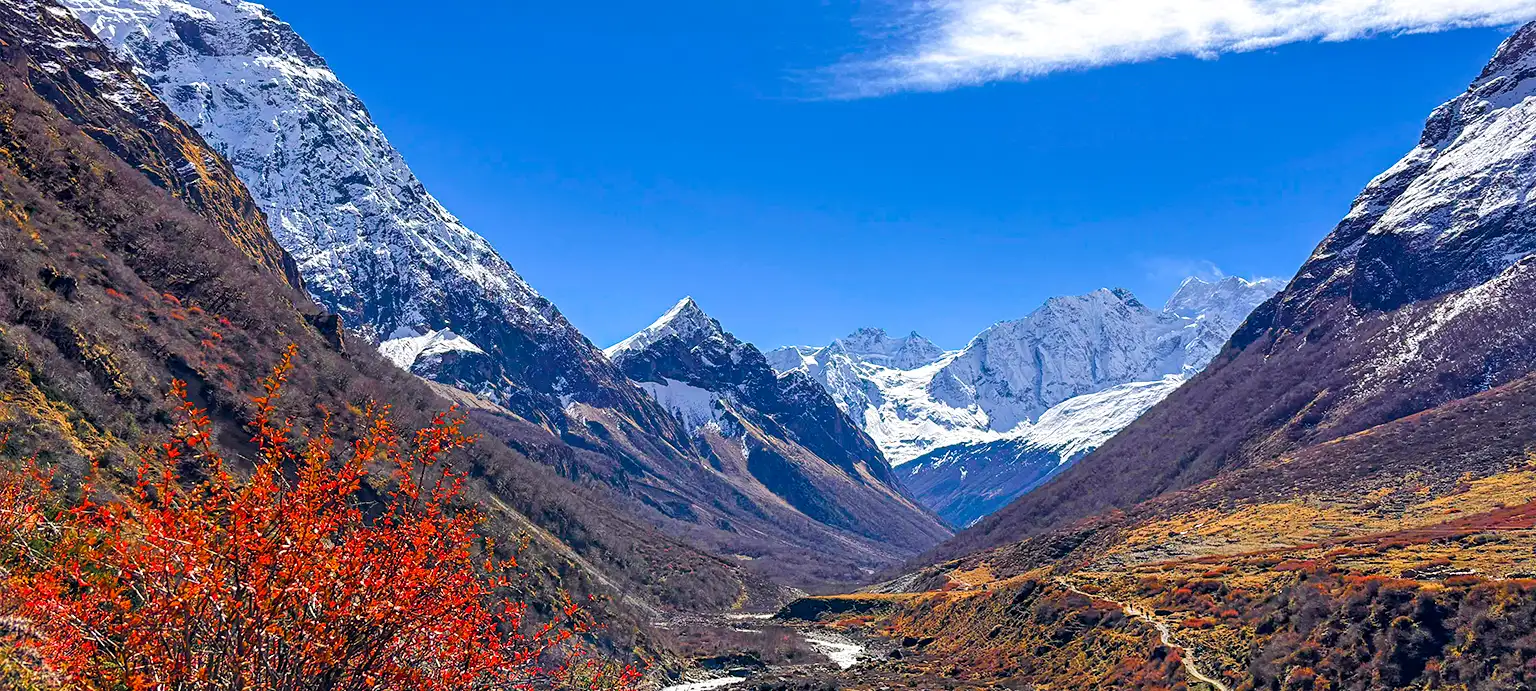
Perhaps the most striking lesson Bhutan offers Nepal concerns the mountains themselves. Nepal has built a globally important mountaineering industry. The Himalayas attract climbers from around the world and provide livelihoods for guides, high-altitude workers, trekking agencies, hotels, airlines, porters and mountain communities. Mountaineering is therefore economically and historically important to Nepal, and simply copying Bhutan’s policy would ignore Nepal’s very different circumstances.
Bhutan, however, made a remarkable choice. In 1994 it prohibited climbing mountains higher than 6,000 meters, largely out of respect for spiritual beliefs surrounding sacred peaks, and in 2003 mountaineering was prohibited altogether. As a result, Gangkhar Puensum, Bhutan’s highest mountain, remains the world’s highest unclimbed mountain. The deeper message behind this policy deserves serious consideration in Nepal: a mountain does not have to be climbed, conquered or commercially exploited in order to have value.
For generations, Himalayan cultures have regarded mountains as more than geographical objects. Mountains can be sacred landscapes, sources of water, homes of spiritual significance and essential components of fragile ecosystems. Modern adventure tourism, however, often speaks about “conquering” mountains. Records are celebrated for first ascents, fastest ascents, youngest climbers, oldest climbers and repeated summits. These achievements can represent extraordinary human endurance, but Nepal should also ask whether every mountain must remain open indefinitely to commercial climbing simply because someone is willing to pay for the opportunity.
Nepal does not necessarily need to stop mountaineering. It could instead introduce a more balanced philosophy of mountain stewardship. Certain sacred or ecologically sensitive peaks could remain permanently unclimbed. Particularly stressed routes could periodically be given rest. Permit numbers could reflect environmental carrying capacity rather than primarily revenue considerations. Waste management, human waste, helicopter operations, temporary infrastructure and other high-altitude impacts should be monitored scientifically. Revenue from climbing permits could also be directed more systematically toward mountain conservation and communities that bear the environmental costs of tourism.
There could even be places where not climbing becomes part of Nepal’s tourism identity. Imagine a sacred Himalayan peak about which Nepal could tell visitors: This mountain is so important that nobody is permitted to stand on its summit. Such a mountain would not lose its tourism value. Its untouched character could itself become its attraction, creating opportunities for trekking, photography, cultural tourism, meditation, scientific research and environmental education without requiring people to reach the summit.
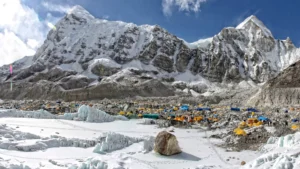
Mount Everest deserves particular attention. Everest is much more than an international adventure destination. For Himalayan communities, mountains possess cultural and spiritual meaning, while scientifically they are part of the cryosphere that stores snow and ice and feeds major river systems. Nepal already requires expedition waste management and has strengthened rules concerning human waste and activities around base camps. But regulation must continue to evolve as commercial mountaineering grows. The important question is not simply how many climbers Everest can physically accommodate, but how much human pressure its environment should reasonably be expected to absorb.
Bhutan’s approach ultimately demonstrates the value of environmental restraint. Modern development frequently asks, “Can we build here?” Mindful development asks, “Should we build here?” Tourism asks, “Can we climb this mountain?” Environmental and cultural responsibility asks, “Should every mountain be climbed?” Engineering asks, “Can we control this river?” Ecological wisdom asks, “Can we instead give the river enough space?” Economics asks how much money can be generated from a forest, while sustainability asks what future generations will lose if that forest disappears.
Nepal does not need to become Bhutan. The countries differ enormously in population, political structure, economic conditions, urbanization, tourism dependence and infrastructure requirements. Nepal has nearly 30 million people and a much larger and more established mountaineering and trekking economy. Any environmental policy must also recognize the livelihoods of Sherpa and other mountain communities. The lesson is therefore not to copy Bhutan policy by policy, but to understand the philosophy behind it: economic development should take place within ecological limits instead of continually moving ecological limits to accommodate economic development.
Nepal could apply this principle by strengthening permanent protection of forests and watersheds, establishing scientifically determined river and floodplain buffers, preventing inappropriate construction in geologically vulnerable areas, strengthening environmental-impact assessments, encouraging local and organic production, expanding renewable energy, protecting wildlife corridors, managing tourism according to environmental carrying capacity and designating selected sacred mountains where conservation takes priority over commercial climbing. Environmental awareness should also become part of education, tourism training, local government planning and everyday consumer behavior.
There is also a broader issue of climate justice. Nepal contributes only a very small share of global greenhouse-gas emissions yet faces serious consequences from a warming Himalayan environment. Nepal therefore has legitimate grounds to demand greater international climate responsibility, financing and justice from major emitters. But climate justice must operate in both directions. Nepal cannot ask the international community to help protect the Himalayas while tolerating avoidable river encroachment, careless construction, forest degradation, pollution, uncontrolled extraction and poorly managed tourism at home. International responsibility and national responsibility must complement each other.
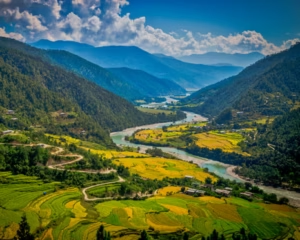
Bhutan demonstrates that another development philosophy is possible. Forests can remain standing. Rivers can be given room. Infrastructure can follow the landscape. Local products and agriculture can be incorporated into modern development. Economic growth can acknowledge ecological limits. And mountains can sometimes remain unclimbed simply because a society decides that their natural, cultural and spiritual value is greater than the money that could be earned by opening them to commercial exploitation.
The Himalayas do not belong only to our generation. We inherited their mountains, glaciers, forests and rivers from those who came before us, but inheritance does not give us unlimited permission to exhaust them for short-term profit, convenience, business or fame. Development is necessary. Infrastructure is necessary. Tourism and employment are necessary. But restraint is necessary too.
Sometimes progress means building something extraordinary. Sometimes progress means having the wisdom to leave something untouched.