
Navi Pillay Wins 2026 Nobel Peace Prize as Award Marks 125 Years
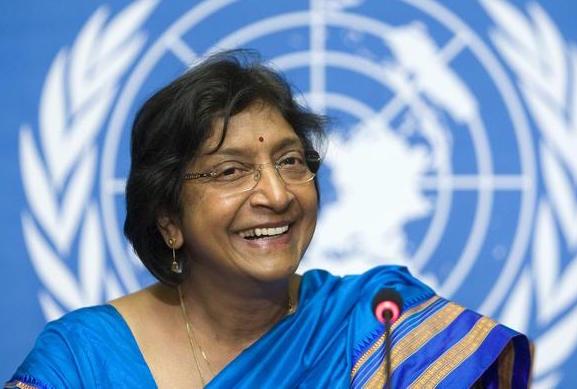
The Norwegian Nobel Committee announced the award on Friday, October 9, recognizing Pillay for her decades of service in national and international legal institutions. The committee honored her “for her efforts to promote peace and international law,” acknowledging her contribution to advancing accountability for serious human rights violations and strengthening legal protections for vulnerable communities.
Pillay’s selection adds another chapter to the history of the Nobel Peace Prize, which has recognized some of the world’s most influential peace advocates, humanitarian organizations, political leaders and human rights defenders.
According to official Nobel Prize records, the Nobel Peace Prize was awarded 106 times between 1901 and 2025, accounting for 143 laureate honors, including 112 individual recipients and 31 awards to organizations. With Pillay’s selection in 2026, the total reaches 107 awarded Peace Prizes and 144 laureate honors, comprising 113 individual laureates and 31 organizational awards. Because certain organizations have received the prize more than once, the number of laureate honors is higher than the number of distinct recipients.
From Apartheid South Africa to International Recognition
Navanethem Pillay was born in 1941 in Durban, South Africa, into a family of Indian descent. Growing up under apartheid, a system of institutionalized racial segregation, she experienced discrimination that restricted the educational, professional and political opportunities of non-white South Africans.
These experiences influenced her decision to pursue law as a means of challenging injustice and defending people whose fundamental rights were denied. Despite the social and political barriers of the time, Pillay pursued higher education and later studied at Harvard Law School in the United States.
In 1967, she became the first woman to establish a law practice in South Africa’s Natal Province. Her legal career began during a period when the apartheid government was imprisoning political activists and restricting opposition to racial segregation.
Pillay represented political prisoners and anti-apartheid activists, challenged discriminatory practices and advocated for improved conditions for detainees. Her legal work contributed to efforts to protect prisoners’ rights and challenge the injustices of apartheid.
Following South Africa’s democratic transition, she became the first Black woman appointed to the country’s High Court in 1995, marking a significant milestone in the nation’s judicial history.
Her legal achievements subsequently brought her to the international stage, where she became involved in prosecuting some of the most serious crimes committed during armed conflicts.
Landmark Contribution to International Criminal Justice
One of Pillay’s most significant contributions came during her service at the International Criminal Tribunal for Rwanda, established by the United Nations to prosecute individuals responsible for the 1994 Rwandan genocide.
During the genocide, approximately 800,000 people, primarily Tutsis and moderate Hutus, were killed over roughly 100 days. The tribunal was created to investigate and prosecute those responsible for genocide and other serious violations of international humanitarian law.
Pillay played an important role in a landmark 1998 judgment that established that rape and sexual violence could constitute genocide when committed with the intention of destroying a protected group.
The ruling was a major development in international criminal law. It helped establish that sexual violence during armed conflicts could be prosecuted not only as a war crime or crime against humanity but also as an act of genocide when the legal requirements were met.
This precedent strengthened the international legal framework for prosecuting sexual violence and contributed to broader recognition of the experiences of women and girls affected by war.
Pillay later served as a judge at the International Criminal Court in The Hague from 2003 to 2008. The court was established to prosecute individuals accused of genocide, war crimes, crimes against humanity and the crime of aggression.
Her judicial work contributed to the development of international criminal justice institutions and efforts to hold individuals accountable for serious crimes regardless of their political or military positions.
Leadership at the United Nations

In 2008, Pillay was appointed United Nations High Commissioner for Human Rights, one of the most prominent international positions responsible for promoting and protecting fundamental freedoms.
She served in the position until 2014, during which time she addressed human rights concerns involving armed conflicts, political repression, discrimination, torture, violence against civilians and restrictions on freedom of expression.
Pillay advocated for stronger international responses to serious human rights violations and repeatedly emphasized that governments have a responsibility to protect people living within their borders.
Her work also focused on women’s rights, children’s rights, racial equality, the rights of marginalized communities and the protection of people affected by humanitarian crises.
Throughout her tenure, she emphasized the importance of international cooperation and independent institutions in investigating human rights abuses and ensuring accountability.
Her leadership helped bring global attention to human rights challenges in several conflict-affected countries and reinforced the role of the United Nations in documenting violations and promoting international standards.
Role in Investigating the Gaza Conflict
In recent years, Pillay has also been involved in investigations concerning Israel and the occupied Palestinian territories.
In 2021, she was appointed chair of the United Nations Independent International Commission of Inquiry on the Occupied Palestinian Territory, including East Jerusalem, and Israel.
The commission was established to investigate alleged violations of international humanitarian law and international human rights law.
Under Pillay’s leadership, the commission examined allegations involving attacks on civilians, displacement, destruction of civilian infrastructure and other serious violations associated with the Israeli-Palestinian conflict.
In 2025, the commission concluded that Israel had committed genocide in Gaza. The Israeli government rejected the findings and criticized the commission’s conclusions and impartiality.
The commission’s findings represent the conclusions of an international investigative body, rather than a final judicial determination by the International Court of Justice.
Pillay’s involvement in these investigations has attracted both support and criticism, reflecting broader political disagreements surrounding the conflict and the interpretation of international law.
Her Nobel Peace Prize recognizes her wider career in international justice and human rights, extending well beyond any single investigation.
The Nobel Peace Prize: 125 Years of History
The 2026 announcement also marks an important moment in the history of the Nobel Peace Prize, one of the world’s most internationally recognized honors.
The prize was established through the will of Swedish inventor, engineer and philanthropist Alfred Nobel, who signed his final will on November 27, 1895. Nobel directed that much of his fortune be used to recognize achievements benefiting humanity. Alongside prizes for physics, chemistry, medicine and literature, he established an award for efforts to promote peace between nations, reduce standing armies and encourage peaceful cooperation.
The first Nobel Peace Prize was awarded in 1901 to Swiss humanitarian Henry Dunant, founder of the International Committee of the Red Cross, and French peace activist Frédéric Passy, who advocated international arbitration and peaceful conflict resolution.
Since then, the award has recognized political leaders, humanitarian workers, international organizations, civil rights advocates and individuals who have worked to prevent armed conflicts or protect people affected by violence and persecution.
Among the notable recipients are Martin Luther King Jr., who received the prize in 1964 for his nonviolent struggle against racial segregation; Mother Teresa, honored in 1979 for her humanitarian work; The 14th Dalai Lama, Tenzin Gyatso, who received the prize on December 1989 for his commitment to nonviolent efforts to resolve the Tibetan conflict with China and his advocacy of peace, human rights, and religious tolerance, Nelson Mandela and F. W. de Klerk, who shared the 1993 prize for their contributions to ending apartheid; and Malala Yousafzai, who became the youngest Nobel Peace Prize laureate in 2014 at age 17.
The award has also recognized organizations including the International Committee of the Red Cross, the United Nations, Amnesty International, the United Nations High Commissioner for Refugees and the World Food Programme.
The International Committee of the Red Cross has received the prize three times, in 1917, 1944 and 1963, reflecting its longstanding humanitarian role in protecting victims of armed conflict.
Total Number of Nobel Peace Prize Winners
According to official Nobel Prize records, the Nobel Peace Prize was awarded 106 times between 1901 and 2025, producing 143 laureate awards. These included 112 individual recipients and 31 awards to organizations.
With Navi Pillay’s selection in 2026, the historical total has reached 107 awarded Peace Prizes and 144 laureate awards, consisting of 113 individual laureates and 31 organizational awards.
The distinction between awards and recipients is important because some organizations have won the prize more than once. As a result, the number of distinct individuals and organizations recognized is smaller than the number of laureate awards.
Women have also played an important role in the prize’s history. Austrian peace activist and writer Bertha von Suttner became the first woman to receive the Nobel Peace Prize in 1905. Through 2025, 20 women had received the award. Pillay’s selection in 2026 brings that number to 21.
The Nobel Peace Prize has not been awarded every year. Since its establishment, the prize has been withheld on 19 occasions, particularly during periods of major international conflict, including the First and Second World Wars. Under Nobel Foundation rules, the award may be withheld when no candidate’s work is considered to meet the required standard.
Unlike the other original Nobel Prizes, which are presented in Stockholm, Sweden, the Nobel Peace Prize is awarded in Oslo, Norway. The recipient is selected by a five-member Norwegian Nobel Committee appointed by the Norwegian Parliament.
The annual ceremony takes place on December 10, commemorating the anniversary of Alfred Nobel’s death. The 2026 prize carries a monetary award of 12 million Swedish kronor, approximately $1.2 million, along with a gold medal and diploma.
Global Reactions to Pillay’s Recognition
The announcement of Pillay’s award has attracted international attention, particularly because of her involvement in major investigations concerning genocide, war crimes and human rights violations.
United Nations Secretary-General António Guterres welcomed the decision, describing Pillay as a defender of international law and human rights. He emphasized that the award also recognized the broader efforts of individuals and institutions working to uphold justice and protect human dignity.
South African President Cyril Ramaphosa congratulated Pillay, describing the recognition as a tribute to her lifelong commitment to justice. Her selection makes her the fifth South African to receive the Nobel Peace Prize, following Albert Luthuli, Desmond Tutu, Nelson Mandela and F. W. de Klerk.
Pillay was attending a legal gathering in Nuremberg, Germany, when she learned of her Nobel Peace Prize. The location carried historical significance because Nuremberg hosted the trials of senior Nazi officials following the Second World War, establishing important precedents for international criminal accountability.
Responding to the announcement, Pillay dedicated the award to survivors of international crimes and emphasized the importance of defending international legal institutions amid increasing political pressure.
A Historic Recognition of Peace Through Justice
The 2026 Nobel Peace Prize reflects the growing importance of international law in addressing modern conflicts and humanitarian crises.
Throughout its 125-year history, the award has evolved from recognizing traditional diplomacy and disarmament to honoring a broader range of contributions involving democracy, humanitarian assistance, civil rights, education, environmental protection and international justice.
Pillay’s career represents this evolution. Her journey from challenging racial discrimination in apartheid-era South Africa to serving in international courts demonstrates the role that legal institutions can play in protecting human rights and promoting accountability.
Her work at the International Criminal Tribunal for Rwanda helped establish legal precedents concerning sexual violence and genocide, while her leadership at the United Nations contributed to global efforts to document human rights abuses and defend vulnerable populations.
The Norwegian Nobel Committee’s decision also draws attention to the challenges facing international legal institutions as armed conflicts, geopolitical tensions and disputes over accountability continue around the world.
The selection of Navanethem “Navi” Pillay as the 2026 Nobel Peace Prize laureate marks a significant moment both in her professional career and in the 125-year history of the prestigious international award.
From its first presentation in 1901 to the recognition of Pillay in 2026, the Nobel Peace Prize has honored generations of individuals and organizations whose work has contributed to peaceful cooperation, humanitarian protection, justice and human dignity.
With 107 awarded Peace Prizes and 144 laureate honors, the award’s history reflects changing international challenges and the different ways individuals and institutions have sought to address them.
Pillay’s recognition reinforces the Nobel Committee’s view that international law, independent courts and accountability for serious crimes are essential elements of sustainable peace.
As the world continues to face armed conflicts, humanitarian emergencies and challenges to international institutions, the 2026 Nobel Peace Prize places renewed attention on the relationship between justice, human rights and lasting international peace.
Sources: Norwegian Nobel Committee; NobelPrize.org historical records; United Nations; Reuters and Associated Press, October 9, 2026.

United Sherpa Association Transfers $30,521 to Nepal’s Prime Minister’s Disaster Relief Fund
1 day ago

Global Sherpa Conference 2026: A Global Gathering to Preserve Heritage, Identity and Unity
6 days ago