
Bhutan Creates History by Building 108 Sacred Stupas in a Single Day at Gelephu Mindfulness City
An extraordinary union of royal vision, Buddhist devotion and national unity marks a historic chapter in Bhutan’s spiritual and developmental journey.
Gelephu, Bhutan, November 3, 2026
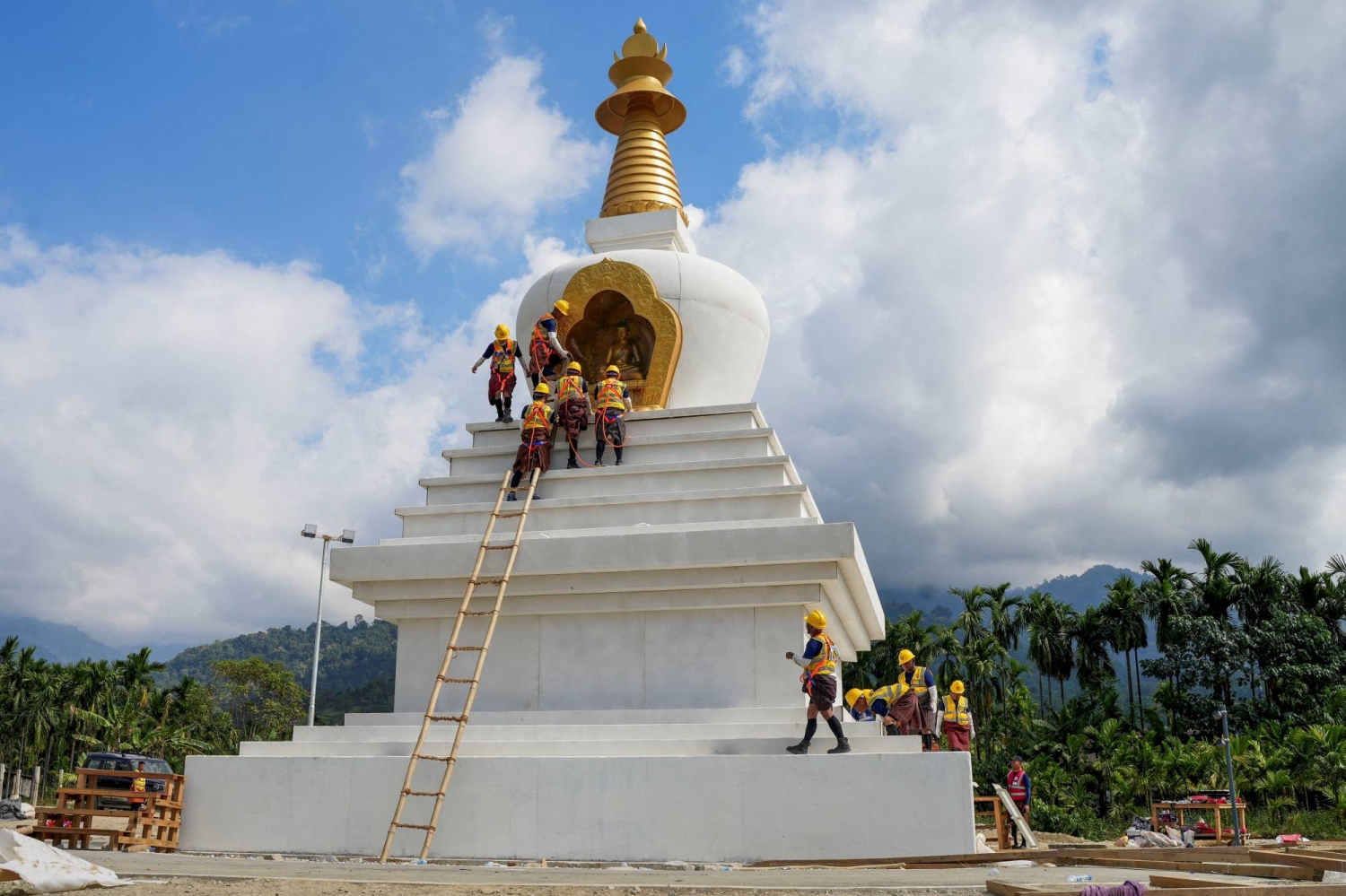
In an extraordinary demonstration of faith, unity and collective determination, the Himalayan Kingdom of Bhutan has created history by raising 108 sacred Buddhist stupas in a single day at Gelephu Mindfulness City in southern Bhutan. The remarkable undertaking, completed on November 1, 2026, brought together tens of thousands of volunteers, Buddhist spiritual masters, members of the Royal Family, government officials and international dignitaries. The occasion was not merely an architectural achievement but a profound expression of Bhutan’s spiritual heritage, national solidarity and royal vision for a future in which economic progress and Buddhist wisdom coexist harmoniously.
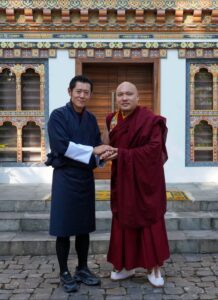
The historic initiative, known as Project 108, was conceived and initiated by His Majesty King Jigme Khesar Namgyel Wangchuck, the Fifth Druk Gyalpo of Bhutan. His Majesty announced the ambitious project on February 21, 2026, coinciding with his 46th birth anniversary. The royal initiative envisioned the construction of 108 Jangchub Chortens, or Stupas of Enlightenment, within the emerging Gelephu Mindfulness City. Beyond their religious importance, these monuments were intended to symbolize the strength of national unity, the spirit of voluntary service and the collective aspiration of the Bhutanese people for peace, prosperity and the well-being of all sentient beings.
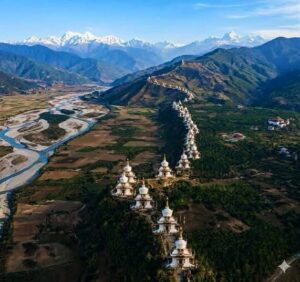
The 108 stupas were erected along the banks of the Mao Chhu River in Gelephu, located in Sarpang District near Bhutan’s southern border with the Indian state of Assam. Each stupa stands approximately 15 metres, or 50 feet, high, with a distance of 108 metres between neighbouring structures. Arranged along an approximately 11.7-kilometre corridor, the stupas form an extraordinary sacred landscape that is expected to become a significant destination for Buddhist pilgrimage, meditation and spiritual reflection. Their imposing yet serene presence is also intended to give Gelephu Mindfulness City a distinctive spiritual identity rooted in Bhutan’s centuries-old Buddhist traditions.
The number 108 holds profound significance in Buddhism. It is traditionally associated with spiritual completeness, purification and the overcoming of mental afflictions that obstruct the path to enlightenment. Buddhist prayer beads, commonly known as malas, generally contain 108 beads, allowing practitioners to count their recitations of sacred mantras. The construction of 108 stupas therefore represents far more than a numerical achievement; it expresses a collective aspiration to overcome ignorance, attachment, and suffering through the cultivation of wisdom and compassion. The Jangchub Chorten itself commemorates the enlightenment of Lord Buddha at Bodh Gaya and serves as a sacred reminder of the ultimate spiritual goal of Buddhist practice.
The foundation for the monumental undertaking was laid through months of preparation, careful planning and religious observances. Following the royal announcement in February, His Majesty the King visited the project site on March 24, accompanied by His Royal Highness Gyalsey Jigme Namgyel Wangchuck and senior officials associated with Gelephu Mindfulness City. Buddhist religious authorities conducted preparatory rituals, while monks and spiritual practitioners prepared sacred scriptures, mantras, relics, and other religious objects to be placed within the stupas. Engineers, construction specialists and thousands of volunteers worked to ensure that the structures could be raised simultaneously on the designated day. Thus, although the visible stupas were erected in one day, the achievement was the culmination of approximately eight months of preparation.

The historic day began long before sunrise on November 1. By approximately 1:30 in the morning, volunteers had assembled at designated locations along the Mao Chhu River, ready to participate in what would become one of Bhutan’s most memorable collective undertakings. At around 3 a.m., the ceremonial construction commenced amid the deep, resonant sounds of traditional Buddhist long horns, known as dungchen, and the chanting of sacred prayers. As the first light gradually illuminated the southern plains, thousands of hands worked together to raise the stupas, transforming the river landscape into a remarkable expression of faith in action.
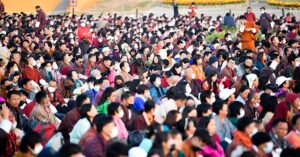
Approximately 40,000 volunteers participated in the construction effort, while reports estimated that around 200,000 people gathered for the broader historic occasion. The volunteers included monks, civil servants, engineers, skilled workers, young people, local residents, and devotees from different sections of Bhutanese society. Working in coordinated teams, they assembled the prepared components of the stupas with determination and precision. Within the course of the day, all 108 structures had been successfully raised. The achievement demonstrated not only exceptional organization and technical preparation but also the enduring Bhutanese tradition of voluntary service, known as Zhabto, through which people contribute their labour for the benefit of their community, religion and nation.
The event was graced by the presence of His Majesty King Jigme Khesar Namgyel Wangchuck, Her Majesty Queen Jetsun Pema Wangchuck, His Majesty the Fourth Druk Gyalpo Jigme Singye Wangchuck and members of the Bhutanese Royal Family. His Holiness the Je Khenpo, Bhutan’s supreme religious authority, presided over important spiritual ceremonies associated with the undertaking. The presence of the monarchs and senior religious leaders added immense national and spiritual significance to the occasion, reflecting the close historical relationship between Bhutan’s monarchy, the Buddhist faith and the welfare of the Bhutanese people.
Several highly revered Buddhist masters from different spiritual traditions also attended the historic gathering. Among them were His Holiness the 17th Gyalwang Karmapa, Ogyen Trinley Dorje; His Holiness Sakya Gongma Trichen Rinpoche; and His Holiness the Ganden Tripa Rinpoche. Their participation represented a rare gathering of distinguished Buddhist spiritual authorities united in prayer for peace, compassion, and enlightenment. The presence of these masters also emphasized the international significance of the project, extending its message of spiritual harmony beyond Bhutan’s geographical borders.
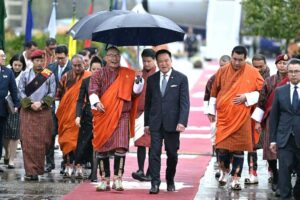
The occasion attracted distinguished international dignitaries, including Thai Prime Minister Anutin Charnvirakul, who attended with his wife and an official delegation, and India’s Union Minister Kiren Rijiju, who represented the Government of India. Bhutanese Prime Minister Tshering Tobgay and senior government officials were also present. The participation of representatives from Thailand and India highlighted Bhutan’s close diplomatic and cultural relations with neighbouring and fellow Buddhist countries. Another notable participant was Venerable Pannakara, the Buddhist monk internationally recognized for his Walk for Peace across the United States, who attended with members of his delegation. Together, the dignitaries, religious masters and ordinary devotees gave the historic gathering an atmosphere of international solidarity and shared spiritual aspiration.
The date of November 1 carried threefold significance for Bhutan. It coincided with Lhabab Düchen, one of the most sacred observances in Himalayan Buddhism, commemorating Lord Buddha’s descent from the heavenly realm after teaching his mother. The day also marked the 18th anniversary of the coronation of His Majesty King Jigme Khesar Namgyel Wangchuck, who formally ascended the Golden Throne in 2008. The simultaneous raising of the 108 Stupas of Enlightenment therefore united a major Buddhist religious occasion, an important anniversary of the Bhutanese monarchy and a historic national achievement in a single celebration.
The completion of the 108 stupas also received international attention for its extraordinary scale and speed. According to reports published on November 3, officials announced that the undertaking had received Guinness World Records recognition for the greatest number of stupas consecrated in a single day. While the recognition highlighted the exceptional accomplishment, the project’s greater significance lay in its religious purpose and the unity demonstrated by the thousands of participants who helped bring the royal vision to life.
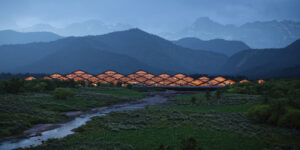
The spiritual importance of Project 108 is closely connected with the larger vision of Gelephu Mindfulness City, one of Bhutan’s most ambitious national development initiatives. His Majesty King Jigme Khesar Namgyel Wangchuck first announced the vision for Gelephu Mindfulness City during Bhutan’s 116th National Day celebrations on December 17, 2023. The project was subsequently established through a Royal Charter in February 2024 as a Special Administrative Region with distinctive governance arrangements. Situated in the southern plains of Bhutan, Gelephu Mindfulness City is envisioned as a new economic and spiritual centre capable of connecting Bhutan with regional and international markets while preserving the kingdom’s cultural identity, Buddhist values and environmental heritage.
The concept of Gelephu Mindfulness City represents an alternative approach to modern urban development. Unlike conventional commercial cities, which often prioritize industrial expansion and economic growth, Gelephu seeks to integrate prosperity with human well-being, environmental sustainability, spiritual mindfulness and cultural preservation. Its long-term vision encompasses sustainable infrastructure, international connectivity, education, wellness, responsible tourism, technological innovation, green industries and opportunities for international investment. The project also seeks to address pressing national challenges, including limited employment opportunities, the migration of young Bhutanese citizens overseas and the need to diversify Bhutan’s economy.
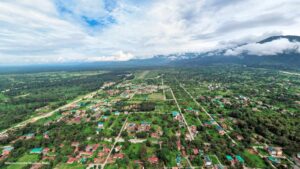
At the heart of this ambitious undertaking lies Bhutan’s internationally recognized philosophy of Gross National Happiness, which places human well-being, environmental conservation, cultural preservation and good governance alongside economic advancement. Gelephu Mindfulness City aims to demonstrate that material prosperity and spiritual fulfillment need not be contradictory goals. Instead, the project seeks to establish a model in which economic activities are guided by ethical responsibility, social harmony and respect for nature. The development is therefore intended not simply to create a new urban settlement, but to offer a distinctive vision of how future cities might be designed around the needs of humanity and the planet.
Within this broader national vision, the 108 stupas occupy a special place. Their construction establishes a spiritual foundation for Gelephu Mindfulness City, ensuring that the city’s identity is shaped not only by modern infrastructure and economic opportunity but also by the timeless Buddhist ideals of compassion, wisdom and inner peace. As visitors enter this emerging city, the sacred monuments will offer a powerful reminder that true development involves the cultivation of human character as much as the expansion of material prosperity. The stupas are expected to serve as centres for prayer, meditation, pilgrimage and contemplation, attracting devotees and spiritual seekers from Bhutan and abroad.
The project also carries an important message for a world increasingly challenged by conflict, social division, environmental degradation and uncertainty. At a time when many nations struggle to reconcile rapid economic development with cultural and spiritual preservation, Bhutan is seeking to demonstrate that progress can be pursued without abandoning deeply rooted values. The participation of thousands of volunteers in the construction of the stupas showed how collective faith, discipline, and a shared sense of purpose can transform an ambitious aspiration into a tangible achievement. In this respect, Project 108 symbolizes not only Bhutan’s spiritual devotion but also its belief in the power of national unity.
The ceremonies associated with the construction included the chanting of Buddhist prayers, religious blessings, and traditional observances conducted by senior spiritual leaders. Following the successful raising of the monuments, further consecration rituals and religious activities were organized to continue through November 4. The celebration also included ceremonial programmes honouring the collective achievement. As the day drew toward its conclusion, the illuminated stupas stood along the river landscape as enduring symbols of peace and enlightenment, their presence marking a new chapter in Bhutan’s religious and national history.
For the Bhutanese people, the significance of November 1, 2026, will extend far beyond the physical construction of 108 monuments. The day demonstrated the strength of a society united through its spiritual traditions and inspired by a shared national vision. It also offered an opportunity for younger generations to witness the importance of selfless service, cooperation, and devotion to the common good. Through the efforts of thousands of volunteers, a royal aspiration became a collective offering dedicated to the happiness and welfare of all sentient beings.
As Gelephu Mindfulness City gradually takes shape in the coming years, the 108 Stupas of Enlightenment are expected to remain among its most recognizable and meaningful landmarks. Their sacred forms will connect Bhutan’s ancient Buddhist heritage with its aspirations for a prosperous, peaceful, and sustainable future. For pilgrims, they will offer places of prayer and reflection; for visitors, they will represent the Himalayan kingdom’s extraordinary spiritual culture; and for the Bhutanese nation, they will stand as a lasting testament to what faith, determination, and unity can accomplish.
The story of the 108 stupas is ultimately a story of a nation seeking to shape its future without losing sight of its past. From the royal vision of His Majesty King Jigme Khesar Namgyel Wangchuck to the devoted labour of thousands of volunteers, the historic undertaking reflects Bhutan’s enduring conviction that the highest purpose of development is the happiness and well-being of humanity. Along the peaceful banks of the Mao Chhu River, 108 sacred monuments now stand in silent dignity, carrying the prayers of a nation and the aspirations of generations yet to come.
In the years ahead, the extraordinary events of November 1, 2026, may be remembered not simply as the day Bhutan raised 108 stupas, but as the day the kingdom offered the world a compelling example of how spiritual devotion, visionary leadership and collective action can come together to create something truly enduring. As the sacred chortens rise above the landscape of Gelephu, they proclaim a timeless message: that lasting peace begins within the human heart, and that a truly prosperous future must be built upon the foundations of wisdom, compassion and harmony.
Bhutan Creates History by Building 108 Sacred Stupas in a Single Day at Gelephu Mindfulness City
6 hours ago
California Sherpa Association Transfers Over $116,000 to Nepal Prime Minister’s Relief Fund
6 hours ago


United Sherpa Association Transfers $30,521 to Nepal’s Prime Minister’s Disaster Relief Fund
4 weeks ago