
Tenzing Norgay Belongs to History, Not to Nationality
By Lhakpa Gelu Sherpa
History often remembers the achievement, but not always the struggle behind it. It celebrates the victory, but sometimes overlooks the sacrifices, discrimination, and determination that made the victory possible. The 2026 biographical film Tenzing offers an important opportunity to revisit the extraordinary life of Tenzing Norgay, a man whose legacy belongs not only to Nepal, Tibet, or India, but to the entire Himalayan region and humanity.
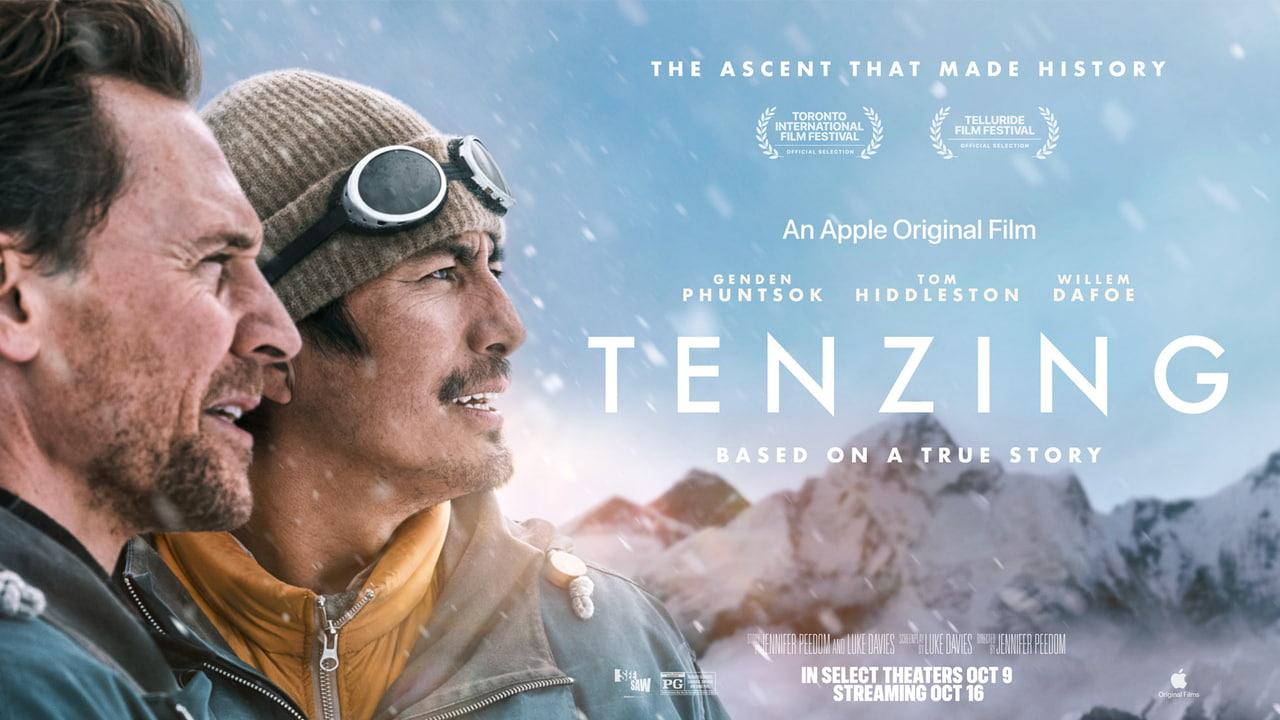
Directed by Jennifer Peedom, the film stars Genden Phuntsok as Tenzing Norgay and Tom Hiddleston as Sir Edmund Hillary. Released in selected theaters on October 9, 2026, and on Apple TV on October 16, it revisits the historic first confirmed ascent of Mount Everest on May 29, 1953.
Yet this is more than a story about climbing the world’s highest mountain. It raises deeper questions about identity, dignity, recognition, social hierarchy, and the people whose contributions have too often remained in the shadows of history.
The Struggle Behind the Summit
Tenzing Norgay’s journey was not simply a physical challenge against snow, ice, altitude and unpredictable weather. His struggle was also social, economic and deeply personal. Coming from a modest Himalayan background, he entered a mountaineering world in which European expedition leaders often enjoyed greater authority, recognition and privilege, while local Sherpa climbers frequently performed difficult and dangerous work without receiving equal public acknowledgment.
Sherpas were indispensable to Himalayan expeditions. Their knowledge of the mountains, ability to navigate dangerous terrain, endurance, and understanding of high-altitude conditions made many major expeditions possible. Nevertheless, their contributions were often presented as supporting roles rather than achievements deserving recognition in their own right. Tenzing challenged this imbalance through his skill, courage, persistence and professionalism.
The 2026 film brings this tension into focus by portraying his struggle to be accepted as a full member of the British Everest climbing team rather than merely someone employed to serve it. The film emphasizes how differences of class, cultural background and status shaped the expedition. This is perhaps one of the most important lessons from his life: human ability, dignity and courage should never be measured by social position, ethnicity or economic background.
On May 29, 1953, Tenzing Norgay and Sir Edmund Hillary stood together at the summit of Mount Everest. It was not simply a victory for one individual or one country. It was the culmination of years of experience, preparation, hardship, and collective effort.
Hillary’s contribution deserves the highest respect. Equally, Tenzing’s achievement must be recognized as that of a pioneering mountaineer and equal partner in the historic ascent.
Was Tenzing Norgay Nepali, Tibetan or Indian?
This question has been discussed for decades, sometimes with strong national emotions. However, the historical record deserves a careful and respectful interpretation. Tenzing himself stated that his parents came from Tibet but that he was born in Nepal. In his autobiographical account, he identified his early life with Nepal’s Khumbu region. These statements provide important evidence of how he described his own origins.
At the same time, later family accounts, including those associated with his son Norbu Tenzing Norgay, place his birthplace in Tibet and describe his upbringing in Nepal. Consequently, historians and biographers have not reached complete agreement on the precise circumstances of his birth.
What is clear is that Tenzing’s identity was shaped by several interconnected cultural and geographical experiences. His family roots were Tibetan. His childhood and mountaineering heritage were deeply connected with Nepal and the Sherpa community. He later established his home and professional life in Darjeeling, India, where he became a celebrated figure. These connections are not necessarily contradictory. They reflect the historical reality of Himalayan communities whose family ties, cultures, languages, and traditions often extend beyond modern political boundaries.
In discussing his origins, we should therefore distinguish between ancestry, birthplace, ethnic identity, residence and citizenship. These are related but different aspects of a person’s life. Respecting Tenzing’s own words is essential, just as acknowledging conflicting historical evidence is part of responsible storytelling.
No country needs to diminish another country’s connection to Tenzing in order to honor him. Nepal can proudly celebrate his contribution to its mountaineering heritage. Tibetans can honor his ancestral and cultural connections. India can recognize the important years he spent living, working, and contributing to mountaineering in Darjeeling.
The Sherpa community, above all, deserves recognition for the cultural heritage, knowledge, and mountaineering traditions that shaped his journey. These are shared connections, not competing claims of exclusive ownership.
Who Stepped First onto Everest: Hillary or Tenzing?
One of the most frequently debated questions surrounding the historic 1953 Everest expedition concerns who first stepped onto the summit: Sir Edmund Hillary or Tenzing Norgay. The 2026 film Tenzing approaches this question differently from a conventional historical account.
In the film’s concluding summit sequence, Hillary and Tenzing approach the highest point of Everest after overcoming extraordinary physical and emotional challenges. Before reaching the summit, the film portrays how each climber depends on the other for survival. Tenzing saves Hillary from a dangerous fall, while Hillary later assists Tenzing when his oxygen equipment becomes obstructed. These moments establish an important message: neither man could have completed the journey without the other’s courage, skill, and support.
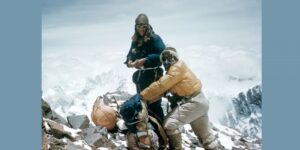
As they approach the summit, the film presents a particularly meaningful exchange. One climber says, “After you,” and the other responds with the same words. Rather than establishing who stepped onto the summit first, the scene depicts two men respectfully offering each other the honor. They share the emotional significance of their achievement, embracing at the summit after a difficult journey. This is a deliberate cinematic interpretation that places friendship, cooperation, and mutual respect above individual competition.
But what does historical evidence tell us?
Tenzing Norgay himself provided the answer. In his 1955 autobiography, Tiger of the Snows, written with James Ramsey Ullman, Tenzing acknowledged that Hillary stepped onto the summit first and that he followed immediately afterward. Importantly, Tenzing made clear that he had not regarded those final steps as a competition between them. This historical account deserves recognition, particularly when a film presents events based on a true story.
However, acknowledging that Hillary stepped first does not diminish Tenzing’s achievement. Equally, recognizing Tenzing’s extraordinary struggle and contribution should never diminish Hillary’s historic role. Both men had worked together to reach the summit, supported by a larger expedition whose collective efforts made their success possible.
The 2026 film’s decision not to identify who took the first step can therefore be understood as a cinematic emphasis on partnership rather than a denial of historical evidence. There is also a broader lesson in this portrayal. When history becomes a competition over who was first, we sometimes lose sight of the cooperation that made the achievement possible.
Hillary took the first step onto the summit, but Hillary and Tenzing made history together.
Their achievement deserves to be remembered as a shared human victory, not as a contest between national identities.
.
A Human Achievement Beyond Political Boundaries

The film highlights this difference in perspective: while some foreign mountaineers approach Everest primarily as a challenge to overcome, Tenzing views Chomolungma through a more personal and spiritual relationship. That contrast gives his story significance beyond mountaineering.
Tenzing’s achievement demonstrates that the highest human accomplishments often emerge through cooperation across cultures, not competition between identities. A Himalayan climber and a New Zealand mountaineer reached the summit together as members of a larger expedition involving many people whose work made their success possible.
The mountain did not distinguish them by nationality. Their success required trust, skill, endurance and mutual dependence. This is a lesson particularly relevant in today’s world, where questions of nationality, ethnicity and historical ownership can sometimes overshadow shared human accomplishments.
The Art of Historical Adaptation
The Greatest Summit Was Human Dignity
Tenzing Norgay reached the world’s highest peak, but the significance of his life cannot be measured only in meters above sea level. His story represents determination in the face of hardship, dignity in the face of unequal treatment, and the pursuit of recognition in a world where opportunities were not always equally distributed.
For young people across Nepal, Tibet, India and the wider Himalayan region, his life remains a powerful reminder that circumstances of birth do not determine the limits of human achievement. For the international community, his legacy offers another important lesson: the contributions of Indigenous and local mountain communities deserve visibility, appreciation, fair treatment and equal respect.
Himalayan mountaineering history cannot be told accurately without the Sherpa communities and generations of climbers whose skills, labor and sacrifices helped make exploration possible. The 2026 film offers an opportunity to bring this broader history into public discussion.
Its lasting value should be judged not only by how dramatically it recreates the ascent of Everest, but also by how effectively it encourages audiences to understand the humanity behind the achievement.
Tenzing Belongs to History, Not to a Dispute
Whether Tenzing Norgay is described through his Nepalese connections, Tibetan ancestry, Indian life, or Sherpa heritage, none of these dimensions should become a reason for division. His life was shaped by the wider Himalayan world, where cultural identities and communities have existed across geographical boundaries for centuries. Acknowledging that complexity does not weaken his historical identity. It makes our understanding of him more complete.
We should honor his own statements, remain open to historical evidence, and respect the legitimate emotional connections different communities feel toward his legacy. But we should never allow the debate over national identity to overshadow the extraordinary struggle that made him a legend.
Tenzing Norgay did not climb Mount Everest to prove that one nationality was superior to another. His achievement demonstrated what human determination, courage, partnership and perseverance can accomplish. Nepal may celebrate him with pride. Tibet may honor his ancestry. India may cherish his life and contributions. The Sherpa community may rightly regard him as one of its most distinguished sons. And the world can respect him as a pioneer whose accomplishment transcended borders.
The most meaningful tribute to Tenzing Norgay is therefore not an argument about which country can claim him, but a commitment to preserving his story truthfully, recognizing the struggles he endured and ensuring that future generations understand the magnitude of what he achieved.
Mount Everest may stand between nations, but Tenzing Norgay’s legacy rises above them.

United Sherpa Association Transfers $30,521 to Nepal’s Prime Minister’s Disaster Relief Fund
2 weeks ago
Global Sherpa Conference 2026: A Global Gathering to Preserve Heritage, Identity and Unity
3 weeks ago