
Pema Osel Ling Among the Redwoods in California
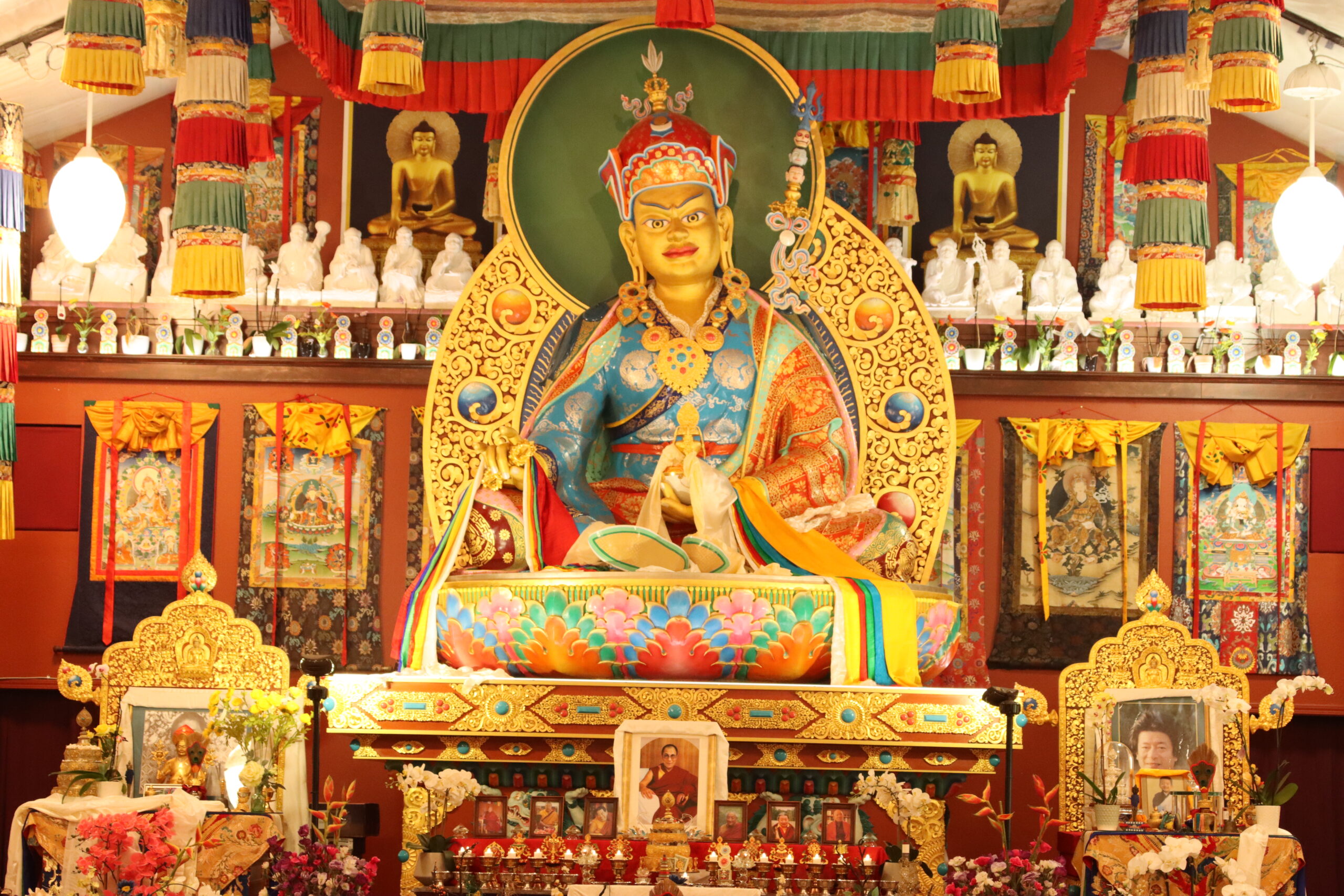
Nestled among the towering redwoods and rolling hills of the Santa Cruz Mountains, overlooking the distant waters of Monterey Bay, Vajrayana Foundation, widely known as Pema Osel Ling, the Lotus Land of Clear Light, stands as one of the most significant centers of Tibetan Vajrayana Buddhism in the United States. More than a monastery or retreat center, it is a sacred landscape where Himalayan spiritual tradition, nature, meditation, and community life merge into a living mandala of devotion and contemplative practice.
The story of Pema Osel Ling began in 1984, when Lama Tharchin Rinpoche arrived in America from Tibet by way of Nepal and India. An accomplished lama of the ancient Nyingma tradition of Tibetan Buddhism, Lama Tharchin Rinpoche carried with him not only the teachings of the Vajrayana path, but also the sacred artistic, ritual, and contemplative heritage of the Himalayas. In 1988, he founded the nonprofit Vajrayana Foundation in Santa Cruz, California, initially operating from the home of a sangha member with the aspiration of preserving and transmitting Tibetan Buddhist teachings through meditation retreats, sacred arts, translation work, and spiritual education.
As the community steadily grew, the small center could no longer contain the expanding circle of practitioners. In November 1990, members of the sangha visited a former youth camp in Corralitos. After a gentle rain, the land glowed beneath the misty redwoods, opening toward sweeping views of Monterey Bay. Lama Tharchin Rinpoche immediately recognized the profound spiritual quality of the place. With the generosity and support of students and benefactors, the property was purchased, and Pema Osel Ling was established as a permanent spiritual home for the Dudjom Tersar lineage in the West.
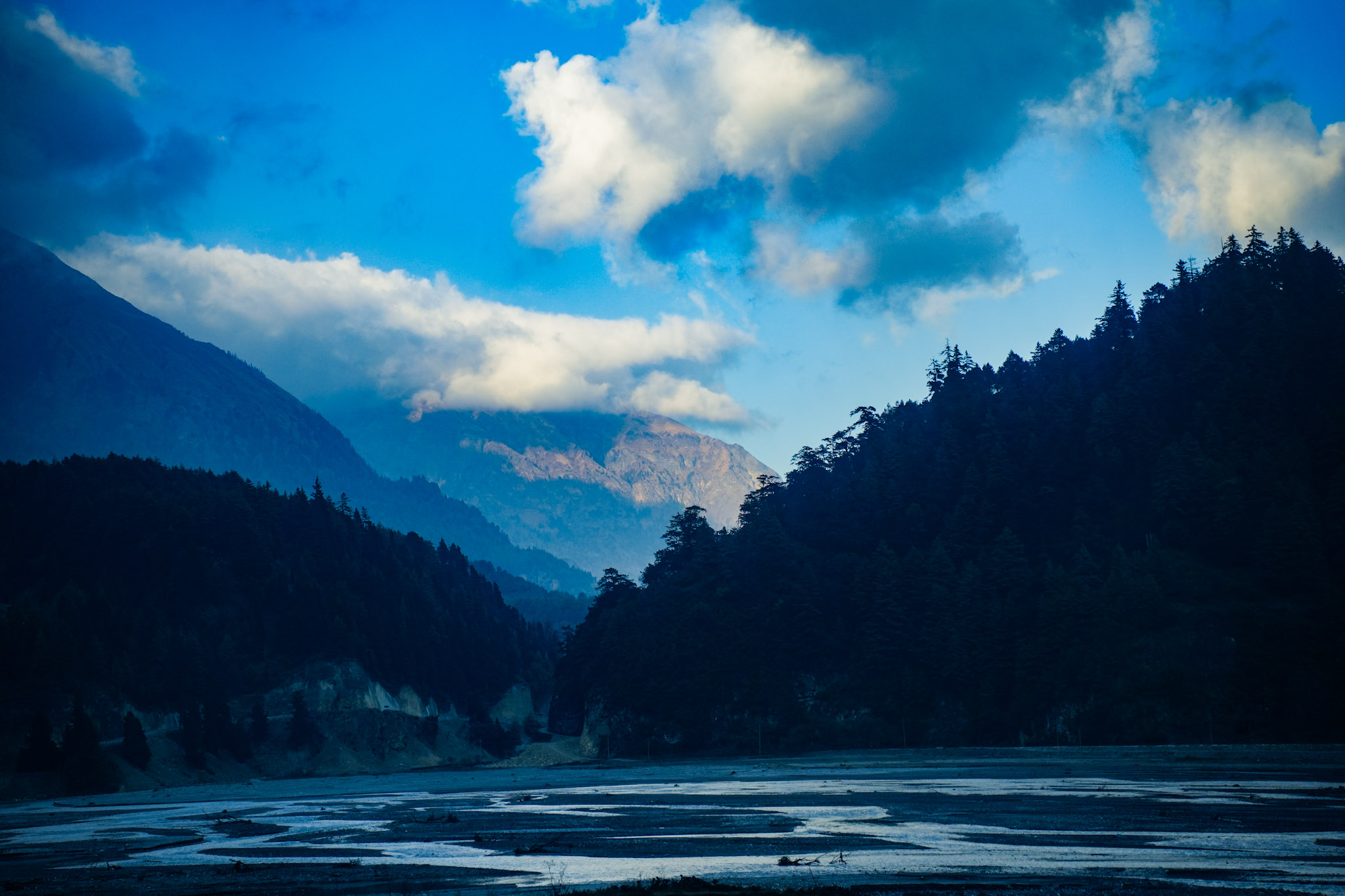
Today, the land itself remains one of the center’s most striking features. Spread across forested mountainsides and quiet meadows, the environment evokes both the serenity of the California coast and the contemplative atmosphere of Himalayan retreat valleys. Prayer flags flutter between ancient trees, mountain fog drifts through the forest in the early mornings, and the silence of the land is interrupted only by birdsong, wind, and the distant sound of ritual instruments during ceremonies. For many visitors, the experience of arriving at Pema Osel Ling feels less like entering a conventional religious institution and more like stepping into a sacred refuge hidden within nature itself.
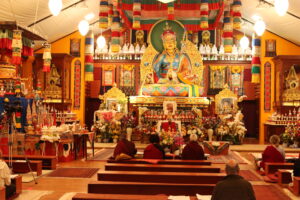
The spiritual life of the center radiates outward from its monastery and shrine rooms. Inside the main temple stands one of the largest Guru Padmasambhava statues outside Asia, a magnificent gilded thirty-foot representation of Guru Rinpoche in the form of Nangsi Zilnon. Designed under the guidance of Dungse Thinley Norbu Rinpoche and Lama Tharchin Rinpoche, the statue was constructed between 1992 and 1993 by artisans and practitioners working together in devotion.
Inside the shrine room, the immense presence of Guru Rinpoche dominates the space with extraordinary stillness and symbolic power. Within the Vajrayana tradition, Guru Padmasambhava is revered as the great tantric master who established Buddhism in Tibet during the eighth century and who transformed the Himalayan region through spiritual realization, wisdom, and compassion. The statue of Guru Rinpoche is not viewed merely as a work of art, but as a living representation of enlightened wisdom itself, a sacred presence believed to inspire liberation, healing, and spiritual awakening.
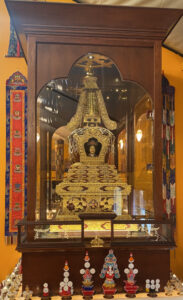
Flanking the great statue are the Kudung Stupas containing the sacred relics of Dudjom Rinpoche and Thinley Norbu Rinpoche, along with relics of other realized masters. These reliquary stupas symbolize the inseparability of the teacher’s wisdom mind from the physical world, serving as sacred supports for devotion, prayer, and spiritual connection. Lama Tharchin Rinpoche repeatedly emphasized that such stupas continue the living blessings of enlightened teachers even after their physical passing.
Elsewhere within the shrine room are elaborate thangkas, sacred ritual objects, and traditional Tibetan artistic works created under the direction of Lama Tharchin Rinpoche, Lama Sonam Tsering Rinpoche, and other lineage masters. Marble statues of the Four Element Taras and Green Tara were later installed as symbols of protection, environmental harmony, healing, and compassionate activity during times of global imbalance and suffering.
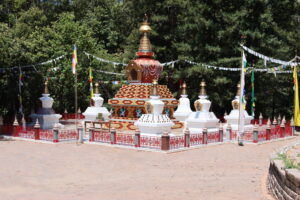
A quiet twenty-minute walk from the monastery leads visitors through forest paths toward one of the center’s most sacred sites, the Joyful Lotus Stupa Mandala, known in Tibetan as Namdrol Pemay Gatsal. Situated on a hillside selected personally by Lama Tharchin Rinpoche, the mandala consists of a central Stupa to Subdue Negative Forces surrounded by seven smaller stupas representing key moments in the life of Buddha Shakyamuni.
The stupa complex was created as a profound field of merit and blessing. According to the lineage tradition, such stupas help pacify warfare, disease, famine, environmental imbalance, and collective suffering while generating peace, harmony, and spiritual benefit for future generations. Surrounded by towering trees and mountain silence, the stupa mandala carries a contemplative atmosphere that deeply reflects the Vajrayana understanding of sacred geography, where the landscape itself becomes part of spiritual practice.
Beyond its ritual spaces, Pema Osel Ling also sustains a vibrant communal and retreat life. The center’s dining hall and kitchen provide simple communal meals during retreats and ceremonies, reflecting the traditional Buddhist emphasis on generosity, mindfulness, and shared practice. Nearby, the Dharma bookstore and treasure room offer Buddhist texts, ritual objects, sacred art, and teachings connected to the Nyingma and Dudjom Tersar traditions, serving both practitioners and visitors seeking a deeper understanding of Vajrayana Buddhism.
For nearly three decades, Pema Osel Ling has hosted annual Drupchens, extensive Vajrayana meditation retreats involving continuous ritual practice, chanting, sacred music, visualization, and lama dances. Led over the years by masters such as Thinley Norbu Rinpoche, Lama Tharchin Rinpoche, Lama Sonam Tsering Rinpoche, and Tulku Thadral Rinpoche, these retreats preserve the living transmission of the Dudjom Tersar lineage in America. Practitioners from across the world gather for these intensive practices, transforming the mountain retreat into a vibrant spiritual community rooted in devotion, discipline, and collective prayer.
The land has also supported traditional three-year retreats, a rare opportunity in the modern world for practitioners to dedicate themselves fully to meditation and advanced Vajrayana training. Over the decades, many revered masters of Tibetan Buddhism have visited and taught at Pema Osel Ling, including Thinley Norbu Rinpoche, Chatral Rinpoche, Dudjom Yangsi Rinpoche, Yangsi Gyana Trinley Dorje Rinpoche, Chakung Jigme Wangdrak Rinpoche, and Tulku Namgyal Dawa Rinpoche.
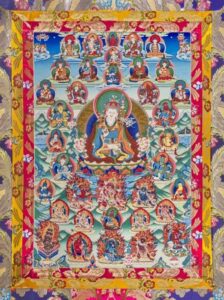
Today, under the spiritual guidance of Lama Sonam Tsering Rinpoche and Tulku Thadral Rinpoche, Pema Osel Ling continues to flourish as a center of practice, retreat, sacred arts, and spiritual transmission. Yet despite its growth and international significance, the atmosphere of the land remains remarkably humble and grounded, faithful to the vision of Lama Tharchin Rinpoche, who envisioned a refuge where people from all backgrounds could encounter the Vajrayana teachings in an environment of peace, simplicity, and compassion.
In an age increasingly shaped by speed, distraction, and uncertainty, Pema Osel Ling stands quietly among the redwoods as a rare spiritual sanctuary, a place where ancient Himalayan wisdom continues to breathe through ritual, meditation, sacred art, and the enduring silence of the natural world.
Shechen Center New York Opens, Bringing a Living Buddhist Lineage to the Heart of New York City
1 week ago