
Why Does President Trump Want Greenland and Why Is It So Important

Since early January, Greenland—a vast, icy territory in the Arctic under Danish sovereignty—has unexpectedly become a flashpoint in global geopolitics. The reason: President Donald Trump’s renewed insistence that the United States should acquire the remote island. This proposal, long dismissed as a quixotic idea, is now generating real tension between Washington and its European allies, especially Denmark, Greenland’s governing nation.
The notion of the U.S. “purchasing” Greenland first surfaced during Trump’s initial term in 2019. At the time, it was widely treated as a rhetorical flourish rather than a serious policy initiative. However, with the Trump administration’s recent military intervention in Venezuela and the ousting of President Nicolás Maduro on January 3, 2026, Trump’s calls have taken on new weight, appearing as part of a broader demonstration of U.S. strategic assertiveness.
Protests have erupted in Greenland’s capital, Nuuk, where thousands of citizens marched to voice their opposition. Placards read messages such as, “We are not for sale,” signaling widespread resentment at the notion that their homeland could be treated as a commodity. Greenlandic filmmaker Inuk Silis Høegh told CNN that such discussions represent “a total show of disrespect,” highlighting the deep cultural and political affront felt by the island’s residents.
What is Greenland Like?
Greenland is enormous yet sparsely populated. Covering 836,000 square miles (2.16 million square kilometers), it is the world’s largest island but home to only about 56,000 people. Most inhabitants live along the western coast, in towns connected not by roads but by boats, helicopters, and planes. Nuuk, the capital, exemplifies these settlements, with its colorful houses clustered along a jagged coastline backed by mountains.
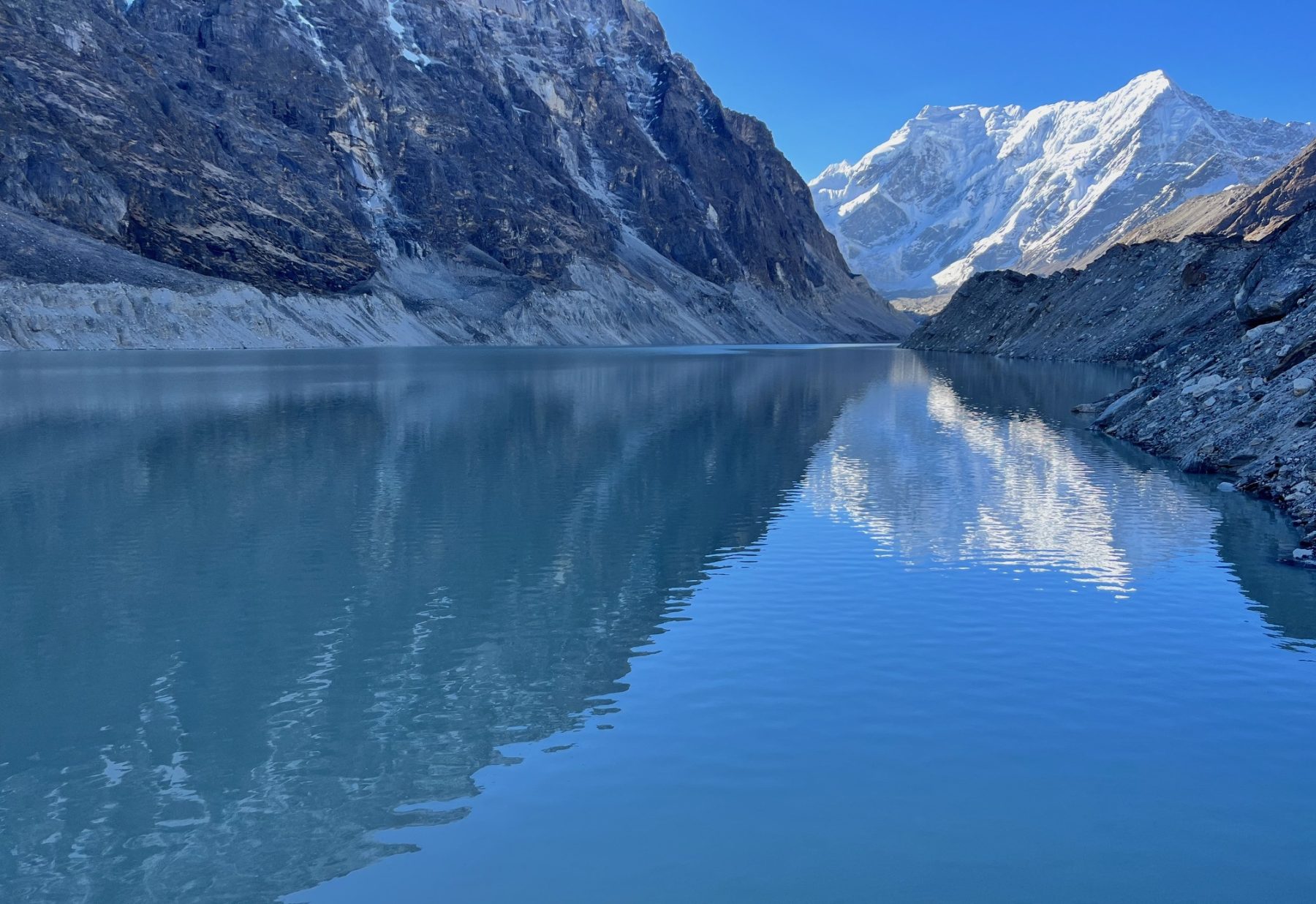
Outside these towns lies largely untouched wilderness, dominated by ice covering approximately 81% of the land. Nearly 90% of Greenlanders are of Inuit descent, and fishing has historically formed the backbone of the economy. Land ownership is communal rather than private, adding another layer of complexity to Trump’s idea of treating Greenland as a real estate asset. Høegh commented, “No individual can own land in Greenland, which makes the view of our country as real estate ever so more provocative for us.”
Why Greenland is Strategically Important
Greenland’s importance stems from three key factors: its geopolitical location, abundant natural resources, and the opening of new northern shipping routes—all amplified by climate change.
Strategically, Greenland lies between the U.S. and Europe, controlling the so-called GIUK gap, a critical maritime passage linking the Arctic to the Atlantic Ocean via Greenland, Iceland, and the UK. This corridor is vital for monitoring naval activity, controlling trade, and maintaining security across the North Atlantic.
The island also contains vast untapped reserves of oil, gas, and rare earth minerals—resources essential for modern technology, green energy, and military applications. With China controlling a large portion of global rare earth production, Greenland represents a potential alternative source for the U.S. However, despite climate change making parts of these resources more accessible, mining remains challenging due to the island’s mountainous terrain, harsh climate, and environmental regulations.
Melting Arctic ice has also opened northern shipping lanes for longer periods, creating potential new trade routes between Asia, Europe, and North America, while also raising strategic security concerns.
While Trump has publicly downplayed the mineral argument, stating, “We need Greenland for national security, not for minerals,” former national security adviser Mike Waltz suggested otherwise, describing the focus as “about critical minerals and natural resources.”
The Arctic has become a theater of international competition, with Russia controlling over a quarter of its territory, China asserting itself as a “near-Arctic state” and pursuing a “polar silk road,” and the U.S. seeking to maintain dominance in the region.
Trump’s Renewed Focus
Trump’s interest in Greenland surged immediately after the U.S. intervention in Venezuela. Speaking aboard Air Force One, he claimed, “Greenland is covered with Russian and Chinese ships all over the place. We need Greenland from the standpoint of national security, and Denmark is not going to be able to do it.”
Two weeks later, he escalated tensions further, threatening a 10% tariff on several European nations unless a deal for Greenland was reached. Trump framed it as recompense for centuries of U.S. support and trade with Denmark and other European countries, writing, “Now, after Centuries, it is time for Denmark to give back — World Peace is at stake!”
Historical Context
The United States has long maintained a presence in Greenland. During the Cold War, Greenland’s proximity to Russia made it a critical monitoring point for missile defense. The U.S. signed a defense agreement with Denmark in 1951, allowing troops to operate at a military base that continues to function today, albeit on a smaller scale. Historically, the U.S. has attempted to purchase Greenland several times, most recently in 1946.
Economically, Greenland has encouraged U.S. investment in sectors such as energy, mining, and tourism. Christian Keldsen, CEO of the Greenland Business Association, noted, “There’s no barriers for American investments,” reflecting a longstanding cooperative relationship.
Impact on NATO and European Relations
Trump’s public ambition to acquire territory from a NATO ally, coupled with threats of economic punishment, has unsettled the alliance. European leaders, including Denmark, Germany, France, and the UK, issued a joint statement condemning tariff threats, warning of a “dangerous downward spiral” that could undermine transatlantic relations.
In response, several European nations deployed military personnel to Greenland for joint exercises with Denmark, signaling support for the territory and underscoring tensions with the U.S. Trump, for his part, characterized these moves as “a very dangerous situation for the Safety, Security and Survival of our Planet.”
Greenlanders’ Reactions
For the people of Greenland, Trump’s proposals are overwhelmingly unwelcome. Approximately 5,000 citizens—nearly 10% of the population—protested in Nuuk, holding banners reading “Yankee go home” and “Greenland is already great.” Many see Trump’s rhetoric as an affront to Greenland’s autonomy and political identity, which has evolved over decades: the island achieved home rule in 1979 and full self-government in 2009, though Denmark still controls foreign, defense, and monetary policy.
Greenland’s Prime Minister Jens-Frederik Nielsen called Trump’s comments “completely unacceptable,” emphasizing that they were disrespectful to the island’s people and their political process. Cultural responses, such as posting the Greenlandic flag on social media, further reflect the population’s insistence on self-determination.
Yet a small minority of Greenlanders, including members of the pro-U.S. opposition Naleraq party, have welcomed aspects of Trump’s focus, seeing potential for closer ties with Washington.
Conclusion
Trump’s fixation on Greenland illuminates a complex web of strategic, economic, and geopolitical considerations. The island’s vast natural resources, critical Arctic location, and emerging shipping routes make it a prize in the global balance of power, attracting attention from the U.S., China, and Russia alike. However, Greenland’s people remain united in asserting their autonomy, and the international repercussions of the U.S. seeking to “purchase” the island highlight the fragility of alliances and the sensitivities of Arctic geopolitics.
Source: CNN